English
 Español
 Français
 Deutsch
 Italiano
 Português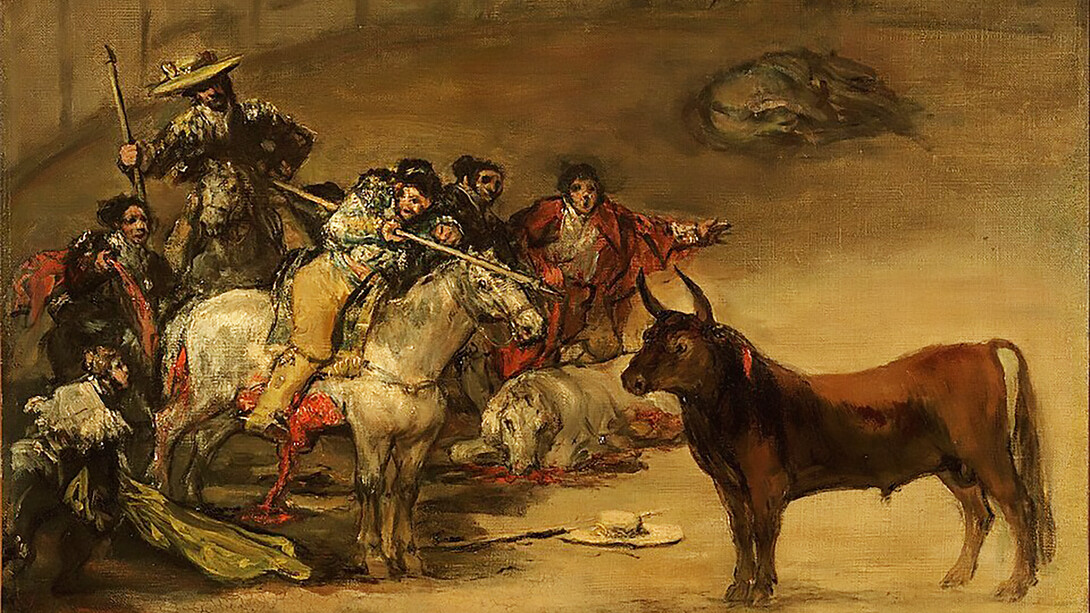
I came to bullfighting late, through a documentary on Andrés Roca Rey—the man many call the greatest matador alive. I expected a spectacle. I did not expect to feel physically sick.
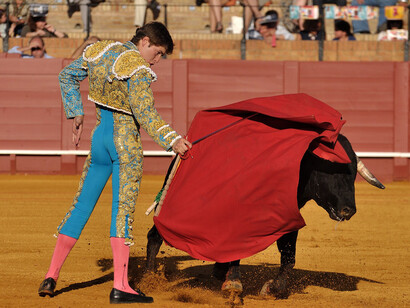
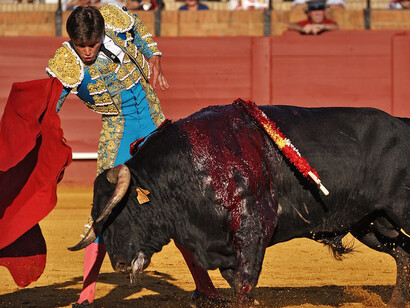
What I witnessed was not combat. It was not even hunting. It was a slow, choreographed execution dressed in silk and sequins. A bull—bred from birth to be magnificent, aggressive, and doomed—is lured into the ring, lanced, stabbed, caped, and bled until its legs buckle and its breath comes in wet, rattling gasps. Only then does the star step forward for the final sword thrust between the shoulder blades. The animal collapses, still conscious, still bellowing, while the matador struts and preens while the crowd roars. The carcass is dragged out by horses like refuse. No bow of the fallen head. No moment of silence. Just another round of applause.
I have seen men do violent things and called them courageous. I have witnessed hunters overrun bucks with their wagons. This was not courage. This was theater of cruelty, staged so that one man in tights could perform masculinity for paying strangers.
We like to romanticize the archetype: man against beast, the gladiator in the Colosseum, hero slaying the mammoth. Those stories pit equal forces against each other. Bullfighting does the opposite. It rigs the game. Eight men wound and exhaust the animal before the “hero” delivers the coup de grâce and claims the glory. The bull is not an opponent; it is just a prop. Its suffering is the point.
Compare this to the animal sacrifice I grew up with.
In my culture, the blood of an animal is treated as sacred. When we slaughter a goat or a chicken for prayer, the rite is precise, swift, and reverent. The knife finds the exact spot. The first drop of blood must kiss the earth to honor the ancestors and to thank the creature whose life we are taking. The kill is over in seconds. The body is beheaded only after the spirit has already left. There is no taunting. No audience. No applause. The animal is not entertainment; it is an intermediary between the living and the dead. Its death has meaning.
Bullfighting has none.
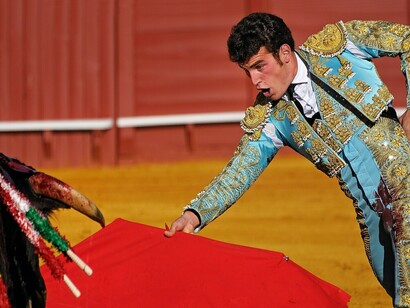
The bull is not sacrificed. It is tormented for sport. Its agony is prolonged for aesthetic effect: the graceful pass, the blood on the sand, and the final dramatic collapse. The matador does not honor the animal; he insults it, mocks its death throes, and lets his cuadrilla even curse the animal for “dying badly," as though it was such a bad sport. Then he peacocks in front of the crowd, chest puffed, as if he has conquered nature rather than participated in its slow mutilation.
It’s a joke. What masculinity is this?
Real strength does not require eight assistants to cripple your opponent first. Real courage does not demand that the creature you face be drugged, lanced, and half-dead before you risk your balls. The only honest moment in the entire spectacle is when the bull’s horn finds the matador’s stomach. In those seconds, when the “immortal” is gored and screaming. I felt something like poetic justice. The animal, at least, died fighting.
And yet the tradition persists. In Spain, parts of Latin America, and a few other pockets of the world, people still insist this is a culture that must remain ancient, noble, and untouchable. They speak of “art,” of “bravery,” of preserving a link to the past. I understand the impulse. I, too, come from a culture that keeps rituals alive even when the modern world finds them absurd. But there is a difference between preserving what is sacred and preserving what is sadistic.
Factory farms are grotesque, yes. Abattoirs and industrial slaughter are merciless. But those animals are not bred, raised, and paraded for the specific purpose of being publicly tortured before they die. Their suffering is hidden; bullfighting’s suffering is the main attraction. We pay to watch it. We dress it up in legend and culture to call it heritage.
At what point does “culture” become cruelty we simply refuse to outgrow?
The question is larger than bulls. It is about how we treat anything we deem dispensable. Animals, the powerless, the voiceless. When a society cheers the slow breaking and collapse of a magnificent creature for entertainment, it plants a seed in our collective psyche: some lives exist for our spectacle. Some suffering is necessary and in some cases even beautiful if it is wrapped in tradition and activity. That seed does not only stay in the ring. It grows.
I do not know what Andrés Roca Rey tells himself at night. Perhaps he believes he is continuing a noble lineage. Perhaps the adrenaline and the adulation drown out the bellowing and groans of the animals. Perhaps he never thinks of the hundreds of bulls whose bodies he has pierced. I suspect the truth is simpler and uglier: the ritual arouses him. It lets him feel like a gladiator without ever having to face an equal.
I have no sympathy for him or his colleagues. If the roles were reversed—if a bull were given a sword and allowed to taunt, stab, and exhaust a man until he collapsed in the sand—I would cheer every time the horn tore into living flesh. I certainly would not call it cruelty. I would call it overdue.
Tradition is not a shield. When it demands the prolonged agony of a sentient being for applause and profit, it stops being heritage and becomes something darker that looks back at us. And what we see is certainly not bravery. It is the oldest and most pathetic human impulse of all—the need to feel powerful by making something else bleed.