English
 Español
 Français
 Deutsch
 Italiano
 Português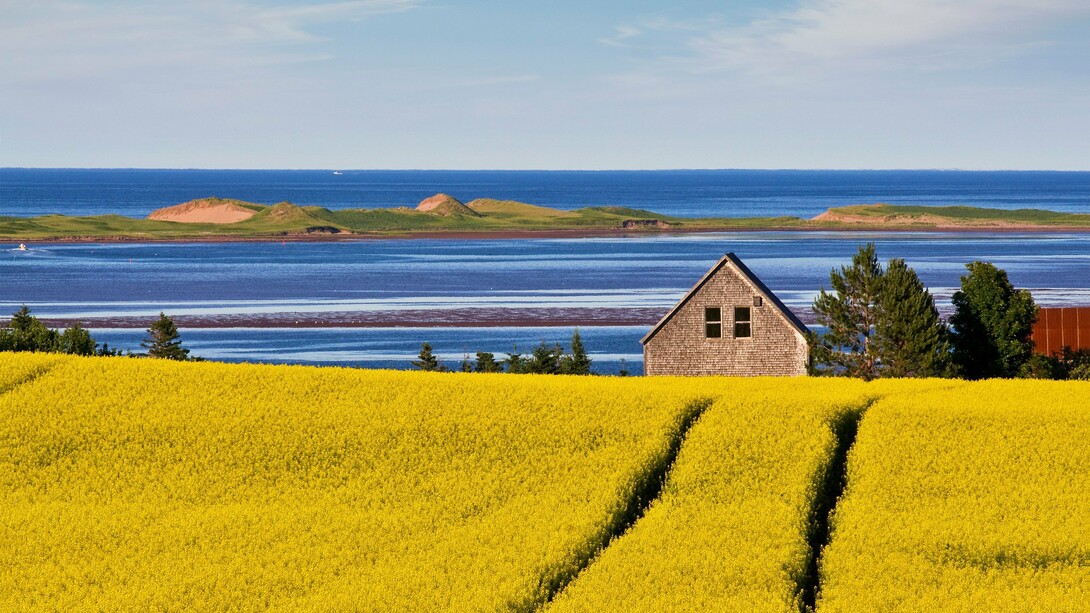
Growing up, I never read Anne of Green Gables, the 1908 novel by L. M. Montgomery about an orphan named Anne Shirley sent to live on a farm owned by a middle-aged brother and sister on Prince Edward Island (PEI). I’m not sure why I didn’t, since it’s considered a children’s classic, having been translated into 36 different languages and selling more than 50 million copies, and my mother was all about me reading the classics.
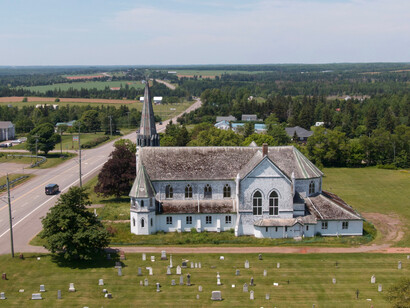
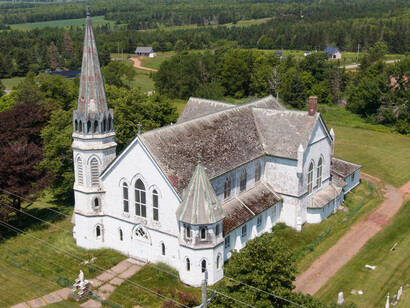
I still hadn’t read any of Anne's books, seen the movies, or watched the TV series, but it was hard to imagine visiting PEI, one of eastern Canada’s Maritimes, located along the waterways of the Gulf of St. Lawrence and the Atlantic Ocean, without a visit. So, leaving Charlottetown, the charming Victorian-era capital of PEI, I headed northwest to Green Gables Heritage Place, part of L.M. Montgomery's Cavendish National Historic Site.
Along the water
Once outside of Charlottetown, past its eclectic shops, art galleries, and restaurants, the landscape quickly turns rural. The coastal road meanders past sandy beaches, red-roofed lighthouses, and dramatic red sandstone cliffs. Trees ablaze with the jewel colors of fall line the road as I travel through cute little fishing hamlets, all of which have at least one restaurant offering lobster rolls and mussels as well as a store or two selling jams made from locally grown fruits, wood lobster traps to take home, and, of course, Anne paraphernalia.
It’s all about Ann
The first thing I noticed when entering Avonlea Village just before turning to enter Green Gables is that signs were not only written in English and French (there’s this long history of the Maritimes passing back and forth between the British and the French) but also in Japanese. Turns out that in 1952, the Montgomery books were translated into Japanese and became so popular that around 20,000 or so tourists from Japan travel here to tour the places mentioned in the books.
I stop for a few minutes to wander around Avonlea Village, named for the fictitious name Montgomery gave Cavendish. I had worried it would all be a little too touristy, but the feel of the historic buildings and those built to represent Anne’s times have a quaint feel. I decide to buy several of the books at the Anne of Green Gables Store, where you can find, as they advertise, “all things Anne,” and then watch candy being made at Anne of Green Gables Chocolate, a store along the sprawling Cavendish Boardwalk.
Purchasing chocolate-covered red licorice and maple syrup candies, I pose for a photo underneath a giant cow statue, which stands atop a roof. PEI is dairy central and is noted for the richness of its cheeses and ice creams, including those made by Cows, which now has 12 locations, including in the village and also in Charlottetown.
Green Gables
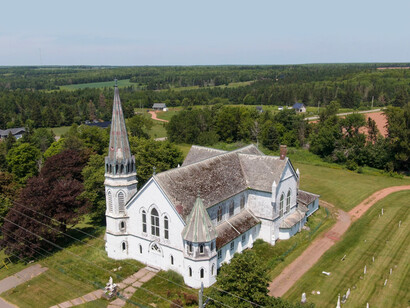
Deciding not to take a formal tour, I watched the short video about Montgomery, her life, and, of course, Green Gables. Then it’s through a large old barn with vintage equipment like that the farmers who adopted Anne might have used, and into a pretty 19th-century garden with its white picket fencing, arbors draped with flowering vines, cozy seating, and old-fashioned blooms such as giant hollyhocks and delphiniums.
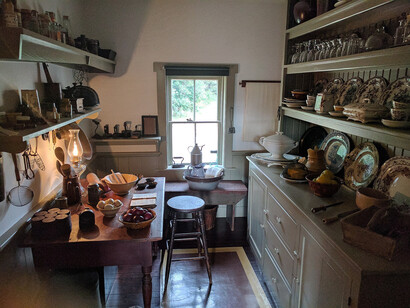
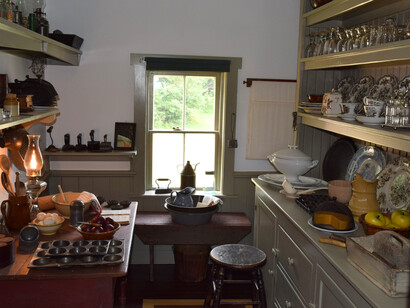
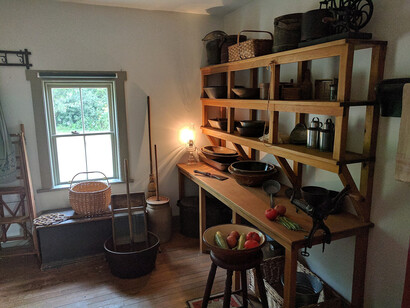
Interpretative guides wearing early 20th-century country garb and straw hats lead the way through the gabled home, all neatly furnished with period antiques. Pathways such as Lovers Lane wander through the richly colored woods, and along the way, I pass a few serious Anne-wannabes, their hair spray colored red and crowned with, of course, straw hats.
Fortification is always a must after a walk, and I order two scoops of ice cream and a few Beaver Tails pastries, since I’m told they’re the iconic Canadian treat from the Butter Churn Café, before following another wooded way towards the Atlantic Ocean. And for those wondering, Beaver Tails are fried dough sprinkled with sugar, similar to the elephant ears in the U.S.
On the way back to Charlottetown, there’s a stop at Prince Edward Island Preserve Company in New Glasgow for a late lunch, where I opt not to get nachos but instead the specialty of the island—mussels—and then take a walk through their 12-acre garden. The shelves of their gift shop are lined with jars of artisan preserves, tins of fine teas, Dunoon fine China made in the United Kingdom, pretty packages of chocolate, and pottery made by local artists.
That night, while enjoying a lobster roll at Water Prince Corner Shop & Lobster Pound in Charlottetown, where owner Shane Campbell tells me he buys directly from the many fishing boats that dock in the harbor, I start reading Anne of Green Gables. Mesmerized by the magic of the day and the story of Anne, by the time my meal is finished, it’s hard to believe she didn’t really exist.
Where to stay
There are cottages, including those on the beach along the coastal drive to Green Gables, or you can stay in Charlottetown, which is what I did. There are a variety of hotels, but if you want to stay near the water and love history, the multi-gabled 28-room Queen Anne Revival-style Elmwood Heritage Inn, an 1889 beauty, is located near Victoria Park, which has a great boardwalk along the water’s edge.