English
 Español
 Français
 Deutsch
 Italiano
 Português
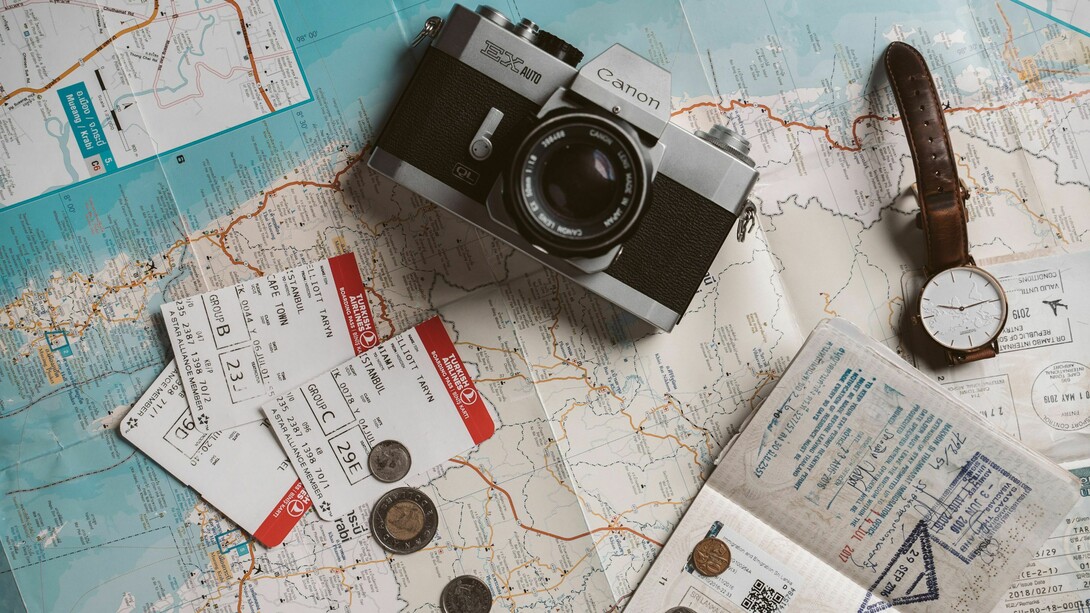
Travel is often described as transformational.
People speak of journeys that changed their lives, cities that awakened something within them, and landscapes that reshaped their sense of what is possible. We tell one another that travel broadens the mind, deepens empathy, and reveals the world as it truly is.
Sometimes it does—but not always.
Travel does not change you simply because you board a plane, cross a border, photograph beautiful buildings, or taste food whose names you cannot pronounce. Movement across geography is not the same thing as movement within a life. It is entirely possible to circle the globe while remaining fundamentally unchanged.
Transformation requires participation, and while travel can create the conditions for change, it does not guarantee it.
The difference between movement and encounter
Most travel advice focuses on logistics: where to go, what to see, what to eat, and how to optimize an itinerary. These things matter. They help us arrive and notice what is available.
However, they do not determine whether anything meaningful happens once we are there.
The deeper opportunity of travel begins when we stop treating places as destinations to consume and begin encountering them as realities to meet. Encounter requires attention and curiosity. It requires the willingness to suspend the assumption that what feels normal to us is natural, inevitable, or universal.
Without that willingness, we simply export our habits to a new location. The scenery changes, but we do not.
Travel interrupts the invisible structures of ordinary life
One reason travel can be powerful is that it temporarily loosens the structures that normally organize our days.
At home, routines accumulate quietly. Expectations settle around us, and roles become fixed. The range of what feels possible narrows without our even noticing. We begin to interpret our lives through patterns we did not consciously choose.
Travel interrupts these patterns.
Suddenly, the ordinary signals disappear. The language around us shifts. Familiar social cues no longer function automatically. Even simple tasks require attention again. So we become beginners anew in places where we are accustomed to competence.
This interruption creates space, and inside that space, we can begin to ask questions that daily life rarely invites us to consider: Which parts of my life are truly mine? What expectations did I inherit without noticing? What assumptions have I mistaken for necessity?
Travel does not answer these questions for us, but it can make them visible.
Distance reveals what proximity conceals
It is often easier to see our own culture from outside it than from within it. Practices that once felt obvious begin to look contingent. Norms that appeared universal begin to look local.
This shift in perspective can be unsettling. It can also be liberating.
When we realize that entire societies organize work differently, structure time differently, educate children differently, or understand success differently, something important becomes available to us. We begin to see that our own lives are not fixed arrangements but constructed ones—and if they were constructed, they can be reconstructed.
Travel does not force reconstruction, but it can invite it.
Beauty alone does not transform
Many artistically inclined people assume that exposure to beauty will automatically produce change. But this is not necessarily the case.
Beauty can be experienced passively. It can be admired, photographed, and left behind without altering anything in how we live. A person can stand before a cathedral, a coastline, or a mountain range and remain exactly as they were before.
Transformation begins when beauty becomes a question rather than a spectacle. This is especially true of works of beauty created by humans. Ask yourself: What kind of attention produced this? What standards made this possible? What forms of patience, discipline, or devotion shaped what I am seeing? Why would I settle for less for the rest of my life?
These questions move us from consumption that will be forgotten in two weeks toward participation that can last a lifetime. They invite us to consider whether the qualities we admire externally might also be cultivated internally.
Travel can offer us access to beauty. Meaning emerges when we decide what to do with that access.
Travel gives us permission to experiment with ourselves
Away from home, we can change who everyone knows us to be. Suddenly, the people surrounding us do not know our histories and do not expect us to behave in familiar ways—they do not reinforce the identities we normally perform. This creates a rare opportunity.
Now, we can speak differently, move differently, notice differently, choose differently. We can test versions of ourselves that daily life had quietly discouraged.
Sometimes travelers discover that they can be more courageous than they believed. Sometimes they discover they can be more patient. Sometimes they discover they can be more curious, more observant, more independent, or more at ease with uncertainty.
However, none of these discoveries happen automatically—they happen when we treat travel as a laboratory rather than a mere view to be photographed.
The most important work still happens inside
Travel can introduce us to alternatives, but it cannot choose between them for us.
Transformation begins when we ask: Which of these values belong in my life? Which ways of being do I want to carry forward? Which parts of myself remain constant no matter where I go?
Ultimately, the real gift of travel is perspective.
Travel provides a contrast, a differentiation, that allows us to see ourselves more clearly. It shows us that there are many ways to construct a life, and that the one we inherited from our hometown is only one among them.
From this perspective, travel becomes something more than recreation—it becomes a catalyst for re-creation. It becomes a chance to choose again who we will be in the world.
In the end, travel will not change you simply because you go somewhere new—but it can change you when you decide what the journey will mean.