English
 Español
 Français
 Deutsch
 Italiano
 Português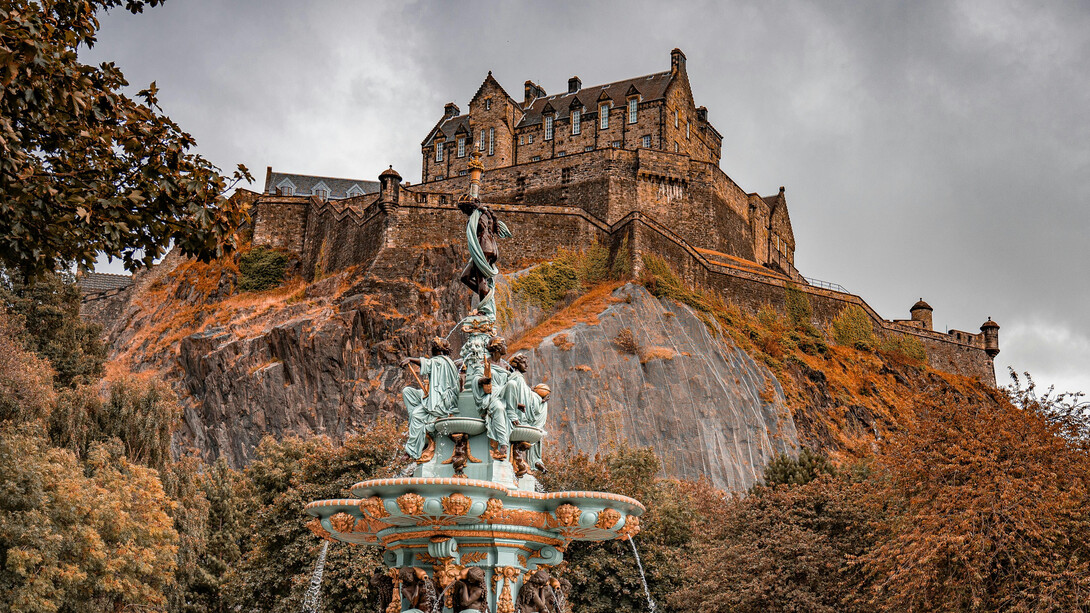
Edinburgh has been recognized as the capital of Scotland since the 15th century. Its centuries-old buildings lend an ancient character to the city.
The city’s historical and cultural attractions have made it the United Kingdom’s second most visited tourist destination, with London claiming first place. It boasts the strongest economy in the U.K. outside of London.
In the 7th century, the Angles, the tribe that gave its name to England, attacked the prominent fort called Dun Eiden. The Angles joined the names “Eiden” and “Burh,” an old English word meaning fort, creating the name of Edinburgh. Remember to call it “Edin-bru” or “Embra,” and not “Edin-burg,” unless you want to be corrected by its passionate inhabitants.
Edinburgh’s Old Town and New Town are together listed as a UNESCO World Heritage Site. Old Town has a charming medieval street layout, dominated by Edinburgh Castle and the University of Edinburgh, which was established in 1583. New Town is approximately 250 years old. It is lined with wide boulevards and well-tended squares along an orderly grid. Princes Street Gardens and Waverly Train Station separate Old Town from New Town.
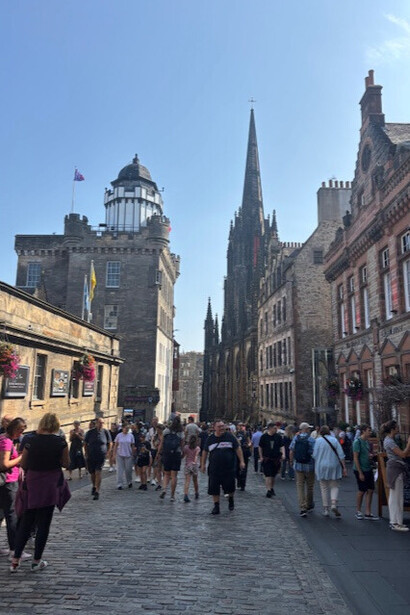
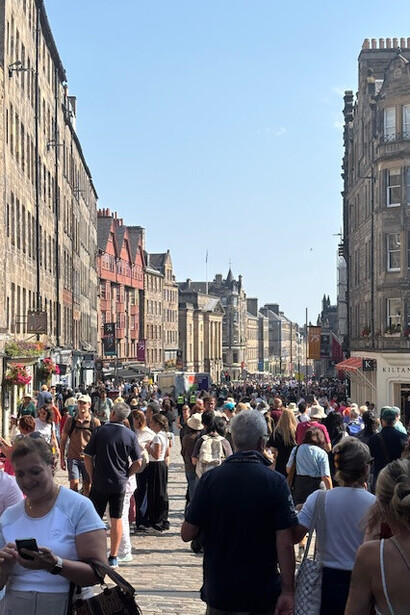
The Royal Mile is Edinburgh’s most famous street. It measures 1.81 km, which is approximately one Scots mile long, a measurement that has not been used since the 18th century.
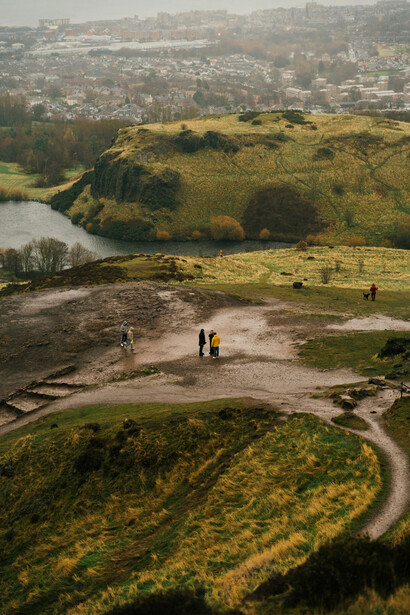
The Royal Mile runs down from Edinburgh Castle, which is perched atop an extinct volcano. Tour tickets for the Castle are best purchased in advance. Every day at 1 pm, a gun is fired from the Castle. Views from the Castle grounds are well worth the hike up “The Mound.”
The Palace of Holyroodhouse is at the other end of the Royal Mile. This palace was built between 1671 and 1878 and serves as the official royal residence in Edinburgh.
The Royal Mile features ancient buildings, cobbled streets, Scottish shops, churches, museums, restaurants, pubs, street performers, and hidden gardens. The 12th-century St. Giles’ Cathedral has striking architecture and beautiful stained glass windows. Outside the Cathedral, do not miss the Heart of Midlothian, a heart-shaped mosaic of granite stones symbolizing Scottish resilience and determination.
Walk down narrow passages off the Royal Mile, known as closes, which often lead into charming courtyards. The Real Mary King’s Close is a popular tourist attraction, with 17th-century homes accessible via underground tunnels and shrouded in myths. Note that many older buildings lack ramps and lifts, and that the stone streets and walks can be slippery, especially when wet.
The Fringe Festival, which takes place in Edinburgh every August, is the world’s largest annual international arts festival. Many of the several thousand shows offered each year are free or charge pay-what-you-can tickets. The shows are held in a multitude of venues across the city, and many are outdoors and seemingly impromptu. Comedy shows have become prominent at the Fringe Festival. It is advisable to book accommodations long before August if you are intending to attend Fringe Festival events, as the city’s population doubles during the festival.
Edinburgh is also known for the Edinburgh International Festival, which hosts high-profile theater productions and classical music performances. The Edinburgh Military Tattoo, first introduced in 1950, consists of the British Armed Forces and military bands from around the world, which perform on the Castle Esplanade every evening for three weeks each August. Edinburgh also hosts the Edinburgh International Film Festival, the world’s oldest film festival, and the Edinburgh International Science Festival.
The rules of golf were born in the adjacent town of Leith, technically part of the City of Edinburgh. Leith is an easy tram or bus ride from Edinburgh’s Old Town, and is worth a visit for its restaurants and waterfront. Leith was formerly the rough setting for the popular movie Trainspotting, but has been steadily gentrifying.
One must sample Scotland’s traditional dish of haggis when in the country. It is made of sheep’s liver, kidney and lungs, minced onion, oatmeal, suet and spices, traditionally encased in sheep’s stomach and boiled. Haggis are usually served with turnips and mashed potatoes, called “neeps and tatties.” The authentic version of haggis has been banned from import to the United States since 1971 because livestock lungs were determined to carry a serious foodborne illness risk. In addition, if you are a drinker, you may want to try Scotch whiskey, Scotland’s national drink.
While Scotland is part of the United Kingdom, many Scots consider themselves independent of England. It's best to avoid talk of politics with the locals.
One of Edinburgh’s most enduring nicknames is “Old Reekie,” dating from the 17th century when Old Town’s smoky chimneys and Nor Loch, a stagnant pool where Princes Street Gardens now sit, created smog over the city and a notorious odor of mixed smoke and effluent. The nickname is outdated now, as Edinburgh is a glorious city free of offending smog and smell, with abundant and varied offerings for all who visit.