English
 Español
 Français
 Deutsch
 Italiano
 Português
Former President Rodrigo Duterte of the Philippines is now in the custody of the International Criminal Court (ICC) in The Hague and will soon be brought to trial for the extrajudicial killing (“EJK”) of thousands of drug users and dealers, most of them. At the same time, he was the country’s chief executive during the years 2016 to 2019. His imprisonment and bloody legacy have polarized the country and contributed to making his daughter, Vice President Sara Duterte, the leading contender for the presidency in the coming 2028 elections.
Among the strongest supporters of Duterte’s war on drugs are Metro Manila’s dense urban poor communities, where some 30 to 37 percent of the population, or 3 to 5 million people, live. Most of the victims of Duterte’s campaign also came from these areas. This has presented students of the urban poor with a puzzling paradox.
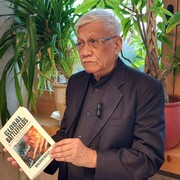
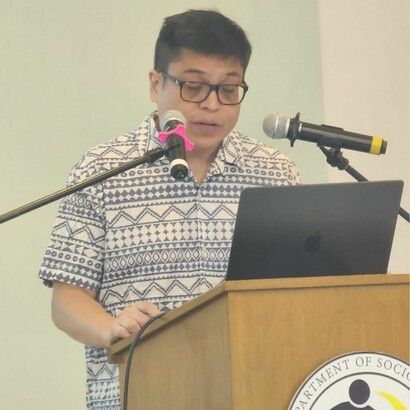
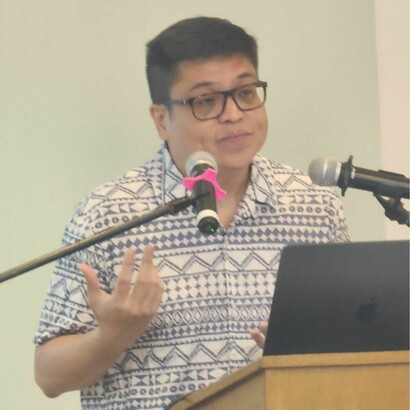
How could people in urban poor communities deplore the taking of the lives of their neighbors but at the same time support Duterte’s bloody war on drugs? University of Chicago Professor Marco Garrido, the leading specialist in Metro Manila’s lower-class communities, tries to unravel this contradiction at the heart of Tokhang (popular slang for the drug war) in an interview with fellow sociologist Walden Bello.
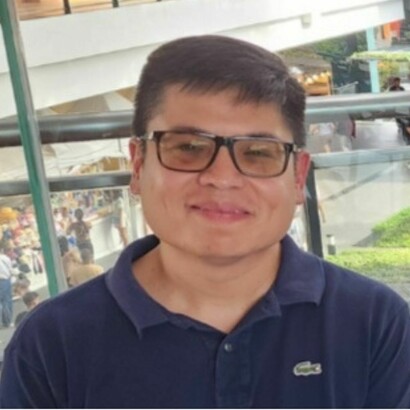
Marco Garrido is an associate professor of sociology at the University of Chicago. He is an ethnographer of the urban poor and middle class in Metro Manila. He is the author of The Patchwork City: Class, Space, and Politics in Metro Manila. He just wrapped up a second book called Bad Words about corruption, politics, and the politics of knowledge in the Philippines. His research on the drug war will be part of a third book tentatively titled “Democracy as Disorder.”
Marco, your recent lectures on the urban poor communities’ support for Duterte’s war on drugs, or Tokhang, struck a chord in me owing to my dual persona as a political activist and a sociologist. You know, as an activist, I have been very clear about Duterte in my writings. I’ve called him a mass murderer and called for his prosecution by the International Criminal Court, a stance that has brought the wrath of the so-called DDS, or “Die-Hard Duterte Supporters,” down on me.
At the same time, I am, as an academic, as a sociologist, very curious, fascinated even, by why people support authoritarian or fascist figures like Duterte, who embody the antithesis of my political values. This interview is part of an effort to understand this phenomenon.
So let me begin. In your work, you’re basically saying that the urban poor communities of Metro Manila supported Tokhang or Duterte’s war on drugs. Is that an accurate summary of what you’re trying to bring across?
Yes, I’m saying that support is real. This is not exactly groundbreaking since the surveys already show this. But I’m trying to understand that support, and I think that to do that we need to understand how people in those communities actually live. We need to understand their support for Tokhang in the context of their social worlds. My main criticism of the literature is that, for the most part, it doesn’t try to understand the urban poor’s support for Tokhang in terms of their experiences and structural conditions.
Can you tell me briefly about your theoretical approach and your methodology in carrying out the study?
Sure. It’s an ethnographic study of six barangays [local government divisions] in Tondo [one of Metro Manila’s districts]. It was part of a longer study I conducted in 2022 and 2023 about how people’s experience of democracy has changed over time. I focused on Metro Manila, interviewing both the urban poor and middle class. I spent time in informal settlements and lower-class barangays as well as in middle-class subdivisions.
When I talked to people in urban poor communities, the topics of Duterte and Tokhang came up repeatedly. So it was on my radar. People’s support puzzled me. I just couldn’t understand it. And so I decided to pursue my questions more systematically. I focused on the communities most affected by Tokhang, places where people really felt its effects. I interviewed 53 people in Tondo, but the study builds on the research I’ve been doing on urban poor communities in Metro Manila for about 20 years now.
Anyway, people’s support for Tokhang grew out of their demand for greater social order in their communities. To really understand this demand, we need to understand what people have to deal with on a daily basis. In sociological terms, we need to understand the social structure of their communities. This structure is determined, first, by poverty, meaning that they operate with very little margin for error. It takes a lot of work to stay on track in order to finish school, get a job, and simply survive. It’s very easy to be derailed by all kinds of gulo (disorder).
The other structural aspect that matters is the density of these communities. I’m not just talking about physical density but moral density. The idea of moral density comes fromÉmilee Durkheim [one of the founders of sociology]. He believed that the intensity of social interaction between a set of people gave them a sense of solidarity or “groupness” and thus a sense of obligation to the people within that group. The concept helped me understand why, despite extreme poverty, no one in these communities went hungry. Aid was freely given, not in the sense of charity so much as mutual obligation. Just as I wouldn’t let my child go hungry, I wouldn’t let my neighbor go hungry.
This same dynamic also made people sensitive to behaviors that could harm the community. Gulo [“trouble”] was concerning because it could quickly spread, affecting more than just one household but one’s neighbors and the larger community. So people had a common stake in social control or curbing gulo. There are many sources of gulo. The most common were disputes between couples and neighbors, or “rumbles,” young people fighting over territory.
Drugs were a major source of gulo. People would see it as a waste of life—sayang ang buhay—and an offense to their community. Why? Because drugs threatened people’s diskarte or effort to get ahead in life. If one of your family members started using drugs and ended up in jail, that would mean a loss not just of income but of another set of helping hands. Everyone suffered, and thus people felt betrayed. Beyond the household, people in the community at large saw addicts as a direct threat to their children, as bad influences.
They felt very strongly about it. Drugs represented not only a threat but an insult to the community. Everybody had to work so hard just to make ends meet that to see people using drugs was like a slap in the face; in the words of one informant, “How could people waste their lives this way? I think the only way to understand the strength of these feelings is to understand how people live—the social structure of their communities—and how it shapes their morality.
Marco, the picture you painted in the lecture was that of a morally dense community caring for each other and guarding against dangers to it, whether it came in the form of intra-family disputes or drugs—this comes up against a view in the middle class, even among academics, of lower-class communities as being in a state of social disorganization or disintegration. Is that a fair statement about the contrast in the way different groups of people view things?
If the idea is that these communities are characterized by anomie or social disintegration, that is absolutely not the picture I got. It’s quite the opposite. There’s care and a sense of mutual obligation growing, as I said, out of a sense of groupness, a sense of belonging to one another, like a family. People had a sense that their fates were bound up in the fate of the community at large, and that’s why they were so protective of it. People tried to keep disputes within their barangay because they knew that once it went “outside”—to the police or courts—they wouldn’t have the same protection.
People had many, many kinds of disputes with one another, but in general they would try to resolve them locally. Barangay tanod [leaders] would try to mediate domestic disputes, say, and if they didn’t succeed, the barangay chairman would try. Then there’s the barangay lupon, or local justice system. Only as a last measure would a case be sent outside the orbit of the community. Once it goes outside the community, to the police or courts, there’s no protection. It’s out of the hands of people who feel a responsibility towards you. But, of course, there are cases where this is necessary.
Okay. Just one more methodological thing before we go into more exciting stuff. Do you think that the methodological individualism that is characteristic of the social sciences, including sociology, prevents social scientists from appreciating this kind of moral density?
Absolutely. Social scientists tend to understand support for Duterte or the war on drugs in terms of individual preferences. You get a different picture on the ground. A kind of common sense takes shape over time. It’s not that person A develops an opinion. Then person B develops an opinion independently of person A, but they’re in conversation with one another and develop their outlook collectively. That’s why it feels objective—and why there’s pressure to conform to the common sense that develops, and why it has a normative power.
So, on the one hand we have a morally dense community where people have mutual care and support, but also where people don’t have to go into disputes until they have a community impact. On the other hand, you have the drug war, Tokhang, that was decreed by Duterte. Can you describe the interaction of these two forces?
We need to understand support for the drug war in terms of the demand for and supply of social order within these communities. While no one wanted to see people killed, much less their own neighbors, they demanded social order, meaning that they wanted their communities to be safe so that they could flourish.
They want their kids to finish school. They want them to get good jobs. They don’t want them to be stuck in poverty as they are. Sana lang makatapos, or they should at least have the opportunity to complete their schooling—they say this again and again; it’s their most ardent wish. Drugs represent an existential threat for this reason. If you don’t understand this demand for order and where it comes from, it’s easy to discount people’s support for Tokhang as the result of brainwashing or disinformation. But no, it reflects their experience.
Now, in terms of the supply of social order. We tend to think of social control as coercive and repressive, as constraining our individuality. We need to go back to the classical meaning of social control as essentially what allows societies to function. It’s something being exercised all the time, not just by the state but by an array of social actors: parents, siblings, relatives, neighbors. People do it in the interest of the community at large.
People saw Tokhang as something that could be used to increase social control in their communities. It could be used for the good of the community, to create more safety and peace. Now, did they accept it completely? No. They didn’t like the fact that their neighbors were being killed. And yet, insofar as they believed there was a process in which their neighbors could be treated fairly, they saw it as a kind of justice.
Nobody supported the killings. But they supported drug users and drug dealers being forced to change. It was only at the end of a process that killing could be justified. If community members were given the opportunity to change but refused, well, then they were relinquished to the outside world, so to speak. What I’d like to emphasize is that from the community’s point of view, they—the barangay officials in charge of the process—felt that they were doing a kind of public service. That’s how they saw it.
We may have this picture of bloodthirsty residents, but it’s quite the opposite. People lamented the killings, and yet they supported the drug war. This was really difficult for me to reconcile at first. What was evident was not bloodthirstiness but care for the community. If Tokhang led to the deaths of many of their neighbors, some of whom they acknowledged were innocent, then, from their point of view, the greater well-being of the community justified it. They felt that Tokhang really made a difference; it led to less drugs and crime in their communities. People felt safer. There was fear but also a sense of greater order. Now, I don’t want to be misconstrued as endorsing the drug war. I’m just saying that from the point of view of these people, it worked. I know that can be hard for some of us to accept. We need to acknowledge that this is how many people living in these communities saw it, and we need to understand this perspective.
Can you explain something you said, which was pretty much like something that came out of F. Scott Fitzgerald, which is that the “mark of an intelligent mind is the ability to hold two conflicting ideas at the same time and still be able to function.” Does that somehow relate to what you’re saying?
I appreciate the quote. Over the course of my research, I concluded that the truth has different faces, and that we need to recognize them equally rather than choose the one we prefer. At first, I had trouble reconciling what seemed to be two incompatible pictures. One was of the drug war as bloody and indiscriminate. To be clear, there is a great deal of evidence for this picture. On the other hand, from the point of view of the people I interviewed, the drug war made their communities safer, and they participated in it willingly because they cared about their community. These two pictures seemed contradictory. It was only by understanding how these poor communities functioned that I began to see how they could both be true. I began to think that maybe I did not need to choose.
At the beginning of the research, I thought that I had to choose, and that my job was to figure out which picture was true. But I came to realize that the world is complicated and people experience it differently depending on where they’re situated. And when it came to the people most affected by Tokhang, the people whose relatives were murdered, how could they possibly support the drug war and even call for its return? What was a puzzle to me was not puzzling to them at all. Supporting Tokhang made perfect sense to them. But for me, it took making the effort to understand what their lives were like.
Still, I want to be careful what my findings mean for other matters, for policy, the ICC trial, and Duterte’s legacy; I don’t know. That’s not what I studied. What I do believe is that in order to have a productive conversation, we need to see the picture in all its complexity. And so, with this research, my aim is simply to enrich public discourse on the topic specifically by adding perspectives to the conversation that have not been adequately represented. I think the more truth we have, the better, no matter the difficulties certain truths create. Better because we’re closer to reality.
In the elections of 2016, Duterte was the only one to run on an anti-crime platform. And I think that it was the main platform that he ran on. He won, and although there were many factors that contributed to that victory, certainly the anti-crime platform was central to it. Do you think that Duterte perceived the demand for social order, and that he was effectively responding to that demand? That he was channeling what lower-class communities were demanding?
I think it’s more complicated. There are different understandings at play. In Metro Manila at least, the middle and upper classes have a very different idea of social order than the lower classes. Disorder for them is, say, corruption, informal settlements, crime, and kamote drivers. The lower classes are a major source of this kind of gulo. For the lower classes, as we’ve discussed, disorder looks somewhat different. It comes in the form of precarity, drugs, and crime. So, we need to distinguish what social order means for these different social groups. We also have to distinguish what Duterte had in mind when he launched the drug war.
After all, his political persona was shaped in the context of Davao City and its own traditions. I think that what happened with Duterte’s election and then Tokhang was a kind of alignment of different constituencies. I hesitate to say that Duterte is so politically savvy that he knew exactly what different communities wanted and gave it to them. I think he acted according to the political tradition he was part of, and that different communities responded according to their own visions. I would be careful about giving Duterte too much credit, in other words.
So, do you think there was some sort of political opportunism on the part of Duterte?
I don’t know how strategic it was, but the law-and-order persona he represented clearly resonated with different audiences, again probably for different reasons. Different groups of people can support Duterte for different reasons. I can’t say I know what’s in Duterte’s mind; only that in these communities, there was a particular reading of him and of Tokhang. I hesitate to say that Duterte somehow divined this reading and acted upon it. Rather, people on the ground made use of Tokhang according to their own needs, and that’s why they supported it.
So was it a case of different constituencies projecting their needs onto Duterte? So, on the one hand, the lower-class communities saw him as providing their demand for social order. Then, you had OFWs [Overseas Filipino Workers]. And you had the ABC, or upper-income, crowd. Is it fair to say that people were reading into Duterte what they wanted him to be?
I think so. The survey data back this up. The data for Metro Manila really underscore the volatility of ABC support for Duterte as the drug war proceeded. They were his strongest supporters at the beginning, but you begin to see that support waver at critical moments. Almost universal support, and then when the Korean businessman is kidnapped and killed, there’s a 25-point dip. It goes up again, and then when Kian de los Santos [a minor] is killed, there’s a 33-point dip. In other words, ABC support is sensitive to controversy.
You don’t see this with the D and E, or lower-income, groups. Whatever scandals are happening, their support stays more or less the same. These data suggest that the urban poor and lower-class groups are supporting Duterte primarily because of the drug war, at least in the first year of Tokhang, when it was most intense.
They’re responding to how it’s affecting their communities. But the ABC group doesn’t really feel the drug war in their communities. It’s abstract to them. They’re responding to the image of Duterte and the controversy surrounding him. They cheered him on in the beginning, but once Obama started criticizing him and then Pope Francis, as scandals broke, their support started to shake. This is not what happens to urban poor and lower-class support. It stays high consistently, even now. So again, I think that we can’t lump these groups together. They come from different social worlds and experienced the drug war differently.
I’d like to push you further on this. Are we talking in terms of the controversy around Duterte, the different evaluations of him by different groups, or are we talking about contrasting class moralities here?
Social class is a very important social structure in Metro Manila. To be clear, I’m not thinking about class in Marxist terms, in terms of different modes of production, but sociologically in terms of people occupying different social worlds. The class divide in Metro Manila is very pronounced, such that people consistently misunderstand each other. Class is about power. The public narrative of Tokhang reflects the way social elites tend to see it, while the urban poor’s account of Tokhang tends to be either overlooked or discounted. This is problematic because it creates blind spots in our understanding of the issue. It creates puzzles, like how the poor could support Tokhang, that can’t be solved given our one-sided perspective.
I don’t see how we can move forward, how we can make sense of this moment historically, in the longue durée [long term], without taking into account a wider range of perspectives. There are the imperatives of the moment—that Duterte must be held to account for his actions—but we as a society need to look beyond just these imperatives in order to understand why so many people supported the drug war and why, in its wake, society remains so divided about what it meant. Arriving at this deeper understanding requires taking into account the experiences and perspectives of the urban poor communities actually affected by Tokhang, however inconvenient it may be to our own normative and political agendas. That’s how I see it anyway.
Marco, quite a number of people from the middle class subscribe to the liberal democratic ideology, and a lot of it is human rights discourse, the emphasis on rights and due process. What seems to be surprising is that the adherence to this seems to be quite thin in the Philippines, and to some extent it was class-based.
So, do you think that liberal democracy is something we might have assumed was universally accepted, but actually, we read things wrong, that we were making questionable assumptions about the acceptance of democratic norms in this country? Is that a fair statement to make, that there was an assumption that there was a more or less universal adherence to it, but that the Duterte phenomenon and its consequences made people realize that it was one discourse among many, that many of these discourses were not articulated in formal terms?
I think that’s right. Human rights advocates must really wrestle with the heterogeneity of perspectives in society. Doing fieldwork in Tondo, I spoke to a man who expressed puzzlement at the human rights framing of Tokhang. In retrospect, it’s ironic because I was asking him to help me solve my puzzle: why the poor supported Tokhang, which, to him, wasn’t puzzling at all. Now this guy was asking me to help him understand something that I didn’t see as puzzling at all! Anyway, the man brought up the topic of human rights himself.
He didn’t get it. To him, it seemed like a way of protecting the drug dealers and addicts. It seemed to go against regular people. At one point, he said, “We’re human beings too, aren’t we? What about our rights? He didn’t have an agenda. He wasn’t trying to make some kind of point. He was really just grappling with this framework.
I tried to explain to him that people were being denied due process; they were being killed extrajudicially. He said, “What do you mean? There is a process!” He was referring not to the legal process but to the process in his community. He said, “We care about these people. We try to save them. But some refuse to be saved.” So, from his perspective, Tokhang represents a kind of justice. I want to be clear that this is not a man who is bloodthirsty. This is a man who wanted to avoid killing at all costs because the people being killed were his neighbors, and he himself was exposed to this risk. This was a man who, we might say, cared deeply about “human rights” in the broader sense.
So that struck me. His puzzlement made an impression on me, and I tried to understand it. The legalistic human rights framework just didn’t make sense to him because there was already an informal community process that he found meaningful. To him, the human being was at the very center of this process, and so he can’t see the effort to impose a human rights framing on the drug war as anything but politically motivated. It took me a while to really understand this.
So, yes, the legalistic framing of human rights isn’t the only way of thinking about it, and it’s very individualistic at that. As such, it doesn’t resonate with a lot of people in the communities I studied because, as I’ve said, they tend to think of themselves as part of the community at large. The community has its own process for dealing with disorder. Just because they don’t buy the human rights framework, however, doesn’t mean that they care any less about human beings. They just think about it in a different way. The legalistic discourse of human rights is built on a set of assumptions about society that they simply don’t share.
Thank you. The last thing I’d like to ask you, Marco, is— let me put it this way: you would rather have others take what you have and formulate it into policy, but let me just ask you, are there certain things that would be very important for you that should be part of a policy agenda that addresses what you found?
With respect to the drug war or Duterte and the International Criminal Court?
Both.
With respect to the drug war, there are a set of structural problems that need to be addressed in these communities. Poverty. Insecurity. It goes without saying that providing people with greater security needn’t involve a murderous campaign. Ultimately, people want a more peaceful community where they can build their lives and flourish. No one on the ground said they wanted the killing. Why would they when they and their neighbors were potential targets? They wanted a safer community, and they supported Tokhang only insofar as it made their communities more secure.
Now, with respect to the ICC, let me say a couple of things that may seem at odds but are really not. First, the drug war cannot be condoned. Its orchestrators should be called to account. Second, the perspective of people in the communities affected by Tokhang, including their support of it, should be taken into account. It’s essential that we get as full a picture as possible in order to correct for the blindnesses and distortions of our own standpoint.