English
 Español
 Français
 Deutsch
 Italiano
 Português
The IMF's actions affect the lives and livelihoods of billions throughout the developing world, yet they have little say in its actions. 1
Partially concluded negotiations between the IMF and Senegal, a sovereign country, motivated me, as a layman on economic matters, to take a closer look at the role played by the Bretton Woods international financial institutions, and in particular the IMF. The negotiations on debt repayment, intended to facilitate new financial support, resulted in the collapse of the Senegalese government after the president dismissed the prime minister. A political analyst wrote that 'Senegal's debt crisis has moved its leaders from partners to rivals2, despite their joint anti-establishment campaign for the presidential election in 2024.
Although the popular Sonko, chief ideologist of the PASTEF party, was banned from running for the presidency, he tailored a campaign strategy around the slogan 'A vote for Diomaye Faye is a vote for me'. During the negotiations with the IMF team, their differences became obvious. Sonko remained true to their joint campaign promise on economic sovereignty, while President Faye appeared willing to compromise with the IMF and accept structural reform proposals that Sonko considered humiliating.
The question remains why the IMF decided, at this particular time, to halt the release of a new loan and why it is considering restructuring its programme in Senegal. An internationally renowned Senegalese economist has proposed that an evaluation be undertaken to establish why the IMF confronted the anti-establishment policies of Sonko, which resulted in his dismissal as head of government. It is conceivable that the West, including the old colonial master France, invested considerable energy in devising the best approach to remove Sonko's government so as to allow Western corporations to continue their exploitation.
Since its establishment, and particularly since the early 1980s, the IMF has proven to be an efficient instrument for ensuring the economic dominance of transnational corporations in the developing world. Some observers of IMF activities in Senegal have hinted that the IMF deliberately presented faulty data on government transactions since 2018 to avoid a bad image of the former president, Macky Sall – a loyal supporter of France – emerging in the public realm3. Had these events taken place in the last century, when the French henchman Jacques Foccart ensured France's control over former French colonies in Africa, Sonko would likely have been removed in a more violent manner.
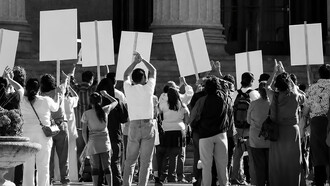
Huge demonstrations at IMF summit meetings in various countries over recent decades show that the popularity of the Bretton Woods institutions is in decline. The unpopularity of these financial institutions has grown since insider economists such as Joseph Stiglitz provided detailed evidence showing that the strategic policies of both Bretton Woods institutions have been detrimental to sustained development in sovereign countries of the Global South and that economic growth, wherever it has taken place, has not halted poverty or inequality.
Background
At the end of the Second World War, following the fall of the Axis states of Germany, Japan and Italy, the US aimed to control the economic and political affairs of the future of the planet. Under the banner of freedom, the USA and the Western countries presented themselves as bearers of the advancement of civilisation. To this end, the UN launched the preparation of the Universal Declaration of Human Rights under the chairmanship of the US president's wife. The IMF and the World Bank were to take care of economic matters, while the UN was charged with political concerns, including human rights and overall development.
Today, 80 years after their establishment, the Bretton Woods institutions remain strong, although their position is being challenged by individual countries offering partnerships to countries in need of support. China and the BRICS countries stand out as being often willing to come to the aid of indebted countries.
During the immediate post-war period, the Bretton Woods institutions played a relatively limited role. They became more important in the 1980s, after the economic crisis of 1982. Thus, despite the limited powers it was given in 1944, the IMF became highly visible throughout the developing world from the 1980s onwards. Its task was to assist countries that faced balance of payments difficulties. The IMF became a strong supporter of neoliberal principles: "the adoption of fiscal austerity, rolling back the state, privatisation, deregulation and trade liberalisation”4.
My arguments
This article emphasises the rights of peoples to self-determination, by virtue of which they have the right to determine their political status and to pursue their economic, social and cultural development.
This paper presents information showing that the behaviour of the IMF is in direct conflict with the Universal Declaration of Human Rights (1948) as well as the UN Declaration on the Right to Development (1986). The policy recommendations of the IMF do not recognise the inherent dignity and equal rights of all members of humanity, although the Universal Declaration of Human Rights states in its preamble that these basic values form the foundation of freedom, justice and peace in the world. The UN's Declaration on the Right to Development puts people at the centre of the development process while declaring that every country has the right to determine its development policies. This declaration is constantly violated by the IMF.
Since the 1980s, the IMF has been one of the most effective instruments for preparing the ground in the Global South for Western transnational corporations. It ensures the management and transfer of resources and wealth from poor and less developed countries to the richest and most powerful nations. For almost fifty years, the IMF has promoted policies aimed at freeing the economic sphere from all government controls.
Under the influence of IMF policies, profit-making has become a defining element of democracy, understood as unrestricted freedom, with a market governing economic relations and the role of the state reduced as much as possible. IMF policies, especially those practised since the early 1980s, when neoliberalism took a firm hold of economic policy, especially in the US, UK and other Western industrialised countries, resulted in a deterioration of living conditions in the Global South, especially in African countries.
How the IMF describes its role
The IMF considers its objective complementary to that of the World Bank5. Both institutions aim to raise living standards in member countries. In doing so, the IMF focuses on macroeconomic stability, while the World Bank concentrates on long-term economic development and poverty reduction. The IMF provides short- and medium-term loans to help countries that have difficulty meeting international payment obligations. The policies guiding the allocation of these loans are based upon conditionality to be met by recipient countries. These conditionalities rest on principles of fiscal austerity, market liberalisation and privatisation.
In agreement with the countries concerned, the IMF issues an annual report card stating a country's fiscal position – budget deficit, outstanding debts, and how much money is flowing in and out of the country. IMF teams advise client governments on how to structure economic policies. Its staff are mostly economists but rarely have experience of developing countries. When argument alone is not sufficient to secure a country's agreement to its proposals, the IMF does not refrain from applying pressure to make the country adopt its policies. Policies promoted by the IMF are approved by its governing board, with the US holding veto power over critical policy decisions. This underlines the fact that these two institutions still serve the interests of their founders, the US and the political West. Thus, the head of the World Bank is always an American citizen, while that of the IMF is traditionally a European.
The IMF exerts significant influence on a country's welfare. It is described as the world's 'financial firefighter'. The IMF attends to country-specific economic problems that threaten global financial stability. During its initial two decades – the 1950s and 1960s – the world saw the fastest sustained growth in global living standards in recorded history6. This growth also had a positive effect on the developing world. Income per person grew by 3 per cent a year. Although there were advances, they were uneven and unequal and never remotely amounted to a catch-up with the status of a developed country.
Take wealth from others
IMF policies are based on market supremacy. They have become ends in themselves rather than means to create a more just society, critics allege. In its efforts to promote global stability, the IMF tends to ignore the particularities of the developing world. Since IMF team members generally lack expertise in development issues, their recommendations often fail to take into account the needs of local populations. Rarely, if ever, do visiting IMF teams involve national macroeconomists when preparing their country-specific recommendations. One investigator observes that "the IMF functions as a guarantee to creditors, and it is for this reason that critics argue that the IMF effectively works as a debt collective agency for international banks”7.
Countries in the Global South feel that they have no choice but to follow IMF strictures. One of the most authoritative critics of the IMF is Nobel Prize winner and former World Bank director Joseph E. Stiglitz8. He observes that inequality is growing within the dominant economic system of the West. He concludes that IMF policies are not based on the best economic science; on the contrary, many of the doctrines they promote have been thoroughly discredited by economic research over the preceding quarter century.
In his search for an explanation, he identifies 'power' as the root of these inequities. Those with power use that power to strengthen their economic and political positions. No political power in the West, or indeed anywhere, holds altruistic views on the welfare of distant states in the Global South. What matters above all is how these countries can benefit the welfare of Western nations by providing essential raw materials.
Exploitation takes place under the cover of a refined vocabulary based upon principles of human rights and democracy. With reference to the internal distribution of wealth within the US, he states that there are two ways of becoming rich: to create wealth or to take it from others. This conclusion is equally applicable to the relationship between the rich countries of the world and the Global South. From the 15th century until today, European countries – joined, and later overtaken, by the US during the last 80 years – have built their wealth by taking from others on terms they themselves determined, aided by international financial institutions.
Undermining national sovereignty
Stiglitz, along with many other observers, notes that the conditionalities imposed by the IMF undermine national sovereignty. Just as the UN was established to secure political stability, the IMF was founded to secure global economic stability. Although most of the work of the Bretton Woods institutions takes place in the Global South, it is the developed countries that govern these institutions, with the USA being the only country holding an effective veto.
In the 1980s, Ronald Reagan and Margaret Thatcher preached free-market ideology. The IMF and the World Bank became the missionary institutions pushing these ideas on reluctant poor countries. Animosity developed towards the two institutions, the IMF and the World Bank. The 1980s saw the birth of the Washington Consensus, an agreement between the IMF, the World Bank and the US Treasury regarding the 'right' policies for developing countries. The US Treasury was instrumental in developing the instruments used by these two institutions to 'support' developing countries. For a period, the US Treasury Secretary was drawn from the world's largest investment bank, Goldman Sachs. These individuals naturally see the world through the eyes of the financial community. Stiglitz argues that 'the international economic institutions are all too often aligned with the commercial and financial interests of those in the advanced industrial countries9.
Violating human rights and UN Resolution 41/128
It is difficult for the IMF to create a more equal and just world, since it represents the interests of Western wealth and power10. Stiglitz compares the behaviour of the IMF to modern warfare. Drones and fighter jets drop bombs from 50,000 feet, with no contact with their target and no feeling for the victims. From five-star hotels, policies are imposed on poor countries with no sense of the damage they inflict on the welfare of the population. The IMF continues to ravage the world, perpetuating poverty in the Global South. Its conditionalities often trigger spontaneous riots, especially when the IMF demands the abolition of food subsidies before a loan can be renewed or disbursed. The implementation of such policies reflects a total disdain for the values of the Universal Declaration of Human Rights.
Over recent decades, the debt of almost half of Africa's countries has increased relative to GDP11. Inequality has also increased, and sovereignty has diminished. Whenever an IMF team has visited an African country, rights and self-determination have been diminished. This is in flagrant violation of UN Resolution 41/128 on the Right to Development, which states that
States have the right and the duty to formulate appropriate national development policies that aim at the constant improvement of the well-being of the entire population and of all individuals, on the basis of their active, free and meaningful participation in development and in the fair distribution of the benefits resulting therefrom.
Justification for this resolution is based upon the Universal Declaration of Human Rights. Thus, it is stated in the opening paragraphs of the resolution that
…under the provisions of the Universal Declaration of Human Rights, everyone is entitled to a social and international order in which the rights and freedoms set forth in that Declaration can be fully realised.
Fighting for repayment to Western creditors
The current crisis between the State of Senegal and the IMF clearly illustrates the IMF's true priorities regarding highly indebted countries: not the poverty of the people, but rather how it can recover the loans provided by Western creditors, mainly banks and investment institutions. A UK-based NGO and the Senegalese organisation FRAPP published a study12 presenting verifiable data showing that, if Senegal repays its foreign debt in full, private creditors stand to profit by $4.4 billion. The document reveals the mechanisms by which international banks, investment funds and asset managers realise massive profits on the back of the Senegalese people.
Of a total external debt of $26.5 billion at the end of 2024, the report indicates that 41% is owed to private creditors, 40% to multilateral institutions, and 19% to other governments. The structure of private loans (high interest rates and short maturities) means that in 2026, 62% of external debt payments go to private creditors. Regarding Senegalese bonds, the report reveals that only 34% of holders are identifiable, with two-thirds remaining hidden. Among the five largest known holders are the US giants Capital Group ($193 million), BlackRock13 ($142 million), TCW ($125 million) and JP Morgan ($104 million), as well as the French company Amundi ($88 million). A statement by BlackRock CEO Larry Fink gives an idea of the values held by these investment companies. In a letter to shareholders, he declared that his company 'will not support policies that are good for society but bad for BlackRock14.
The case of Senegal versus the IMF clearly shows that the IMF has adopted a position defending the interests of creditors, "thus making it accomplice by relegating the vital needs of populations to the background"15, thereby disregarding the dignity and respect owed to entire populations, who deserve protection under the principles of the Universal Declaration of Human Rights.
The meaning of indebtedness to Africa
More than 80 years after the establishment of the Bretton Woods institutions, one might expect that poverty in Africa would have been significantly reduced. However, a closer look at the actual situation shows that this is far from the case.
Africa's total debt is more than $1 trillion, with debt repayment of $163 billion per year, which represents debt servicing costs more than three times larger than they were in 2012. The overall debt of all developing countries reached $11.4 trillion in 2023, four times the 2004 total of $2.6 trillion. This extraordinary increase has induced a debt crisis in over 30 of 68 low-income countries16. By 2004, per capita GDP across sub-Saharan Africa was less than half of what it was in 197417. In 2024, 20 of 48 African countries paid more in debt service than they spent on health and education combined18.
Africa’s debt has tripled since 2008. Twenty-eight African countries spend more on debt service than on health. The African Union Commission has confirmed that 57% of Africa's population lives in countries where debt servicing costs exceed essential social spending. The average share of government expenditure devoted to interest payments doubled between 2012 and 2023. Nine African countries are formally in debt distress. Public debt across sub-Saharan Africa doubled as a share of GDP between 2012 and 2022, from 29% to 60%19.
The IMF, as well as the World Bank, do everything possible to conceal this picture. Thus, their annual reports employ terminology suggesting that everything is going well. A few examples of annual report titles will suffice to illustrate this point. In 2008, the annual report was entitled 'Making the global economy work for all'. In 2011, it was entitled 'Pursuing Equitable and Balanced Growth', and in 2012, the annual report was headed 'Working together to support Global Recovery'. The World Bank applies the same strategy to obtain public support for its work. In 2025, its annual report was entitled 'Creating jobs, Growing economies'.
Good governance for the profit of transnational companies
From its very beginning, the IMF has been under the watchful eye of the US Treasury, which was charged with the task of ensuring that IMF operates in support of US global dominance. Therefore, the IMF does not promote the establishment of protectionist industrial policies in developing countries, although this is how the Western industrial countries built their own industries. The rich countries of the West came to where they are today by protecting their emerging industrial capacity. Now that they have climbed to the summit, they kick away the ladder they climbed, depriving others of the means to follow20.
A renowned economist has argued that virtually all successful attempts at recent industrialisation have used interventionist state policies to foster industrial development21. Although industrial countries such as Japan, the US and European countries developed their economies by setting up barriers to protect emerging national industries against imported foreign products, they strongly oppose the establishment of such barriers by poor countries of the Global South. These countries are thus defenceless against products from Western industrial nations, which make it impossible for them to develop national industries.
The conditions for obtaining financial support facilitated by the IMF require eliminating as many government regulations as possible and letting the market take care of the balance. 'Good governance' is defined by the Bretton Woods institutions as a government that merely creates the necessary legal basis for a market-driven economy.
BRICS demands reform of IMF
In 2001, Brazil, Russia, India and China initiated close economic cooperation. They were joined by South Africa in 2006, together forming BRICS, which in 2024 was joined by Iran, the United Arab Emirates, Ethiopia, Egypt and Indonesia. The original purpose was to create a platform for major non-Western economies to coordinate their positions in international forums and challenge Western dominance of international institutions.
Together, they established the New Development Bank (2014) and the Contingent Reserve Arrangement as alternatives to the IMF and the World Bank, but without the policy conditionality that characterises Western lending institutions. BRICS seeks to reshape global governance by promoting a more multipolar and equitable world order. BRICS signifies ideological resistance to the neoliberal dominance of the Bretton Woods institutions and the undemocratic governance of the boards of both the IMF and the World Bank. China holds less than 7% of the voting power in the IMF22.
One key characteristic of BRICS is the importance given to the principles of equality and mutual benefit. Although the wealth brought to the organisation varies among the countries, each country has one vote in the governing body. To illustrate this, China accounts for over 70% of the wealth produced by all the founding countries. The Chinese economy is five times larger than that of India and, respectively, eight, nine, and almost forty-three times larger than that of Russia, Brazil, and South Africa. China's benevolent, and largely neutral, leadership stands in stark contrast to the USA's dominant position in the Bretton Woods institutions.
The US veto has hindered efforts to democratise the IMF and continues to marginalise the voices and interests of developing nations. By and large, these institutions have continued the work begun by the colonial powers in extracting economic resources from the Global South. Moreover, they have continued the work begun by the former colonial powers, imposing Eurocentric values and institutions on local cultures.
BRICS demonstrated its potential as a global power amid the Russian invasion of Ukraine23. However, the ongoing conflict between the US/Israel and Iran has shown that BRICS member states represent different political systems. A BRICS meeting of ministers of foreign affairs in New Delhi in mid-May 2026 was unable to agree on a joint statement on the Iran war. The impact of BRICS on global adherence to human rights and UN resolutions, and on enabling the disentanglement of African countries from the quicksand of the Bretton Woods institutions, will ultimately depend on whether BRICS countries can reconcile their political differences.
How does Africa get out of the IMF entanglement?
Since the great majority of loans offered by the IMF are repaid, it is in fact the workers and taxpayers of recipient countries in the Global South who bear the brunt of collaboration with the IMF. They are the ones who ultimately provide the IMF with the money that is returned to Western creditors.
How does Africa get out of this quagmire? First, African countries with IMF agreements need to work together to ensure that African voices are heard at IMF board meetings. This is a basic requirement if African countries are to be assured sovereignty over their own economic and social development. Without joining forces, the status as independent states will be of no practical importance. They might as well have remained under colonial status. The IMF should stop imposing outdated austerity policies, which merely strengthen the position of transnational corporations, while poverty and inequality tighten their death grip on African populations.
The IMF's structural adjustment programmes have, for four decades, undermined development and sovereignty in Africa. The default approach is to cut public spending in the social sectors, privatise government-run companies, reduce government regulation and let the market run the show, and freeze the salaries of public sector workers, such as teachers and health staff, despite severe shortages in those areas24.
The role of the UN
Just as equal development of all countries was an essential justification for the establishment of the UN, it cannot be ignored that Africa's absence from the UN Security Council undermines the continent's status and weight as a forceful negotiator with the IMF. The UN Declaration on the Right to Development was stillborn in 1986, overrun by market fundamentalists. If reborn, however, it could come to play an important role in recognising Africa's legitimate status as a global player. In this way, the UN is expected to assume a key role in transforming global institutions, such as the IMF and the World Bank, so that they more equitably reflect demands for greater voice and representation.
The intellectual capture of Global South leaders
As mentioned above, a more equal and fair collaboration with the IMF could be facilitated by giving a stronger voice to the populations of the countries being examined and evaluated. This could be achieved by having economists and sector representatives participate in IMF studies of a particular developing country. But this very point is fallacious. Many developing countries have several expert macroeconomists who possess an intellectual framework generated elsewhere and aligned with the interests of global capital. It is not uncommon for political and economic leaders of the Global South to have undertaken undergraduate training in their home country, followed by graduate training in the USA or Europe, professional experience in an international financial institution, and an eventual return to government service at home.
This is a way of raping the intellectual leadership of the Global South. For this reason, change expected from within a poor developing country does not happen. Instead, we often observe that national development experts share commitments to fiscal discipline, liberalisation, deregulation and market-led development. National economists celebrate growth, while unemployment and inequality increase among the population. Vijay Prashad concludes that the battle for the future is not only a contest over resources, institutions and power. It is also a contest over ideas. The battle for the future of Africa and other countries of the Global South 'requires creating new centres of intellectual authority capable of generating concepts, theories and strategies from the experiences and aspirations of the peoples of the Global South25.
Reparation and cancellation of debts
Finally, I believe it is imperative for indebted African countries to join forces in order to enter collective dialogue with the IMF on radical renegotiations, or even debt cancellation. Such dialogue with the IMF and its backers among powerful creditors should ideally take place in the context of demands for reparations for the suffering and losses caused by the trade in African slaves, which victimised the entire continent for centuries and continues to have an impact today. Europe and the USA have never seriously engaged with this subject. Now, in the context of debt cancellation and reform of the Bretton Woods institutions, there is a chance to do so.
Notes
1 Joseph E. Stiglitz, Globalisation and its Discontents, New York, 2002.
2 Senegal’s debt crisis has moved its leaders from partners to rivals, by Lesley Anne Warner, in Emissary, Published by the Carnegie Endowment for international peace. Jun. 8, 2026.
3 Ndongo Samba Sylla, Peter Doyle. The IMF should clean its own house. Networkideas.org, March 26, 2025.
4 Ray Kiely. The Clash of Globalisations, Neo-liberalism, the Third Way and Anti-Globalisation, Leiden, 2005.
5 International Monetary Fund: The IMF and the World Bank. 2022.
6 People and Media. From Bretton Woods to BRICS : A journey through global economic transformation. October 28. 2024.
7 Ray Kiely. The Clash of Globalisations, Neo-liberalism, The third way and anti-Globalisation. Leiden, 2005.
8 Joseph E. Stiglitz. Globalisation and its discontents, New York, 2002.
9 Joseph E. Stiglitz. The price of inequality. Allen Lane, New York. 2012.
10 Joseph Stiglitz, Globalisation and its Discontents, New York, 2002.
11 Gross Domestic Product signifies the monetary value of all finished goods and services produced within its borders in a specific time frame.
12 The Front for a Popular and Pan-African Anti-Imperialist Revolution (Frapp) and the British NGO Debt Justice. Tirer profit de la dette: à qui profite de remboursement de la dette di Senegal, April, 2026. Quoted from Point Actu, 20 April, 2026.
13 According to Dough Casey Black Rock is the world’s largest asset manager, with nearly $10 trillion in assets under its management. Casey hints at the political orientation of Black Rock in an interview with the heading 'Dough Casey on the Black Rock and the Rise of Fascism in the US'. GoldSeek.com; November 2023.
14 J.P. Morgan and BlackRock committed to Ukraine’s “reconstruction” in 2022, overseeing the creation of the Ukraine Development Fund with $400+ billion in proposed investments over the next decade. BlackRock admitted that “the company does not want the conflict to end”: information provided by Achim Weber, Oct 14, 2024.
15 For more information on the secret loans taken by the Macky Sall (now candidate to the post of UN Sec. General), see Demba Moussa Dembele: Des milliards cachés: Le scandale de la dette publique dissimulée du Sénégal. Heinrich Böll Stiftung, Dakar, November 2025.
16 Tricontinental. How the International Monetary Fund underdevelops Africa. 2025.
17 Grace Blakeley, Vulture Capitalism. How to survive in an age of Corporate Greed. Bloomsbury Publishing. Dublin 2024.
18 Dembele (see foot note 15).
19 Pan African Visions, by James Woods, 2025.
20 This is the key conclusion presented by Ray Kiely. Rethinking Imperialism, Palgrave Macmillan, New York, 2010.
21 Robert H. Wade. The Role of Industrial Policy in Developing Countries, 2015, and UNIDO’s promotion of industrial policy as a key instrument for sustainable development, 2024. Here referenced from Tricontinental, To imagine a New Development Theory from the Global South, 2026.
22 Oluyemi, O.A (2025). BRICS and the Transformation of Global Financial Governance: Challenging the Bretton Woods Institutions. International Conference on Economic Sciences and Management in the Changing World 2025, (pp. 21-35). Futurity Research Publishing.
23 Kristen Hopewell. The ties that bind: reassessing the political significance of the BRICS amid Russia’s War on Ukraine. February 2026.
24 ActionAid International. Fifty Years of Failure: The IMF, Debt and Austerity in Africa. October 2023.
25 Tricontinental. From Brain Capture to Intellectual Sovereignty, 2026.