English
 Español
 Français
 Deutsch
 Italiano
 Português

In a world where progress is so fast that it's hard to keep up, challenges arise, and not all of them are clear. Understanding a current situation that is constantly changing leads us to reflect on what we feel: sometimes it is confusion, sometimes it is fear or anxiety. We ask ourselves what and where life is going. That is why one of the most challenging dialogues is the one between faith and science. It is one of the most important ones and we should not dismiss it.
Questions arise, and it is logic. Is faith prepared to provide answers to a moving world? Is science ready to give a correct perspective to the human being? Between these two points that seem to be very far apart, there is a line that proposes a path to face the challenge. The development of the sciences must be maintained with academic rigor, with ethical procedure at the forefront, and with honourtable behaviour; so does faith. Thus, a conclusion may arrive: reason cannot deny what becomes evident; faith does not contradict science. The truth is that, throughout history, it seems that these perspectives are at war—faith against science—and this is not necessarily the case.
On the other hand, people of faith—believers—cannot pretend that a scientific opinion that pleases them and that has not even been sufficiently proven acquires the weight of a dogma. Between faith and authentic scientific research there is no necessary opposition; on the contrary, both can jointly contribute to a fuller understanding of reality, provided that they respect the methods and areas specific to each one.
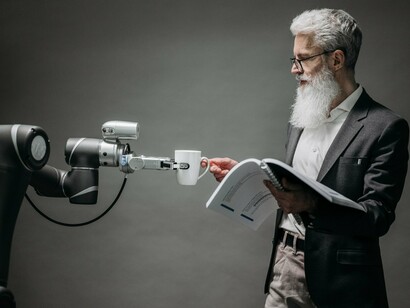
In this relationship between science and faith, we must take into account the challenges posed to us today by new technologies. For instance, Pope Francis, in his own time, was aware of the accelerated changes taking place in our societies. No one is oblivious to these modifications. All human beings are immersed in them, sometimes as actors and sometimes as consumers. In the face of progress such as artificial intelligence, we must manage a more human perspective.
Francis said that when something is accelerated, we have to worry, because there is no time to stabilize. When changes occur at an accelerated pace, the assimilation mechanisms do not have enough time and we end up becoming slaves. And, if it is dangerous to be slaves of a person or a job, it is also dangerous to be slaves of a culture. I believe it is even more dangerous.
"The criterion of cultural progress, including artificial intelligence, is the ability of men and women to manage, assimilate, and govern it. In other words, men and women are lords of creation, and on this point there must be no compromise. The person's dominion over anything. Serious scientific change is progress. We must be open to it," Pope Francis said.
The challenge of faith in the face of progress is the dimension of service. Leo XIV invites us to think about how technological progress is changing our perception of the world. Faith comes to occupy the places where the frontier of technology does not reach. Because, in the face of science, even scientists are walking on unknown paths.
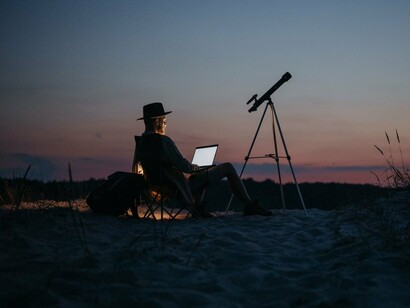
Science requires faith. Faith that the hypotheses were well posed, that calculations are revealing to us what we still do not really know. An astronomer must have faith that the procedure that leads him to presume that a celestial body is somewhere in space is correct, even before physically detecting its probable discovery.
In a recent book on Pierre Teilhard de Chardin, the French historian Mercè Prats describes the Jesuit and paleontologist as an explorer whose scientific and religious training allowed him to develop a personal and bold thought for his time. Today human beings can and must understand dialogue, especially the one that has to take place between science and faith. It is about reflecting on what we believe and what we do with progress. It is about taking the maneuver instead of letting the flow overwhelm us. We need to be something like courageous explorers, endowed with a solid intellectual and faith formation.
The dialogue between science and faith leads us to find meaning. The lines that unite faith and science are meant to design new maps of hope for the unknown territories into which we are entering.
We need to break down walls and build bridges in the field of formation: React with creativity, opening up new possibilities for the transmission of knowledge and meaning in schools, universities, vocational and civil formation, school and youth ministry, and research. In other words, we must come out of our well-thought and sterilized laboratories to meet the other and promote dialogue, a dialogue that demands intellectual honesty, trust that the other person is acting in good faith, and the courage to change, if necessary, our own point of view.
The dialogue between faith and science requires a lot of generosity. The kind of unselfishness that makes me see the other and prompts me to understand my neighbor, my fellow. In times when we struggle to think and offer creative answers, because it is more comfortable for us to turn to artificial intelligence to solve our problems, we must strive even harder to be creative.
Creativity is seeded by observing, in the same measure that science and faith are. Human beings must understand that dialogue is not feeding a machine with information; sympathy is about communicating with other persons. So scientists and believers must understand that the challenge is to open our ears so that we can start listening; we need to start looking at each other in the eye instead of replacing presence with a screen.
The scientist seeks to unveil mysteries, faith too. Both can dialogue from their peripheries, from their borders. Faith and science connect dots; lines can be drawn to find purpose, not to separate. Thus, rather than having dividing and antagonistic lines, what there is between science and faith are thresholds, doors that can be opened with respect, honour, rigor and with the intention of having a connection with our true nature.