English
 Español
 Français
 Deutsch
 Italiano
 Português

Few people form their perceptions of foreign countries through diplomatic agreements or official government statements. More often, those impressions emerge from everyday encounters. A conversation with a traveller who speaks proudly of their homeland, shares stories about its culture, and shows respect for local customs can leave a lasting positive impression. Equally, an unpleasant interaction may shape perceptions in the opposite direction. In both cases, the country itself has not changed, yet the image associated with it has.
This reality highlights a frequently overlooked dimension of tourism. While discussions about tourism often focus on its economic benefits, its diplomatic significance receives far less attention. Tourism creates opportunities for people from different societies to interact directly, exchange perspectives, and challenge preconceived notions. In doing so, it serves as a form of informal diplomacy that extends beyond embassies and official negotiations.
At the same time, governments increasingly recognise tourism as a strategic tool for shaping national image. Through cultural events, international conferences, sporting competitions, and heritage promotion, states seek to present themselves to global audiences and strengthen their international standing. Tourism diplomacy therefore operates on two interconnected levels: through the actions of ordinary travellers who become unofficial ambassadors of their countries and through the efforts of governments that use tourism to project identity, values, and influence. Together, these dimensions demonstrate that tourism is far more than an economic activity; it is also a powerful instrument of diplomacy.
Building on this dual nature of tourism diplomacy, where both individuals and governments contribute to shaping a country’s image, it is important to begin where perceptions are most immediately formed: at the level of human interaction.
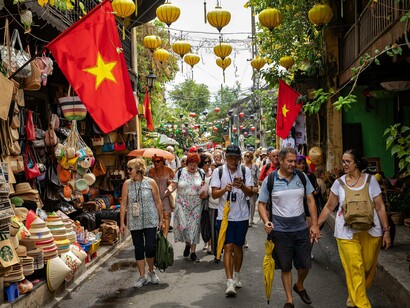
In most cases, people do not encounter diplomats, official representatives, or carefully curated state messaging when forming an opinion about a foreign country. Instead, their understanding is shaped through ordinary interactions with travelers, students, workers, and visitors from that country. These encounters, although informal and unplanned, often become the foundation upon which broader perceptions are built.
First impressions play a decisive role in this process. A single conversation with a visitor who speaks with pride about their homeland, shares cultural practices, and expresses curiosity and respect toward others can significantly influence how a country is perceived. Without any formal intention, that individual becomes a carrier of their country’s image. In that moment, they act as an unofficial ambassador, presenting not an official policy but a lived expression of their culture, values, and identity.
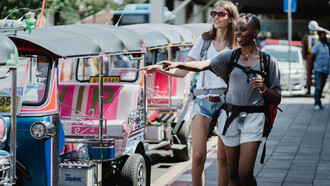
This process is not one-sided. When individuals travel, they often share stories about their country of origin while also absorbing impressions from the host society. These exchanges are rarely strategic; they emerge naturally through curiosity and human connection. Yet they carry diplomatic weight. A traveller who expresses pride in their culture, speaks respectfully about their society, and engages openly with others can leave behind a positive and lasting impression. In contrast, a traveller who displays arrogance, constantly criticises their homeland, or behaves disrespectfully may unintentionally reinforce negative stereotypes and discourage interest in their country.
In this sense, tourism diplomacy operates through a fragile but powerful mechanism: everyday human encounters. These interactions do not reflect official state positions, yet they often influence whether a country becomes a place others wish to visit or one they choose to avoid. First impressions, formed in moments that seem insignificant, can quietly shape international perceptions in ways that formal diplomacy alone cannot fully control.
While individual travelers contribute to shaping perceptions through informal interactions, governments play an equally important role in structuring how a country is seen from the outside. If personal encounters create spontaneous impressions, state action seeks to guide and amplify those impressions at scale.
This is where tourism becomes a deliberate instrument of cultural diplomacy. Through festivals, heritage preservation, museums, and international cultural programmes, governments actively construct narratives about their countries. These initiatives are designed not only to attract visitors, but also to shape desire: a desire to see the country, to understand its history, to experience its music, to explore its traditions, and to engage with its cultural identity. In this sense, tourism policy becomes a form of storytelling, where the state presents itself to the world through curated experiences and symbolic representation.
Beyond cultural promotion, major international events further reinforce this diplomatic function. Sporting competitions, global summits, and international conferences transform host countries into global stages. A recent example is the 2022 FIFA World Cup in Qatar, which drew worldwide attention not only to football but also to the country itself. The event challenged preconceived perceptions and encouraged global audiences to reconsider how a Middle Eastern and Arab Muslim country could successfully organise such a large-scale international event. In doing so, Qatar demonstrated how sport can function as a powerful tool of visibility, soft power, and diplomatic communication.
Similarly, international conferences held in cities such as Geneva, Rome, or across Asia, Africa, and the Middle East highlight another dimension of tourism diplomacy. The way a country hosts delegates, organises logistics, presents its infrastructure, and welcomes visitors contributes to a broader perception of competence, stability, and openness. These events are not only diplomatic in content but also in form: the act of hosting itself becomes a message about national identity and global positioning.
This process is often described as nation branding the effort by states to shape a coherent and attractive international image. Through tourism, governments project narratives of innovation, cultural richness, hospitality, and modernity. They invest in infrastructure, promote heritage, and curate experiences that encourage visitors to engage emotionally and intellectually with the country.
In this way, tourism becomes more than movement across borders. It becomes a diplomatic performance in which states communicate who they are, what they value, and how they wish to be seen by the world.
The most powerful form of tourism diplomacy emerges when the actions of governments and the behaviour of individuals reinforce one another. At this point, perception is no longer shaped separately by official state messaging or by isolated personal encounters, but by a combined experience that confirms a coherent image of the country.
A clear illustration of this dynamic can be seen in the 2022 FIFA World Cup in Qatar. At the governmental level, the event was the result of extensive planning and investment. Infrastructure was developed, stadiums were built to international standards, security systems were reinforced, and transport and hospitality networks were designed to accommodate a global audience. From an institutional perspective, Qatar presented itself as highly organised, capable, and committed to delivering a world-class international event.
However, what made the impact of the tournament particularly significant was not only the state’s capacity to host it but also the human experience surrounding it. Visitors and fans interacted daily with local communities, service workers, and residents. These encounters contributed to shaping a broader perception of the country, one that went beyond infrastructure and logistics. The hospitality, openness, and cultural engagement experienced by many visitors reinforced the image of Qatar as a welcoming and globally connected society.
In this sense, the World Cup became more than a sporting event. It functioned as a convergence point where institutional diplomacy and human interaction met. The state projected a vision of modernity and organisational strength, while individuals contributed to a lived experience that either validated or complicated that image. The overall perception of the country was therefore not produced by one actor alone, but by the alignment between government performance and social interaction.
This dynamic is not unique to Qatar. It reflects a broader pattern in contemporary international events, where success depends not only on infrastructure and planning but also on the attitudes of the people who inhabit and represent the country in everyday interactions with visitors. Tourism diplomacy, at its most effective, occurs when these two dimensions are in harmony.
To better understand how tourism diplomacy operates in practice, it is useful to move from theoretical discussion to real-world examples. While the interaction between individuals and governments reveals the structure of tourism diplomacy, case studies allow us to observe how these dynamics function in specific national contexts. Morocco and Japan offer two distinct yet complementary illustrations of how states and societies contribute, in different ways, to shaping international perceptions through tourism.
In the Moroccan context, tourism diplomacy is strongly shaped by the interaction between state-led initiatives and deeply rooted cultural practices of hospitality. Over the past years, Morocco has increasingly positioned itself as a destination capable of hosting major international events, while also relying on its social and cultural identity to reinforce its global image.
At the institutional level, Morocco has demonstrated significant organisational capacity through the hosting of large-scale international events such as the Interpol General Assembly, GITEX Africa, and various continental and global conferences. These events require not only logistical precision but also the ability to present a country as stable, efficient, and open to international cooperation. The consistent delivery of well-organised conferences and summits has contributed to strengthening Morocco’s image as a reliable host within the international system.
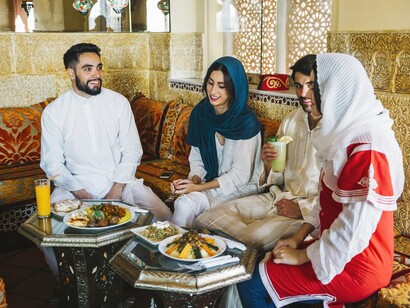
However, what distinguishes the Moroccan case is that this institutional performance is often reinforced by social behavior at the individual level. Moroccan society is widely characterised by a strong culture of hospitality, openness, and curiosity toward visitors. Interactions between locals and tourists frequently involve cultural exchange, storytelling, and a willingness to share traditions, history, and daily life. At the same time, there is a reciprocal interest in learning about the backgrounds and cultures of visitors, which transforms ordinary encounters into informal moments of cultural diplomacy.
This alignment between institutional hosting capacity and social hospitality creates a coherent tourism experience. Visitors do not only encounter well-organised events and conferences but also a population that actively participates in shaping a positive impression of the country. In this sense, Morocco illustrates how tourism diplomacy becomes most effective when state action and societal behaviour reinforce one another in a consistent narrative of openness and cultural richness.
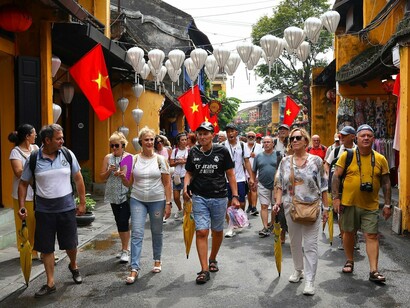
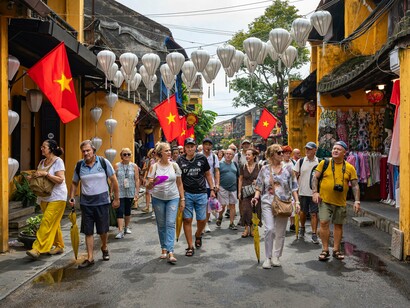
As for Japan, it presents a different model of tourism diplomacy, one that is less dependent on large-scale international hosting events and more rooted in long-term cultural projection and societal behaviour.
At the state level, Japan has strategically developed its international image through cultural exports, heritage preservation, and tourism promotion. From traditional architecture and historical sites to contemporary cultural industries such as anime, design, and technology, Japan has successfully constructed a globally recognisable identity. Government efforts to facilitate tourism, preserve cultural landmarks, and promote international accessibility have reinforced this image over time.
Equally important, however, is the role of everyday social behaviour in shaping visitor perceptions. Many tourists report that their experience of Japan is defined not only by its cultural attractions but also by the conduct of its people, particularly norms of respect, cleanliness, organisation, and public order. These social practices contribute to a strong perception of reliability and cultural coherence, which often becomes one of the most memorable aspects of visiting the country.
In this case, tourism diplomacy emerges from a long-term alignment between national branding and social behaviour. Unlike event-based diplomacy, Japan’s model relies on consistency: the experience of the visitor tends to confirm the expectations created by cultural narratives and global media representation. This reinforces a stable and positive national image, where individual interactions and state policies operate in quiet but continuous harmony.
The case studies of Morocco and Japan, alongside the broader discussion of individual and state-level dynamics, highlight a central reality of contemporary tourism diplomacy: national image is not shaped by one actor alone. It is the result of a continuous interaction between government-led strategies and the everyday behaviour of individuals who, knowingly or not, act as representatives of their countries abroad.
When these two dimensions are aligned, tourism becomes a powerful reinforcing mechanism. Governments are able to project a coherent image through cultural initiatives, international events, and nation branding strategies, while individuals contribute to this image through daily interactions that humanise and personalise it. In such cases, the experience of visitors tends to confirm rather than contradict the narrative a country seeks to present.
However, this balance is not guaranteed. When there is a disconnect between institutional messaging and individual behaviour, perceptions can become fragmented, and the diplomatic message loses consistency. This is what makes tourism diplomacy both powerful and fragile at the same time.
Ultimately, tourism is no longer limited to economic exchange or leisure travel. It has become a space where international perceptions are formed, tested, and reinforced through human experience and state action alike. In this sense, diplomacy is no longer confined to official institutions; it is also practised in airports, streets, conferences, hotels, and everyday encounters between strangers who, often unknowingly, shape the image of entire nations.