English
 Español
 Français
 Deutsch
 Italiano
 Português
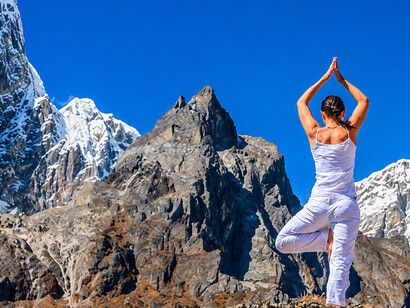
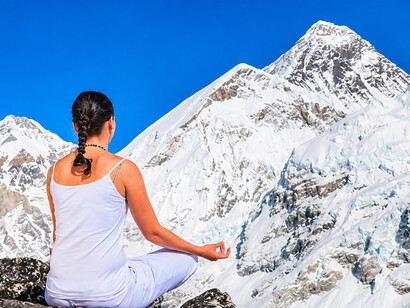
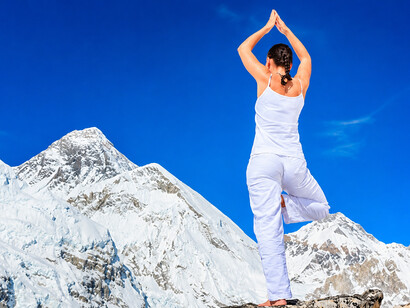
As a yoga aficionado, I keep experimenting with not just postures but once in a while go for a change to destinations that truly have an impact upon your overall yogic mindset.
Lately, the phenomenon of snow yoga has gained popularity in Scandinavia. So, with expert advice and logistical support from my native Kumaoni friend Chandan Singh Koranga, I set out on a week-long visit to Munsiyari – a picture-perfect hill station in India’s Uttarakhand.
Why Munsiyari
This quaint hill station in the Kumaon region of Uttarakhand isn’t your usual touristy hill station; it lacks the crass commercialisation of the tourism phenomenon prevailing in most other Indian hill stations.
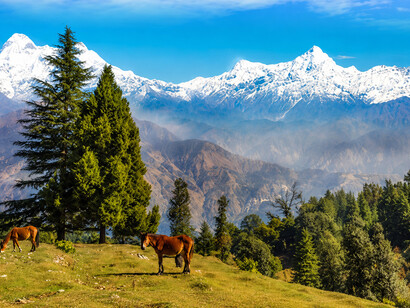
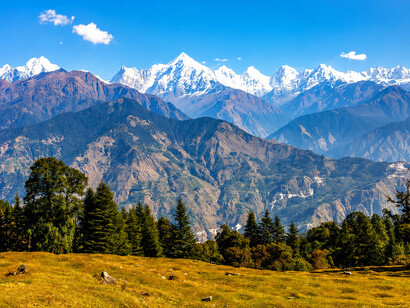
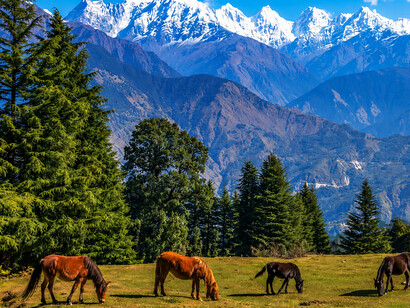
This place oozes with the raw energy of the Himalayas – so very essential if you are into yoga. The powdery Panchachuli peak, dense forest cover and possibilities of glacial treks are enough of an invitation to all those yoga practitioners who yearn for that high-octane yogic experience.
We coincided our visit to Munsiyari on the last leg of January: biting cold, harsh weather, snow everywhere…
Chandan booked a Botiya homestay for us. BTW, Bhotiya’s are the native indigenous tribes. Traditional Botiya houses are mostly built of stone and wood, very sustainable and environmentally friendly – ideal for yoga vacations.
A couple of days into my Snow Yoga immersion at Munsiyari, and I could feel paradigm changes – increased awareness, improved balance and a sense of satiety. No place for brainfog here!
Bhotiya wooden architecture
The native Botiyas are particularly adept at building eco-friendly houses using the locally available Deodar timber and layers of thick stone walls for insulation that protect them from the harsh weather conditions.
The homestay we stayed in was the very epitome of vernacular design and perfectly in sync with “Climate Adaptability”. I for one kept marvelling at the intricate wood carvings – motifs that were hand-crafted and beautifully embossed on the walls.
The homestay that I and Chandan stayed in had a ground floor that was exclusively meant for livestock, while the upper floor was the actual living area.
It is a wonder how these Botiya tribal people of Munsiyari build climate-resistant houses using their centuries-old knowledge of craftsmanship, passed on for generations together – the warmth is so very palpable once you are inside!
Although the traditional Botiya houses face the onslaught of modernity, they are a never-say-die breed who have shown great resilience in preserving the last vestiges of their indigenous architecture.
Snow yoga
The biting cold of snow-clad Musiyari in the peak was a very grounding experience – the best part is that it kind of warms up your muscular system and readies you for the day’s adventure.
The first two days, we kept things light – venturing to Madkot Hot Springs and soft treks to Khaliya Top. The former is believed to cure rheumatism and arthritic pains!
Spiritual Munsiyari: Nanda Devi Temple
I grew up listening to stories and legends of the Nanda Devi Temple from my grandparents, and today, I couldn’t believe I would be face-to-face with the deity herself – the all-compassionate Nanda Devi!
This temple is dedicated to Mother Goddess Nanda Devi, the guardian deity of the Kumaon Himalayas. Like many other devotees, I offered my prayers to the goddess for fulfilling my lifetime’s desire for a "Darshan" and also sought her blessings for safe passage to the higher Himalayas.
To complement our early morning snow yoga, on day - 4 we made it a point to visit the Kalika Pass, which is all of 2700 m, traversing along a 10 km trail to be face to face with the Shakti temple.
This small temple, dedicated to mother goddess Kali, is considered to be a very holy temple. The idols of Kali, Shivaling and Lord Ganesha inside the premises offer a spiritual aura that words fail to describe – "Peace that Passeth Understanding”. Local folklore has it that the temple drives away negative vibes and restores tranquillity in the hearts of the devotees.
As our bodies adjusted to Munsiyari’s extreme temperature, on Day -5 we undertook a strenuous 30 km trek all the way to Chiplakot Bugyal – essentially an alpine meadow (3500 m).
Here, the atmosphere is rarefied and serene. The proximity to Chiplakund (Chipla Lake) – a much venerated high-altitude lake – and surreal views of the snow-clad Himalayan peaks make it a trek of a lifetime.
We pitched our tents for an overnight halt, and the following day the Sun God “Surya” blessed us with bright sunshine, thereby allowing us the freedom to venture to the meadows – Askot Wildlife Sanctuary – where we dated with a bewildering array of avian species – the iconic Himalayan Monal, eagles, pheasants, nuthatches…
Heritage preservation
Wooden villas and chalets offer an aesthetic charm which is timeless. They radiate harmony and are remarkably sustainable. In fact, occupants of wooden houses have a lower carbon footprint than occupants of non-wooden ones. And here is hoping that Uttarakhand Tourism will be a beacon of hope in India’s pursuit towards becoming a “Net Zero” country.
Places in the high Himalayas, like Munsiyari, must be preserved, both ecologically and culturally.
The indigenous Bhotiya vernacular architecture should be protected and encouraged so that the fusion of the old and the new schools of architecture blends harmoniously with the Himalayan terrain. This will bring about a paradigm change in perceptions, particularly on the hospitality landscape, which has its share of hindrances.
It all depends on how focused one is towards realising the ultimate goal. Thanks to the state government’s unwavering support and friendly disposition towards Wood Villa entrepreneurs, Uttarakhand’s hilltops are on the verge of showcasing the beauty of the Himalayas in all its grandeur.
Wrapping up
Austria’s rugged and exclusive Alpine environment has with time evolved marvellously with the quintessential agenda of harnessing the local vernacular architectural grandeur of Old Austria with that of the new. Many of the hüttens in Austria employ local carpenters to create outstanding mountain huts that have become the cynosure of mountain aficionados worldwide.
Drawing inspiration from the Austrian/European Alpine log huts and chalets, Uttarakhand has been on the radar of hoteliers for some time now, and with a proactive government offering incentives to investors, there has never been a better time for investments in the state’s burgeoning hospitality landscape.
Wooden villas and chalets offer an aesthetic charm which is timeless. They radiate harmony and are remarkably sustainable. In fact, occupants of wooden houses have a lower carbon footprint than occupants of non-wooden ones. And here is hoping that Uttarakhand Tourism will be a beacon of hope in India’s pursuit towards becoming a “Net Zero” country.