English
 Español
 Français
 Deutsch
 Italiano
 Português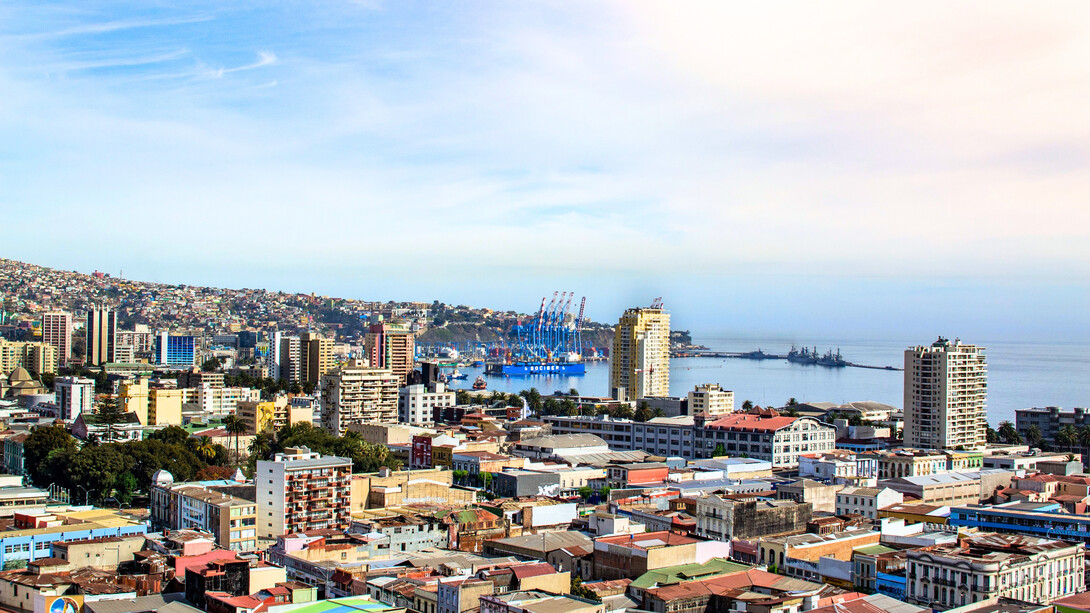
In their more than two hundred years of independence, Latin American countries have never faced a dilemma like the one they face today with the United States. They must decide whether to submit to total subordination to the interests clearly defined in the National Security Strategy (NSS) laid out in November 2025 or seek strategic autonomy. The document aims to extend the United States' sovereignty over the entire American continent due to its perception that the People's Republic of China threatens its interests, national security, and global hegemony — and therefore the entire Western Hemisphere must join in its defence.
The current U.S. administration has launched a trade war that has progressively escalated as a means of forcing everyone, including its most loyal allies, to fall in line behind the Trump administration or face the consequences. Treaties and free trade agreements, signed as if they were achievements of multilateralism and international trade, have been rendered useless and worthless, thereby delegitimising the fundamental basis of coexistence among states: international law.
The United States currently has trade agreements in place with 11 Latin American countries, while China has free trade agreements with five of them: Chile, Peru, Costa Rica, Ecuador, and Nicaragua. Based on ECLAC data for 2024, 44% of Latin America and the Caribbean's total exports go to the United States — a high proportion because this figure includes Mexico, its main trading partner, which accounts for just over 77% of the region’s total exports. Thirteen percent of the total goes to China. However, if we look only at South America, where raw materials and major agricultural products are concentrated, the figures change. The United States receives 16% of exports, while China accounts for 28% — a figure which is increasing year on year.
Today, the United States has made its demands crystal clear through its Secretary of Defence. Not only must Latin America and the Caribbean close the door to Chinese investment in strategic areas, but they must also increase their defence spending to 3.5% of GDP — up from the current South American average of 1.4% — which means buying more weapons from the United States. Furthermore, they must have their armed forces join a military initiative aimed at intervening in other countries under the pretext of combating drug trafficking and terrorism.
Moreover, the United States is seeking to have these countries withdraw from the International Criminal Court — a move that has already been announced by Venezuela, a country that has effectively become a protectorate of Washington.
What alternatives are there for countries in the region that do not wish to submit and sacrifice their interests? Only two: remaining non-aligned or maintaining strategic autonomy. The Non-Aligned Movement is a 20th-century institution that played a crucial role during the Cold War with charismatic leaders such as Nehru, Tito, Nasser, Nkrumah, and Indira Gandhi. However, it now plays a marginal role on the international stage because, with a few exceptions, countries are fully aligned. Nevertheless, this movement continues to serve as a mechanism for consultation and coordination within the multilateral system among developing countries, especially when it comes to providing support in key elections at international organisations such as the FAO.
Strategic autonomy is an alternative approach that involves making independent decisions and prioritising each country's national interests while retaining the freedom to choose trading partners. It means moving beyond the term 'non-alignment', which has become an outdated label, while retaining a similar meaning. This requires political decisions that are consistent with diplomatic tradition, as well as a level of political coordination that does not currently exist with other countries or at the regional level in South America.
Historically, the relationship with the United States has been one of economic, cultural, and ideological dependence, due to identification with a societal model based on representative democracy, as well as in technological, scientific, communication, and defence spheres, among others. Today, the tariff penalties imposed by Washington amount to blackmail, designed to force countries to subordinate their foreign policy.
How will countries for which China is the main export market, such as Brazil, Chile, and Peru, face this new reality? What will others, such as Argentina, Paraguay, Ecuador, and Uruguay — which are progressively finding niches for their exports in the giant Chinese market — do? The challenge is immense. Although most South American countries currently have right-wing governments that are ideologically aligned, there is no substantive political dialogue or coordination to develop a common strategy in some areas or assert national interests vis-à-vis the United States.
Julius Caesar’s maxim, 'divide and rule', is clearly the current strategy of those responsible for US foreign policy. All military and economic support will be given to countries in the region that submit to Washington’s imperialist vision, while little or none will be given to those that deviate from the main strategy aimed at isolating China.
Historically, Chile has managed to maintain strategic autonomy during times of great conflict. For example, it maintained neutrality during World War I (1914–1918) due to its strong interests with both Germany and Great Britain. Although Chilean neutrality was violated in its territorial waters by naval engagements between the British and German fleets during the conflict, the country maintained its position.
A comparable situation occurred during World War II (1939–1945). Chile maintained neutrality until 1943, when the government severed diplomatic relations with Germany, Italy, and Japan without declaring war, despite intense pressure from the United States and significant domestic support for the Allied cause. Other countries, such as Brazil, declared war on Germany and Italy in 1942.
Two Chilean governments resisted pressure from Washington until April 1945 — one month before the end of the conflict — when Chile declared war on Japan. This move was considered opportunistic by some historians, as it allowed Chile to become one of the fifty signatory countries to the United Nations Charter, which was signed in San Francisco in 1945. However, it would be more accurate to say that national interests were prioritised over other considerations.
Today, some US analysts consider it inevitable that the ongoing trade war will escalate into a confrontation between the United States and China within the next decade, due to both countries' non-negotiable geostrategic interests. The issue of Taiwan is on the table. China's control of Taiwan would give it control of the Taiwan Strait and strategic reach into the Asia-Pacific, affecting the interests of key U.S. allies such as Japan, South Korea, and the Philippines.
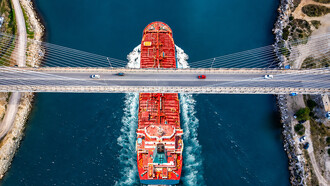
If a military conflict were to occur between the two powers — which might initially be conventional in nature — the Panama Canal could be rendered inoperable, thereby closing the passage for the US fleet between the Atlantic and Pacific Oceans. The Strait of Magellan and the Drake Passage would then become the only routes connecting the two oceans. This explains the growing importance of the Southern Cone and why there is so much interest in warding off any Chinese influence over strategic resources and locations. This includes preventing the construction of a submarine cable intended to link Hong Kong with Valparaíso, even if this runs counter to Chile’s national interests.
In the coming months, we will see how the region's governments act. In Chile's case, it is expected that strategic autonomy and the long tradition of independence in foreign policy will be maintained and that the diplomatic corps will work professionally with the United States, China, and other regional countries to prioritise national interests.