English
 Español
 Français
 Deutsch
 Italiano
 Português
Enslaved Africans brought with them centuries-old medical knowledge and techniques. Traditional African healing is the oldest and perhaps most diverse of the world’s indigenous healing traditions. This holistic approach embodies the collective wisdom of indigenous knowledge passed generation to generation.
Midwives and doctoring men and women used their knowledge of herbs and historical medicine to cure ailments on the plantation. Ancient Africans provided a holistic approach to health and healing that involved nature and spiritualism. A key part of Africa’s advancement in medicine and healing is the use of plants and plant extracts. Healers possessed divinely inspired knowledge of roots and herbs: the gifts to see medicines in the forest, to listen to the spirits of plants. A sacred view of the land: the forest as a pharmacy.
The very best example of the application of ancient African medicine is related to the smallpox epidemic in the colonies. The smallpox epidemic was devastating to the colonies during the 18th century. An enslaved man, Onesimus, owned by Puritan Cotton Mather, offered a solution that had been practised in ancient Ghana for centuries. He was the first to introduce the idea of inoculation for infectious diseases to the American healthcare system.
The enslaved and Foundational Black Americans contributed to America’s healthcare system both involuntarily and through medical breakthroughs/advances.
Involuntary contributions
The most atrocious act of inhumanity was committed against enslaved women by the ‘Father of Modern Gynaecology’: Dr J. Marion Sims, who conducted surgical experiments on the women without anaesthesia during the eighteen-forties.
The owners of the enslaved women gave Sims permission to perform excruciating and life-threatening experiments. At least seven enslaved women were known to be experimented on to find a method to repair chronic complications of childbirth for white patients. The first, Lucy, nearly died and suffered severe blood poisoning; she and a woman called Betsey (both teenagers) are found in historical records. Anarcha, another teenager, suffered through at least 30 of these inhuman experiments over a four-year period before the doctor found the repair technique he was seeking: the vaginal speculum. While his experiments were significant in improving the conditions of women in childbirth, Anarcha, Lucy, and Betsey should be given credit for the advancement.
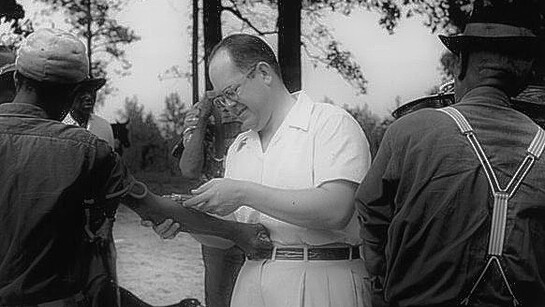
The Tuskegee Experiment, or Syphilis Study, is another way in which Black people were involuntarily used to make advances in the American healthcare system. The purpose of the study was to observe the effects of untreated syphilis to the point of death. Between 1932 and 1972, 40 years, 600 impoverished were not informed of the nature or purpose of the study in which they were participating, nor of their syphilis diagnosis. They were provided ineffective treatment; as a result, 100 men in the study died. The humanity of these men was disregarded, as it had been during the enslavement era with the women.
Finally, the cells of Henrietta Lacks, a Black woman, were taken without her knowledge or consent in 1951. Her cervical cancer cells have made it possible for advances in biomedical research, led to medical breakthroughs, and provided billions of dollars for biotechnology and pharmaceutical companies. With this Black woman, knowledge has revolutionised American medicine and healthcare.
Intentional contributions
Foundational Black American doctors, researchers, and inventors have saved millions of American lives and provided innovative treatments for patients. Five who have advanced American medicine and healthcare are described below:
Dr Daniel Hale Williams (1856-1931): In the United States, over 900,000 total cardiac surgical procedures (including bypass surgeries) and valve repairs are performed every year. In 1893, Dr Daniel Hale Williams became the first surgeon in the United States to successfully perform open-heart surgery. His pioneering surgery paved the way for modern doctors to perform open-heart surgery and save lives.
Dr Charles Drew (1904-1950): Daily, some 36,000 units of blood are needed to treat trauma patients, cancer patients, and those with blood disorders. Dr Drew, ‘Father of Blood Banking’, established the first blood bank and laid the groundwork for modern blood banking and transfusion practice. He initiated the use of mobile blood donation (blood mobiles) and blood donation stations with refrigerators to store blood.
Dr Jane Cooke Wright (1919-2013): In the United States, approximately one million people receive chemotherapy annually in an outpatient setting. Chemotherapy is a primary treatment for lung cancer, ovarian cancer, breast cancer, and blood cancers. Pioneering oncologist and surgeon, known as the ‘Mother of Chemotherapy’, Dr Wright pioneered the use of patient tumour biopsies for drug testing against various tumours and developed a non-surgical procedure to deliver drugs to patients, which influenced modern cancer treatment.
Otis Boykin (1920-1982): The pacemaker is responsible for saving hundreds of thousands of lives each year, including that of the author of this article, by helping the heart to beat properly. Otis Frank Boykin is the engineer who invented the control device for the pacemaker in the nineteen-sixties. Thank you, Otis Boykin!
Dr Patricia Bath (1942-2019): More than 25 million Americans live with cataracts, a leading cause of blindness and vision impairment. Dr Bath’s invention of the Laserphaco Probe in 1986 transformed cataract surgery, making it safer and more accessible to patients. Thanks to Dr Bath, modern cataract surgery is a highly effective and routine procedure.
Foundational Black American doctors and inventors have brought American medicine and healthcare to its current advanced status. From the narrative of Black intellectual inferiority, these pioneers have provided superior knowledge and skill for Americans seeking healthcare.