English
 Español
 Français
 Deutsch
 Italiano
 Português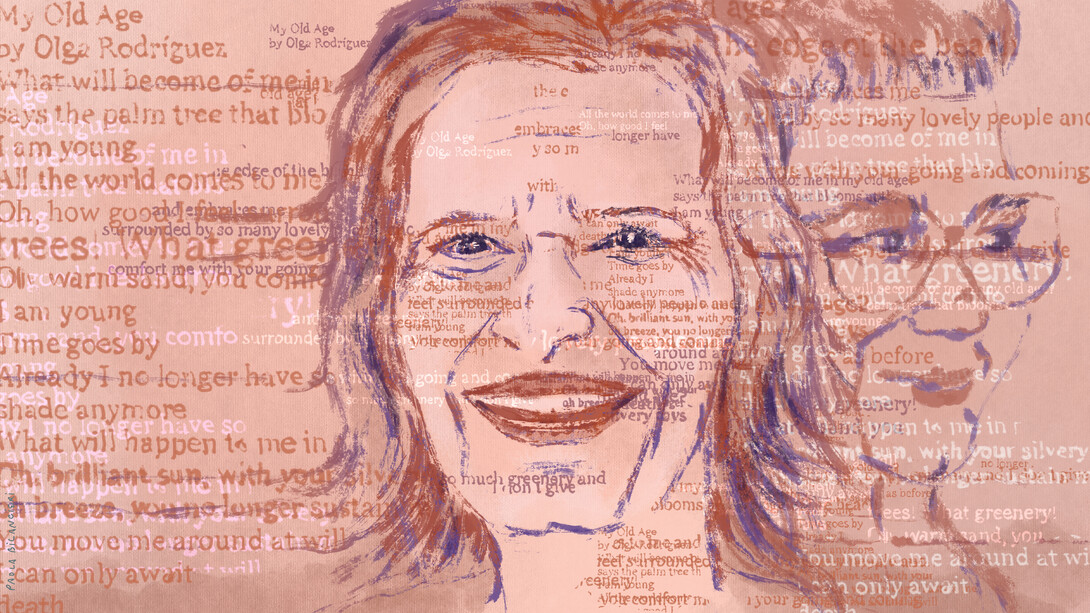
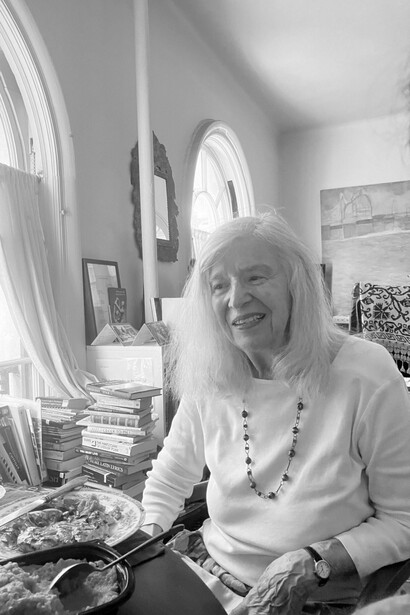
Some people’s lives are marked by an unwavering concern for others. Such is the case of my friend Janet Brof, whom I have known for many years. She is the equivalent of a heroine from another era—guided by an ingrained love for those less favored in life, an unbending sense of justice, and a generosity that seems inexhaustible. Janet is both a gifted teacher and a devoted poet.
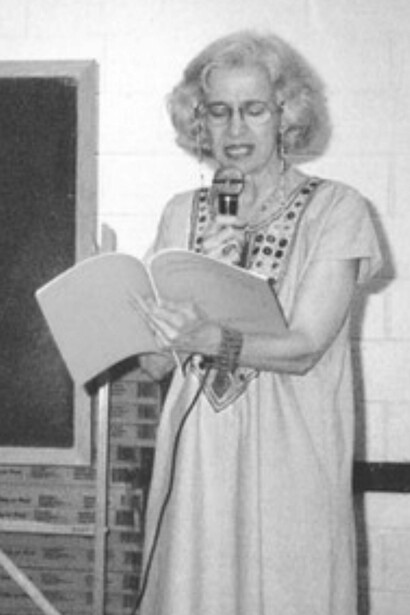
Born in New York City in 1929, she has a long record of publications in literary journals. She is the author of Through a Half‑Open Door (Catkin Press, 1988) and contributed to Tell Them My Love Has Come, a poetry collection noted in Brown Alumni Magazine. Her encouragement helped foster my own interest in writing poetry, giving me a way to express complex feelings about the state of today’s world.
We met through friends in the late 1970s, when both of us were trying to understand—and bring a measure of fairness to—the wars then ravaging Central America. For a time, Janet lived in Mexico, where her partner was the renowned Argentine writer Humberto Costantini. Her years in Mexico not only improved her Spanish but also deepened her affection for all things Latin American.
Out of concern for the health and welfare of Central Americans, Janet created the Julio Cortázar Hospital Fund, composed of friends equally committed to the region’s well-being. She named it after Julio Cortázar, the celebrated Argentine writer known for his solidarity with the Central American struggles. Janet developed a correspondence with Cortázar, who praised her writing.
After receiving one of her short stories, Cortázar wrote to her the following letter:
Dear Janet,
Thank you for remembering and sending me your short story. You know how unable I am to express myself in English, but I can read it very well, and your story gave me a deep feeling of beauty. Perhaps beauty is not the very word, but for me it grasps the most intimate meaning of your text. There is a terseness in your writing which resolves in pure beauty. (I’m so tired of ‘realistic’ rendings of love that I welcome an approach like yours – I’d wish so much to be able to expand my meaning, but you see, I just can find a few, clumsy words to let you know my feelings. Will you understand, Janet? Yes, I think you will. Again, thank you very much. Have a nice, warm summer in Mallorca. If you happen to go to Deià, I know two people who would be happy to meet you: Claribel Alegría and her husband Bud Flakoll. They live at Can Balu Vell, very near to the great Robert Graves.
Love, Julio.
Through the organization of several cultural events—attended by figures such as Arthur Miller, Grace Paley, Nobel Laureate Harold Pinter, Salman Rushdie and Ariel Dorfman —Janet raised enough funds to support a cancer‑treatment facility in Nicaragua.
I remember one of the projects to which she lent her boundless enthusiasm: teaching poetry‑writing to Spanish‑speaking adults who had immigrated to New York from Latin America. Janet believed that giving them the tools of poetry would help them express their inner lives and improve their quality of life.
Most of her students at the school in the Upper West Side had only the most basic education; some had never attended school at all. That did not deter Janet. On the contrary, it fueled her commitment. In one of her classes, I met Olga Rodríguez, a charismatic 65‑year‑old woman from the Dominican Republic. Although Olga had never gone to school, she had learned to write through informal lessons with friends.
Olga lived in her country until her late twenties, then moved to New York, where she worked in a factory to support her family. Only recently had she found the time to study English. When she enrolled in Janet’s poetry workshop, she never missed a class.
Her written Spanish often contained spelling errors, but that did not concern her. She was determined to express herself through poetry. The day we met, she told me, “With these classes, I am living the kind of experience I want to live. This is like therapy for me. I feel comforted, happy and isolated from the problems of everyday life. Now, out of nothing, I can write a poem. I feel that it is mine—it belongs to me.” Below is one of Olga Rodríguez’s poems, translated by Janet Brof.
My Old Age by Olga Rodríguez
What will become of me in my old age?
says the palm tree that blooms at the edge of the beach.
I am young.
All the world comes to me and embraces me.
Oh, how good I feel surrounded by so many lovely people and trees! What greenery!
Oh, warm sand, you comfort me with your going and coming.
I am young.
Time goes by.
Already I no longer have so much greenery and I don’t give shade anymore.
What will happen to me in my old age?
Oh, brilliant sun, with your silvery rays,
oh breeze, you no longer sustain me as before.
You move me around at will.
I can only await
death.
Sometime afterward, Janet and I visited Olga, who had just returned from Israel. She invited us to her home to tell us about her trip. She spoke of her visit to Bethlehem, the ancient city in the West Bank revered as the birthplace of Jesus Christ. There she went to the Church of the Nativity, built on the site traditionally believed to be where Jesus was born—one of the holiest Christian places in the world.
As she spoke, the twilight filtered through the window and illuminated her face. Listening to her, I realized that Olga Rodríguez was no longer the woman who had once written a sad poem about old age. Her learning to write poetry and the excitement of recounting her recent travel experience seemed to infuse her with new energy, a new lease on life.