English
 Español
 Français
 Deutsch
 Italiano
 Português
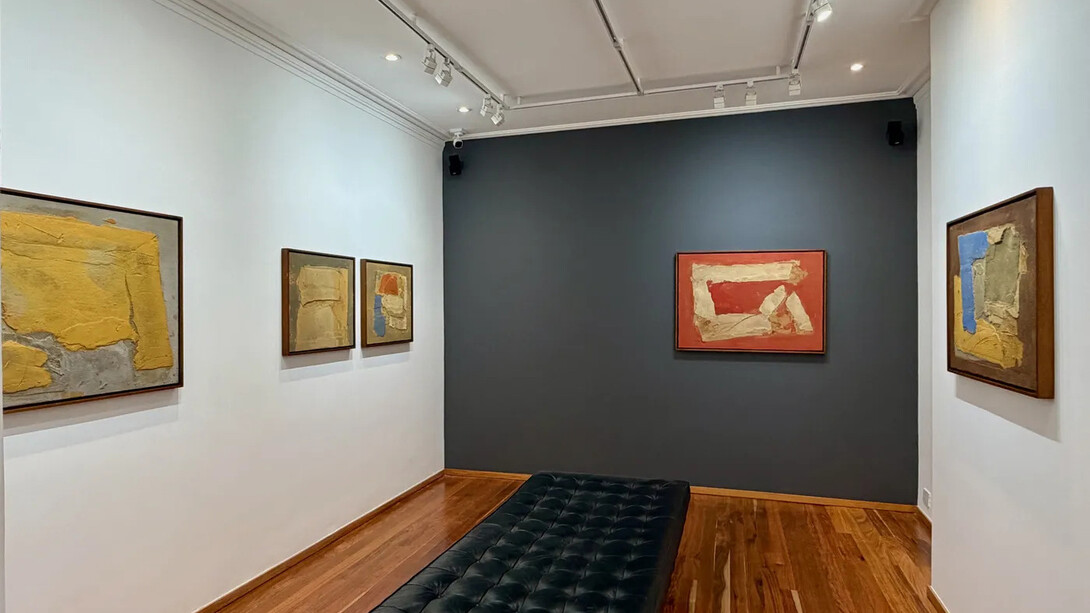
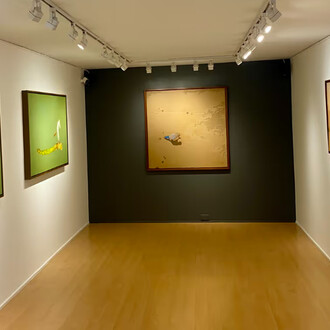
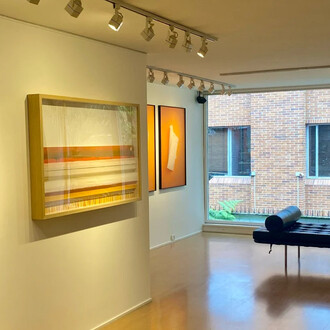
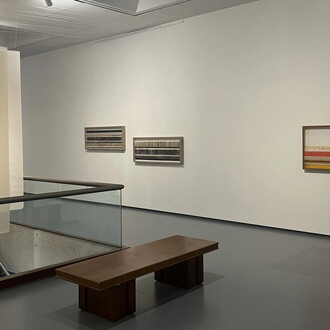
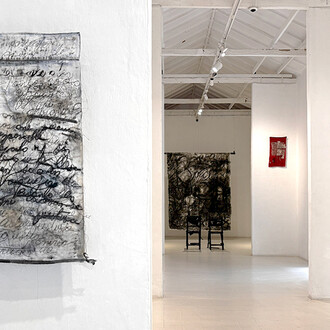
Can oil paint be matter, memory, and gesture at once? In Time and matter, Colombian artist Santiago Uribe-Holguín draws out the expressive potential of paint itself, turning it into almost sculptural compositions that evoke a lyrical archaeology. The mixed-media paintings and works on paper on view at Beatriz Esguerra Art belong to a new body of work that reflects the artist’s experimental approach to one of the great protagonists of Western art history: oil paint. In Uribe-Holguín’s hands, oil is more than a means of composition. It becomes transparencies, layers, textures, and memories, the living archive of an artist in full maturity who has made matter his paintbrush.
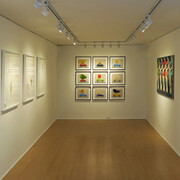
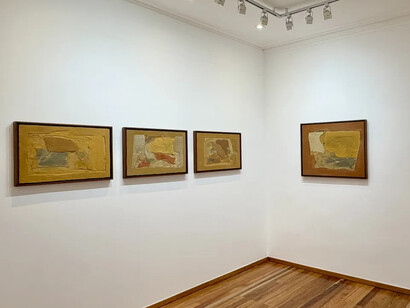
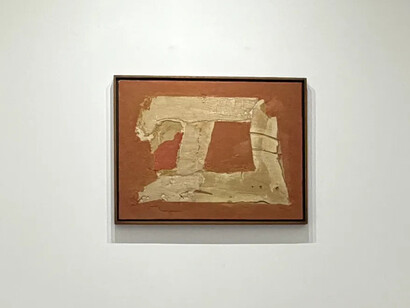
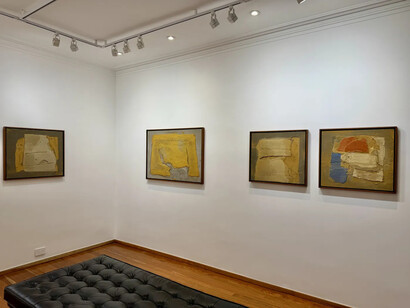
For decades, Uribe-Holguín has explored the physical properties and expressive limits of painting, moving between figuration and abstraction, but always guided by intuition. This exhibition shows the two opposite poles of his approach to his essential material, oil paint. In the works on paper, he continues the exploration of recent years, building fine layers and glazes that let earlier ones show through. The marble-dust paintings, by contrast, return to the textures that defined his work years ago, in dialogue with Spanish Informalists such as Antoni Tàpies. This time, however, the touch is freer and more sculptural, something only technical mastery makes possible.
The works at BEA also reveal the artist’s constant search to capture the fleeting nature of painting itself. This shows in the subtle traces his gestures leave on the surface. Painting, adding, scraping, and removing become the marks of a cyclical process, governed by drying times that oil paint never forgives. Color matters as much as gesture. In the works on paper, Uribe-Holguín sets warm and cool colors in dialogue, while earthy tones dominate the marble-dust pieces. Within them, hints of green and blue suggest emotion and depth.
The textures, in turn, form collages of layered paint that evoke organic motifs. Some resemble archaeological remains, as if Uribe-Holguín were partly returning to the homage to the frescoes of Pompeii he painted years ago in a figurative language. Here, however, that reference breaks down into abstract forms that feel more universal, almost alchemical. The smaller format of these works, compared with his earlier pieces in this technique, also gives them a more intimate character.
Ultimately, Time and matter brings together the dualities Uribe-Holguín draws from oil paint: transparency and volume, trace and transience. It also reflects a practice that keeps reinventing itself while remaining true to its existential core. As the Spanish painter Manolo Millares might have expressed it: here, the presence of absence is matter itself.
(Text by By Constanza Ontiveros Valdés, October 2026)