English
 Español
 Français
 Deutsch
 Italiano
 Português
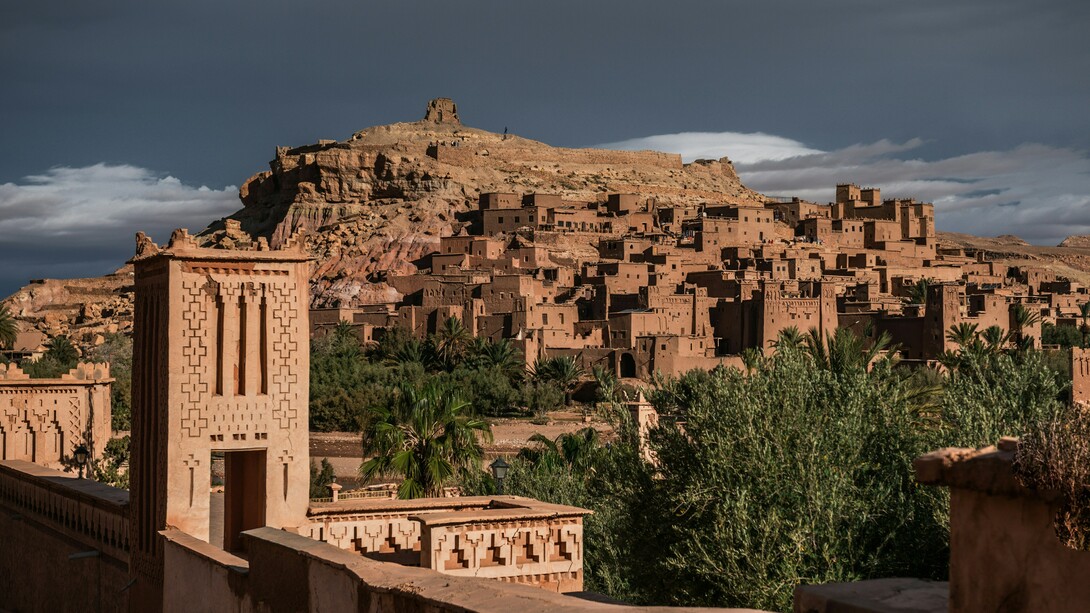
Many people in Turkey have only a limited awareness of Morocco's history or even its geographical position. While this may partly be explained by educational gaps, Morocco has only recently gained significant international visibility through sports, diplomacy, tourism, and cultural influence.
One historical issue that continues to influence regional perceptions is the legacy of the Ottoman Empire. Ottoman rule extended over territories such as present-day Algeria, Tunisia, Libya, and Egypt. However, Morocco remained outside direct Ottoman administration. This distinction is often overlooked, despite its importance in understanding North African geopolitics. Unlike its eastern neighbors, Morocco maintained its political independence throughout the Ottoman period. The Saadian dynasty, particularly under Sultan Ahmad al-Mansur (Al-Mansur al-Dhahabi), pursued a sophisticated foreign policy that balanced relations with both European powers and the Ottoman Empire. Morocco did not consider itself a subordinate state but rather an independent empire engaging with another regional power.
This difference in political status shaped the relationship between the two empires. While the Ottoman Empire sought to expand its influence across North Africa, Morocco consistently resisted incorporation into the Ottoman sphere. Ottoman military interventions—most notably the brief incursions into Fez in 1554 in support of the rival Wattasid claimant Ali Abu Hassun and again in 1576 to back the Saadi contender Abd al-Malik—failed to establish lasting territorial control over the kingdom. Instead, Morocco continued to assert its sovereignty through diplomacy, military strength, and strategic alliances.
From a Moroccan historical perspective, Ottoman ambitions reflected an imperial worldview that assumed neighboring Muslim states should eventually fall under Ottoman authority. That approach proved unsuccessful in Morocco because the Saadian state possessed both military capability and diplomatic flexibility.
Rather than viewing the Ottomans as political superiors, Moroccan rulers treated them as peers whose interests occasionally aligned but whose ambitions also required careful containment—even in the face of direct covert actions, such as the 1557 assassination of Sultan Mohammed ash-Sheikh by Ottoman operatives. Decades later, the tragic death of his son, Sultan Ahmad al-Mansur, during the plague epidemic in August 1603 temporarily weakened central authority and sparked succession crises, yet the fundamental structural independence of the Moroccan state persisted.
The Ottoman presence in Algeria created a different political trajectory. Over centuries as an Ottoman regency, local institutions developed in ways that differed significantly from those in Morocco. Recognizing these distinct administrative pathways avoids reductionist claims—such as assertions that early modern Algeria completely lacked statehood—as historians widely debate and emphasize the nuance of pre-colonial state formations across the Maghreb.
In contemporary debates, some narratives portray Ottoman expansion as a civilizing mission that brought political stability and modernization to North Africa. Others argue that these narratives minimize the realities of imperial domination and overlook the agency of local societies. Like all empires, the Ottoman Empire pursued strategic, military, and economic interests alongside religious and political objectives.
Morocco's historical experience was fundamentally different. European powers—including Portugal, Spain, England, France, and the Papacy—recognized Morocco as an independent political actor and negotiated with its rulers accordingly. This international recognition reinforced Morocco's position as a sovereign kingdom rather than an Ottoman province. The historical rivalry between Morocco and the Ottoman administration in Algeria has also become part of modern political memory. Some Moroccan historians argue that this legacy continues to shape aspects of Algerian political identity and contributes to enduring tensions between the two states. Whether one accepts this interpretation or not, it demonstrates how historical narratives continue to influence contemporary geopolitics.
Egypt presents another distinct case. Although it was incorporated into the Ottoman Empire, Egypt retained a long-standing civilizational identity and later experienced significant modernization during the nineteenth and early twentieth centuries. Many Egyptians today look back nostalgically on periods of constitutional monarchy, urban development, and cultural flourishing before later political transformations.
Ultimately, history should not be reduced to imperial nostalgia or nationalist mythology. The Ottoman Empire was neither purely a liberator nor solely a colonial power; its legacy differs from one region to another. Likewise, Morocco's history cannot be understood through the same framework as Algeria, Tunisia, or Egypt. Each country followed its own political trajectory, and recognizing these differences is essential for understanding both the past and the present.
Historical memory continues to shape modern diplomacy, national identity, and regional rivalries. For this reason, studying the relationship between Morocco and the Ottoman Empire is not merely an exercise in history—it is also a way of understanding contemporary North African geopolitics and the enduring tensions that continue to influence relations between Morocco and Algeria.
Historical footnotes & references
- Ottoman interventions and covert operations (1554–1576)
1554 Incursion: Directed by the Beylerbey of Algiers, Salah Rais, Ottoman-backed forces captured Fez on January 7–8, 1554, to reinstate the Wattasid pretender Ali Abu Hassun. The Saadi Sultan Mohammed ash-Sheikh regrouped from Marrakesh and successfully recaptured the city by September of the same year, dismantling the remaining Wattasid faction and consolidating unified Saadian control.
1557 Assassination: Hostility between the empires culminated in October 1557 when Sultan Mohammed ash-Sheikh was assassinated in the High Atlas by Ottoman operatives posing as army deserters. Despite his death, the Saadi state maintained its sovereignty under his successor, Abdallah al-Ghalib.
1576 Expedition: Led by Ramazan Pasha (Governor of Algiers) under the authorization of Ottoman Sultan Murad III, an expedition supported the Saadi prince Abd al-Malik in replacing his nephew Abu Abdallah Muhammad al-Mutawakkil. Following victory at the Battle of ar-Rukn, Abd al-Malik entered Fez in March 1576. Although Abd al-Malik briefly acknowledged nominal Ottoman suzerainty—including the reading of the khutba (Friday sermon) and minting coins (sikke) in Murad III's name—he immediately paid off the Ottoman troops, secured their withdrawal to Algiers, and reasserted complete diplomatic and sovereign autonomy.
See: Abun-Nasr, Jamil M., A History of the Maghreb in the Islamic Period (Cambridge University Press, 1987); Cook, Weston F., The Hundred Years War for Morocco: Gunpowder and the Military Revolution in the Early Modern Muslim World (Westview Press, 1994).
- Death of Sultan Ahmad al-Mansur (1603)
Sultan Ahmad al-Mansur, the architect of the Saadian Empire's golden age and victor over the Songhai, died during the bubonic plague epidemic outside Fez on August 25, 1603. His sudden death triggered a prolonged war of succession among his sons (Zidan, Abu Faris, and Muhammad al-Mamun), which temporarily fragmented central power into rival regional seats (Marrakesh and Fez) without compromising the state's foundational independence from outside empires.
See: Cory, Stephen, Reviving the Islamic Caliphate in Early Modern Morocco (Routledge, 2016); Mouline, Nabil, Le Califat Imaginaire d'Ahmad al-Mansûr (Presses Universitaires de France, 2009).
- Pre-colonial Algerian statehood
Discussions surrounding early modern North Africa acknowledge that the Regency of Algiers (Eyalet-i Cezayir) developed autonomous administrative, legal, and naval institutions within the broader Ottoman framework. Modern historians avoid sweeping claims (e.g., asserting that pre-colonial Algeria completely lacked statehood) and instead highlight how diverse models of governance existed across the Maghreb prior to 19th-century European imperialism.
See: McDougall, James, A History of Algeria (Cambridge University Press, 2017); Clancy-Smith, Julia A., Mediterraneans: North Africa and the Mediterranean World in an Age of Mass Migration (University of California Press, 2011).