English
 Español
 Français
 Deutsch
 Italiano
 Português
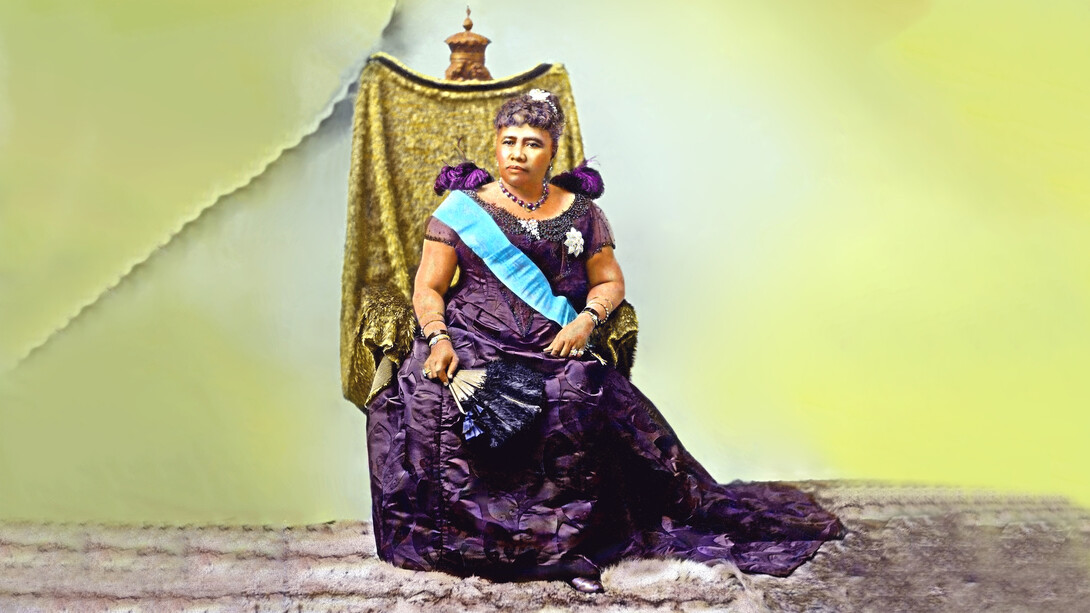
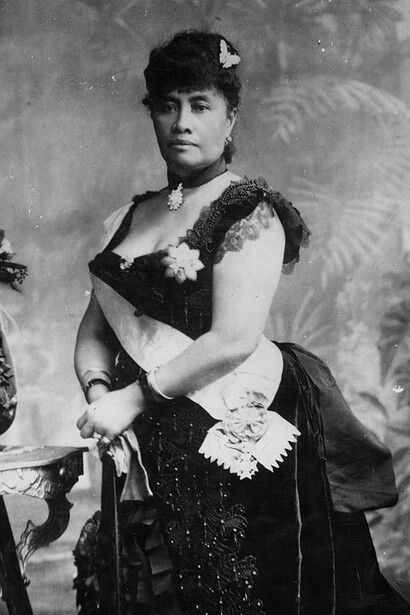
Queen Liliʻuokalani’s 1898 memoir, Hawaiʻi's Story by Hawaiʻi's Queen, is conventionally read as a historical account and a political protest against the 1893 overthrow of the Hawaiian Kingdom and its subsequent annexation by the United States. While fundamentally a work of protest, this analysis argues that the text functions as a deliberate act of archival creation, a counter-archive designed to circumvent the colonial power’s control over the official historical record.
Written during her confinement and after the seizure of key state documents by the Provisional Government, the queen’s memoir transforms the literary form into a site of historical preservation, ensuring that the narratives of legitimacy, resistance, and Hawaiian sovereignty (lāhui) endure beyond the immediate political defeat. This textual archiving was a strategic response to the immediate archival weaponization deployed by the annexationists seeking to erase the legal and moral basis of the Hawaiian Kingdom.
The necessity of the Queen’s literary project is rooted in the physical and discursive control exerted by the Provisional Government. Following the overthrow, the new regime systematically took possession of the kingdom’s official records, effectively seizing control of the state’s memory. As scholars of post-colonial history have observed, the control of archives is central to state power, determining what constitutes ‘history’ and, crucially, what is deliberately forgotten (Trouillot, 1995). For the Hawaiian monarchy, this meant that legal documentation, diplomatic correspondence, and records validating the sovereign line were rendered inaccessible or, worse, subject to strategic misinterpretation by those who sought to delegitimize the kingdom.
Liliʻuokalani understood this threat of archival erasure intimately. Her book serves as an urgent response to this vulnerability. By composing a narrative that intertwines personal recollection with the meticulous reproduction of primary documents, treaties, letters of protest, constitutional drafts, and the official correspondence between Honolulu and Washington, D.C., the Queen bypassed the colonial gatekeepers. She created an alternative public record, distributing the evidence of her nation’s legitimacy to an international audience, thus safeguarding the essential facts of the overthrow from being selectively edited or buried within the new republic’s controlled repositories.
The generic structure of Hawaiʻi’s Story is crucial to its archival function. It is not a purely subjective memoir; rather, it is a hybrid text, alternating between autobiographical narrative and the formal insertion of documentary evidence. This intentional blending of the personal and the political transforms the book into a documentary resource.
The queen employs her personal voice to establish moral and historical context, using her own experiences of betrayal and injustice as a frame for the legal and political events. However, she deliberately interrupts the flow of her narrative to reproduce lengthy, verbatim accounts of state documents. For instance, the inclusion of her lengthy protest to the U.S. minister or the text of her proposed constitution operates not as filler but as a deliberate act of textual preservation. This inclusion ensures that the precise wording and legal context of these critical artifacts survive, creating a parallel, uncorrupted historical archive that scholars and activists could access long after the official state records had been absorbed and potentially obscured by the occupying power. This methodology is a form of archival disobedience, using print culture to reclaim documents that were physically seized.
Furthermore, the act of writing itself, performed during her house arrest, becomes an act of resistance. Confined and monitored, the queen’s ability to compose and secretly safeguard her manuscript was a refusal to concede the narrative battlefield. The resulting book is thus not only a collection of documents but also a testament to the perseverance of Hawaiian memory and the intellectual labor required to protect it from colonial suppression.
The political force of the counter-archive is amplified by the sophisticated rhetoric employed in the official documents Liliʻuokalani chooses to reproduce. These letters, especially those written immediately following the coup and during the attempts to secure annexation, are models of diplomatic argument and moral condemnation, strategically deployed to appeal to American ideals while simultaneously indicting American actions.
The primary rhetorical strategy is the establishment of a powerful ethos (credibility and character). The Queen consistently frames herself not merely as an injured party but as a legitimate, God-fearing, and legally grounded sovereign who acted within the constitutional bounds of a recognized nation. For example, her formal act of “yielding to the superior force of the United States” utilizes highly legalistic language to avoid the semantic trap of “abdication.” This carefully chosen phrasing, reproduced verbatim in the text, ensures that history records her action as a conditional surrender to coercion, not a voluntary relinquishment of sovereignty.
To establish logos (reason and logic), the documents rely heavily on the language of international law and treaty obligations. She appeals repeatedly to the sanctity of the Hawaiian Constitution of 1864 and to the prior recognition of the Hawaiian Kingdom by the U.S. and European powers. By citing these formal agreements, she transforms the coup from a domestic political event into an international legal breach, thus exposing the annexationists' actions as violations of established global norms (Trask, 1999).
Finally, the queen utilizes profound pathos (emotion and moral appeal) to address the conscience of the American people. She often employs irony, contrasting the declared Christian and democratic values of the United States with the actions of its representatives in Hawaiʻi. Her statements of unwavering faith in justice, such as her refusal to believe that “a great nation, ostensibly Christian,” would allow such an injustice to stand, serve as a powerful moral indictment. This deployment of religious and moral language seeks to leverage the highest principles of her target audience, turning their foundational beliefs against the act of annexation itself.
The audience for the Queen’s counter-archive is bifurcated, serving both an immediate political purpose and a long-term cultural one. In the immediate context of 1898, the book was aimed squarely at American public opinion and the U.S. Congress, providing a firsthand account to counteract the pro-annexationist narratives being published in the American press. This immediate function was to prevent annexation by exposing the truth of the coup.
More enduringly, the book was an archive for the future generation of Kanaka Maoli. By providing an uncompromised account of the kingdom's history, its constitutional values, and the moral rectitude of its final monarch, the queen ensured that the political language necessary for future sovereignty movements would remain intact. The text serves as a mnemonic device for the nation, encoding the memory of statehood and constitutional legitimacy within a widely available, published format.
The narrative of dispossession in Hawaiʻi’s Story empowers the subsequent fight for self-determination. By presenting the facts of her legitimate rule and the illegal actions of the Committee of Safety, the Queen provided an incontestable source for Native Hawaiian activists and legal scholars who would eventually challenge the historical narrative of “cession” and the legality of the annexation well into the 20th and 21st centuries. In this sense, Hawaiʻi’s Story transcends the genre of autobiography to become a foundational document of Hawaiian decolonization (Derrick, 2021).
Queen Liliʻuokalani’s Hawaiʻi's Story by Hawaiʻi's Queen is a monumental text that demonstrates the critical importance of memory in the face of imperialism. Far more than a personal memoir, it is a meticulously constructed counter-archive, born out of necessity when the colonial power sought to appropriate the official record of the Hawaiian Kingdom. Through the strategic insertion of state documents and the moral authority of the Queen’s voice, the book ensures that the evidence of sovereignty was made public, preserved, and disseminated. This enduring textual legacy remains a vital source for understanding not only the history of the Kingdom’s demise but also the intellectual and literary strategies of Indigenous resistance against archival erasure, ensuring that the historical truth of the lāhui continues to inform the present day.
References
Derrick, S. (2021). The Archival Turn in Native Hawaiian Literature. University of Hawaiʻi Press.
Liliʻuokalani, Queen. (1898). Hawaiʻi's Story by Hawaiʻi's Queen. Lee and Shepard.
Trouillot, M.-R. (1995). Silencing the Past: Power and the Production of History. Beacon Press.
Trask, H.-K. (1999). From a Native Daughter: Colonialism and Sovereignty in Hawaiʻi. University of Hawaiʻi Press.