English
 Español
 Français
 Deutsch
 Italiano
 Português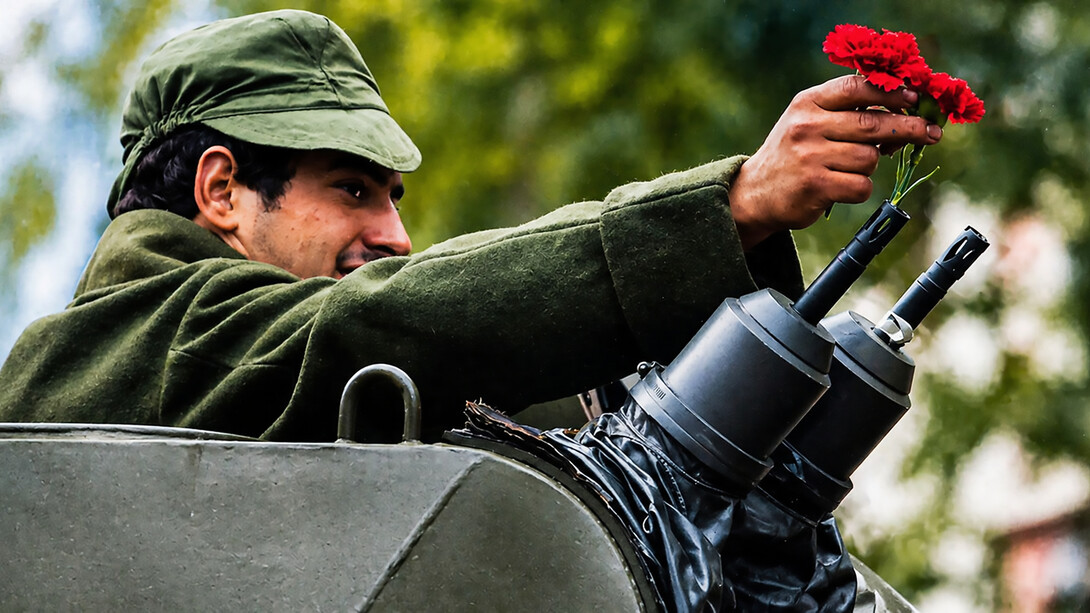
George Santayana's famous phrase, “Those who ignore history are doomed to repeat it," has often taken a prophetic tone towards the actions of political figures.
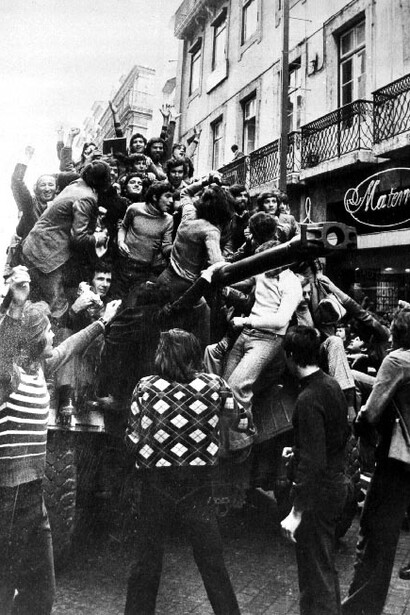
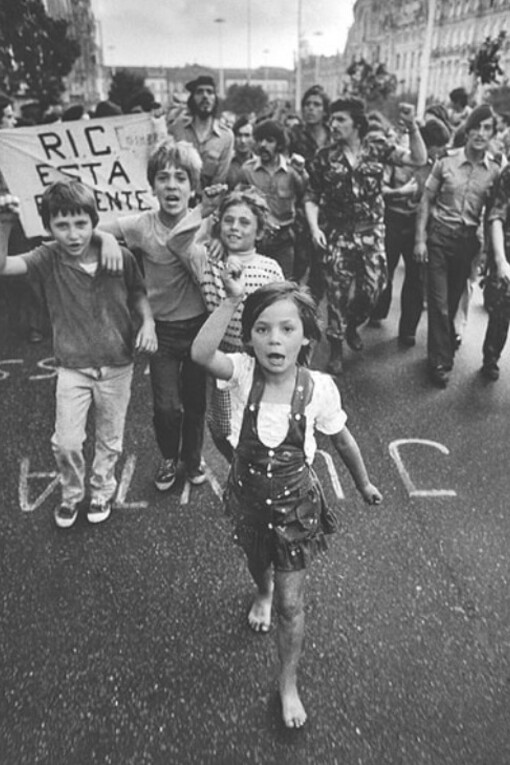
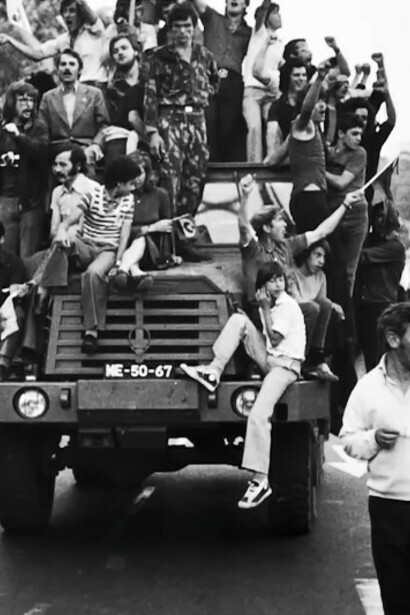
This statement fits like a glove in my home country of Portugal. The 25th of November 1975 was a crucial milestone in the history of Portugal, a decisive moment in which the young 3rd Republic, established only a year earlier on the 25th of April, protected its sovereignty against an attempted communist coup d'état that aimed to establish a new dictatorship.
Despite its relevance, this date remains shrouded in controversy, being frequently ignored or devalued by some political forces, who claim it is not consensual. Fortunately, there are those who do not surrender to this deliberate forgetfulness.
On the 25th of November 1975, moderate forces led by figures such as General António Ramalho Eanes managed to stop an attempt to radicalise the young republic into a Soviet-style dictatorship. This planned uprising was promoted by sectors of society aligned with left-wing revolutionary ideologies, namely those within the Armed Forces Movement.
The communist revolutionaries took several military actions, such as attacks on various Portuguese Air Force bases by paratroopers. However, due to the majority support of the democratic faction by the armed forces and the population, the conflict was contained and de-escalated, avoiding a civil war and allowing the consolidation of democratic rule.
Despite this, the 25th of November has been overshadowed by the 25th of April, which is widely celebrated. This neglect conveys the false impression that the events of November had little influence on the country's destiny. Such an omission is largely due to political and social pressure from communist elements who, even after defeat, seek to rewrite history to minimise the impact of this date.
In fact, the Socialist Party, which at the time supported the moderates against the coup attempt, aligned itself with this revisionist vision, calling the date divisive, perhaps in an attempt to please the far-left political parties, who were their coalition partners.
However, not everyone has forgotten November. Parties such as the CDS-PP and the PSD have always recognised the importance of this date, and more recently formed parties, such as the Iniciativa Liberal and Chega, have also celebrated this historic milestone since their foundation. Their effort to preserve historical memory had a positive impact.
A proposal from IL, supported by PSD, PS, Chega and CDS-PP, led to the institutionalisation of a solemn session in the Portuguese Parliament in honour of the 25th of November, following the example of what already happened with the 25th of April. This initiative represents an important step towards the appreciation of Portuguese history, remembering how close Portugal was to falling into a Soviet-style dictatorship and who were the masterminds behind this action.
Predictably, political parties and organisations ideologically aligned with those responsible for the 1975 coup attempt refused to participate in the celebrations. The PCP, which at the time sought to establish a communist dictatorship, stated that this celebration promoted anti-democratic objectives and represented an erasure of the 25th of April. The 25 de Abril Association, in turn, rejected the celebration, claiming that the 25th of November does not have the same historical relevance and should be seen as just another episode of the PREC.
The PCP, in an act of Orwellian doublespeak, classifies resistance against authoritarian forces as undemocratic and the protection of the young republic as an affront to the spirit of April. This rhetoric demonstrates a vision that values state control over individuals, reducing them to mere instruments of ideological agendas.
The position of the 25 de Abril Association reflects an attempt to devalue a date on which they almost overthrew the Republic. Their refusal to recognise the relevance of November 25th is symptomatic of wilful ignorance or an ideological narrative that distorts events. After all, if November's outcome had been different, Portugal could have plunged into a dictatorship or a devastating civil war.
Situations such as these are a bane to liberal democracies, allowing perverse ideologies to cloud reality, eroding personal freedoms, and stripping the people of the proper knowledge to truly represent their will democratically.
For that reason, as November approaches, I urge you to spare a thought for the nation of Portugal, as well as its people and its history. A small change in fortunes a few decades ago could have had a substantial impact on the world we all live in today, changing it beyond recognition over time. We should never take our basic freedoms and the ability to live in a democracy for granted.
Democracy is fragile, as Portugal’s history demonstrates beyond any shadow of a doubt. We must strive every day to continue preserving it so that our children and grandchildren may enjoy it. Importantly, we must also teach them the lessons of the past so that the wisdom of the preservation of democracy may be carried down through the generations.
This article was written by Ricardo Filipe, a Portuguese writer and campaigner.