English
 Español
 Français
 Deutsch
 Italiano
 Português
The end of the era of “cheap globalisation”
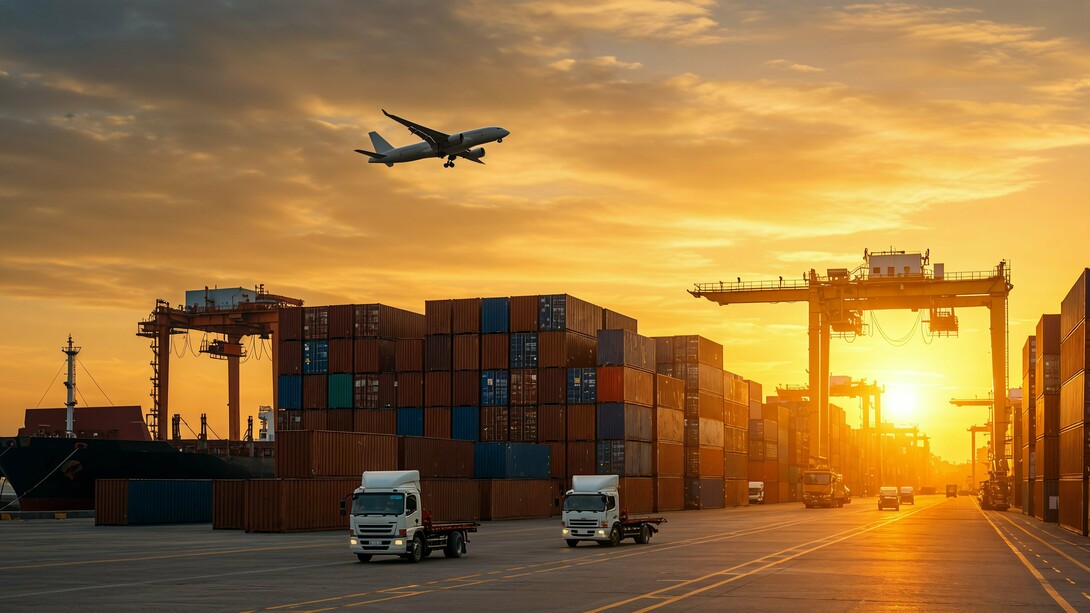
The plans of major powers to reshape the global economy and secure the flow of international trade through new strategic corridors face profound structural challenges. This is due to the growing ability of non-state actors and armed groups to paralyse navigation and trade at chokepoints — specifically in the Middle East.
Developments unfolding throughout 2026 reveal a wide and dangerous gap in Western and international strategic assessments, which have heavily relied on transcontinental infrastructure projects as a means to overcome conflicts, while ignoring the glaring reality that: macroeconomic stability remains a deceptive illusion unless it is grounded in solid political and social stability in the countries through which these projects pass. The past few months have proven that “cheap globalisation”—which relied on open and free waterways—has come to an end, and that the world is entering a new era that requires a precise and painful pricing of geopolitical risks.
The illusion of global stability and the “IMEC Corridor” paradox
Recent analytical assessments point to the emergence of a recurring pattern known strategically as the “paradox of megaprojects.” In this pattern, key actors seek to build massive global economic corridors, perhaps most notably the India-Middle East-Europe (IMEC) Economic Corridor, which aimed to strengthen commercial, logistical, and digital interconnectivity between Asia and Europe through specific geographic channels.
However, despite their geo-economic ambition, these efforts have run into a grave strategic miscalculation: the failure to account for “internal political and security fragility” in some of the corridor’s countries and their regional surroundings. This pattern was revealed with unprecedented clarity through the Houthi group’s targeting of maritime navigation in the Red Sea and the Bab al-Mandab Strait, and the spread of tensions to the Gulf of Aden and the Strait of Hormuz. These developments provided shocking, real-world evidence of the ability of local armed groups—which lack regular armies—to disrupt the entire global economic system and reduce trillion-dollar projects to mere ink on paper simply by closing critical geographical chokepoints.
Economic haemorrhage: the language of numbers and global repercussions
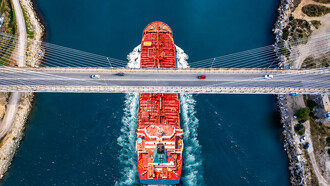
On the ground, this geo-economic fragility has resulted in tangible and severe repercussions; investments worth billions of dollars have become hostages to the decisions and actions of armed militias. According to available data and market indicators for 2026, these successive tensions have paralysed vital segments of supply chains. Shipping costs via the Cape of Good Hope route (the mandatory alternative to the Red Sea) have risen by more than 250% compared to pre-crisis rates, while risk insurance premiums for ships passing through the volatile waterways have jumped to between 1.5% and 2% of the total value of the shipment—figures that are nearly swallowing up commercial profit margins entirely.
This has directly contributed to fuelling waves of global inflation. In a related development, an internal report circulating within the World Bank warned that “ongoing unrest in the Middle Eastern straits could add approximately 0.7 to 1.2 percentage points to global core inflation rates, threatening to undermine central banks’ efforts to control prices.”
A senior official at the European Union’s Trade Commission also stated recently that “overreliance on politically insecure maritime routes is no longer an option; today, we are paying the price for strategic complacency in addressing the developmental and political root causes in the countries along these corridors.”
In light of these facts, there is an urgent need to reassess business strategies and risk management, both at the government level and within major corporations. The lessons learned from the current crisis underscore the imperative of avoiding reliance on a single supplier or a single logistics route—a concept known in crisis management as “avoiding a single point of failure.” Events have proven that building resilient economic structures requires a high degree of flexibility and alternative solutions capable of absorbing sudden geopolitical shocks.
Anatomy of the Crisis
To analyse the question, “How did armed groups choke the arteries of the global economy?” based on data and strategic reports, we must move away from traditional narratives that merely observe events and instead apply a rigorous and direct “anatomical” framework to the crisis:
Military failure and the “asymmetric cost”
The fallacy into which Western capitals have fallen is the belief that conventional military power (aircraft carriers, destroyers, and naval coalitions) is capable of deterring non-state actors and militias. This is an illusion that has been proven false.
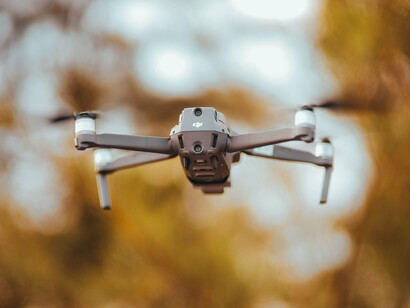
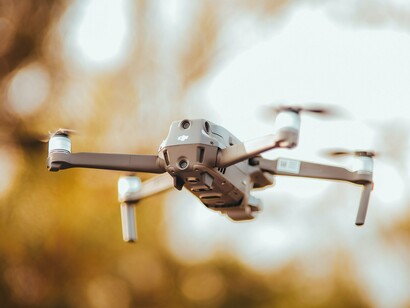
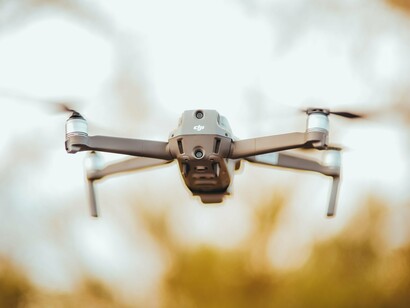
The worst-case scenario is not merely the temporary closure of the Bab al-Mandab or Hormuz Straits, but rather the “convergence and synchronisation of threats.” We are referring here to the execution of simultaneous, distributed “swarm attacks” using low-cost offensive technologies (such as suicide drones, bomb-laden boats, and smart sea mines) against multiple global maritime chokepoints at the same time.
This would lead to the immediate paralysis of supply chains, the collapse of energy markets, and certain famine in fragile states that rely entirely on food and fertiliser imports from abroad.
This highlights the dilemma of “asymmetric cost.” Militias use drones and tactical missiles costing no more than a few thousand dollars, while major powers (such as the United States, Britain, and their allies) are forced to use advanced interceptor missiles (such as the SM-2) that cost millions of dollars per missile, not to mention the enormous operational costs of deploying naval fleets. This represents an economic and military drain on the West, rendering it mathematically and financially unable to continue in providing “free protection” for corridors over long periods.
Furthermore, there is a complete disregard for the deep-rooted causes of the crisis: extreme poverty and climate change, which make joining these groups a purely economic and pragmatic choice for local populations in regions such as the Horn of Africa and Yemen.
This leads us to a crucial question: Why are current strategies failing? Because of the insistence on treating the “symptoms” (military attacks) while ignoring the “disease” (state fragility and the collapse of the social contract). Any global economic corridor (such as IMEC) built on top of politically and socially fragile states is simply a doomed project and a prime target for extortion.
The shock of change and the updated version of globalisation
The mistaken assumption here is the belief that the choking off of corridors marks the end of globalisation; on the contrary, it is the painful birth pangs of a newer, more robust, and more resilient version of it.
The current crisis is acting as a forced accelerator for structural transformation in the global economy. It is forcing multinational corporations to completely abandon the “just-in-time” supply system—an extremely fragile system that proved its failure at the first sign of a shock—and to transition to a more secure system based on regional diversification and distributed local production.
Two golden opportunities for the future stand out here. The first is the strategy of nearshoring. Here, stable countries geographically close to major consumer markets (such as North African countries relative to Europe and Mexico and Canada relative to the U.S. market) face a historic and strategic opportunity to attract manufacturing investments fleeing the risks of transoceanic shipping.
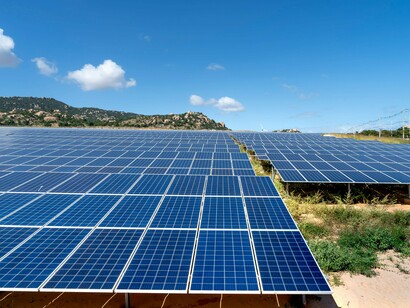
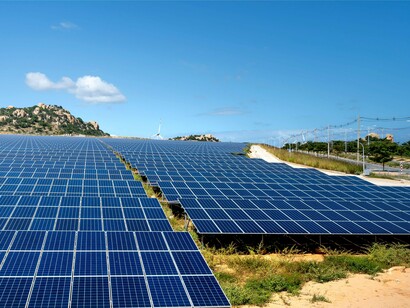
The second opportunity is accelerating the energy transition, meaning that the ongoing threats and blackmail targeting the oil straits (Hormuz and Bab al-Mandab) will accelerate, at an unprecedented rate, the flow of sovereign investments toward renewable energy, battery technology, and green hydrogen, in a strategic effort to reduce dependence on the geopolitics of fossil fuels and their volatile straits.
How can this vision succeed? By redirecting trillions of dollars from massive, intercontinental logistics projects (which are difficult to secure) toward building self-sufficient regional manufacturing and storage hubs, supported by a revolution in “predictive artificial intelligence” to manage inventory, anticipate shocks, and reroute supply chains before a crisis strikes.
Managing a world without guarantees
The fallacy here is passively waiting for stability to return to pre-crisis levels. Absolute stability is over; factoring in the “cost of security risks” has become an integral part of any international business’s budget. The most logical decision, based on the facts, is the immediate adoption of a “redundancy” strategy. No country or major institution can afford to rely on a single Chinese supplier, a single shipping route, or a single strait. Risks must be diversified immediately and radically, even if this leads to a 15% to 20% increase in operating costs, because the cost of “total disruption” (Zero-Revenue) is far higher than the cost of hedging.
Investors and governments must incorporate the principle of “local community stability” as a prerequisite before pouring billions of dollars into geo-economic infrastructure projects. The trade corridor of the 21st century is not protected by tanks and warships, but by the local communities that benefit from it, which must be economically stable and integrated into the corridor’s revenue stream.
Immediate action begins with extensive hedging through supplier diversification, increasing strategic stockpiles (shifting to a “Just-in-Case” system), and securing alternative land or multimodal routes, even if they are time-consuming or more costly.
What should be postponed is the temporary suspension or delay in announcing massive cross-border economic integration projects (such as continental rail lines crossing the Middle East) if these projects pass through grey zones where political conflicts remain unresolved or where governments lack effective sovereignty over their territories.
The toughest question
To reach an accurate strategic conclusion, we must ask the question that everyone avoids: “If the major military powers fail to protect sea lanes from groups using cheap tools, do we have the political and institutional courage to tell our societies and stakeholders that the era of cheap globalisation is over and that they must pay a steep price for ‘security of flows’ in a savage world?”
The direct and unequivocal answer is: No, we do not yet possess this courage, neither politically nor institutionally. Telling societies frankly that the era of “cheap goods” is over is tantamount to declaring the death of an economic system that has ruled the world since the fall of the Berlin Wall. To unravel this impasse, let’s examine it from two angles:
The illusion of power and the flight from inflation
Politicians in democracies are trapped by short election cycles. Telling citizens that the state is no longer able to protect cargo ships and that they must bear permanent structural inflation to cover the cost of “safe alternatives,” is electoral suicide. Therefore, governments resort to “theatrical military displays” by dispatching fleets and carrying out tactical strikes on militia warehouses. This does not solve the geopolitical problem, but it provides societies with the psychological illusion that the military is still in control, thereby preventing them from mentally and economically preparing for the reality of impending inflation.
The dictatorship of quarterly profits
CEOs are terrified of “Wall Street.” Shareholders are addicted to high profit margins. Any CEO who were to announce today that they would cut profits by 20% to invest in building “parallel, costly, and hedging supply chains” would face immediate dismissal by investors who prioritise quarterly profits over the company’s long-term sustainability.
This “institutional denial” leads companies to treat the Red Sea crises as “temporary emergencies” rather than acknowledging them as a new and enduring geopolitical reality.
The “hefty taxes” of the new era
As the world is forced to abandon the illusion of free military protection and enters an era of “self-securing supply flows,” three taxes will inevitably be passed on to the end consumer:
The redundancy tax: This is the capital cost of building two factories instead of one and contracting with a more expensive local supplier alongside a cheap Asian supplier to ensure operations continue should any strait be closed.
Geography tax (nearshoring tax): The cost of relocating production lines from low-wage labour markets in Asia to geographically close, stable countries, resulting in higher labour costs and a stricter regulatory and tax environment.
Social premium/soft shields: Large corporations and investing nations (in projects such as IMEC) will be compelled to allocate a portion of their investment budgets and profits to the development of the vulnerable local communities through which their routes pass. This developmental “soft shield” will be more effective than armed guards, who are powerless against protests.
A strategic roadmap for a safe exit for decision-makers
The ultimate risk is “asymmetric attrition.” Do not get drawn into protracted military conflicts against armed groups with cheap weapons; this path leads to ballooning sovereign debt and the paralysis of military capability. Also, beware of the “illusion of immunity through money”; relying exclusively on currently stable countries does not guarantee the future in a rapidly changing world.
The grand opportunity lies in exploiting the “geopolitical vacuum.” While the great powers exhaust themselves militarily, agile entities can reshape manufacturing landscapes and provide logistical services through non-traditional channels (land-based, digital) to those who can afford stability.
Since we lack the courage to acknowledge outright security failure, business leaders and politicians must reframe this reality in language that markets and societies can accept. Don’t say, “You must pay the price for security failure.” Instead, say: “We are strategically transitioning from an economy of ‘fragile efficiency’ to an economy of ‘sovereign resilience.’”
Tell shareholders that investing an additional 20% to secure decentralised supply chains is not a reduction in profits but rather an “insurance policy that protects them from extinction.” And tell communities that goods will be slightly more expensive, but this is the price of economic independence and localising jobs, rather than leaving food and medicine security hostage to the decisions of armed groups. In this brutal world, true courage lies in honestly pricing in risk and turning that cost into a competitive advantage that ensures only the most adaptable entities survive.