English
 Español
 Français
 Deutsch
 Italiano
 Português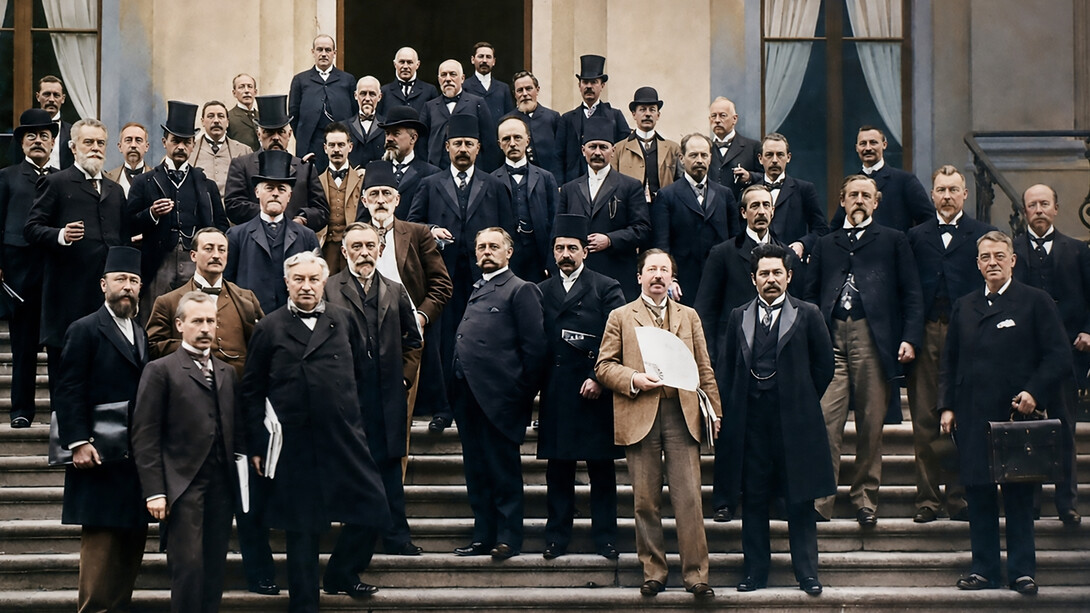
In large part inspired by the Romantic literary and cultural movement, the European Revolutions of 1848-49—that spread from Sicily to the German confederation, to the Austro-Hungarian empire, and to France—hoped to establish a more peaceful and just European society.
Yet despite their hopes of achieving disarmament and a peaceful “Confederation of United Peoples," in the words of the great French poet and novelist Victor Hugo, these social and political movements were largely repressed by 1849. As the century progressed, national leaderships sought to prevent such social movements from uniting across borders and coopt them into their respective definitions of the “national interest.”
The formations of clashing and increasingly polarized alliances then set the stage for the outbreak of the so-called Great War of 1914–18—that (falsely) claimed to be the “war to end all wars” when the Americans entered in 1917.
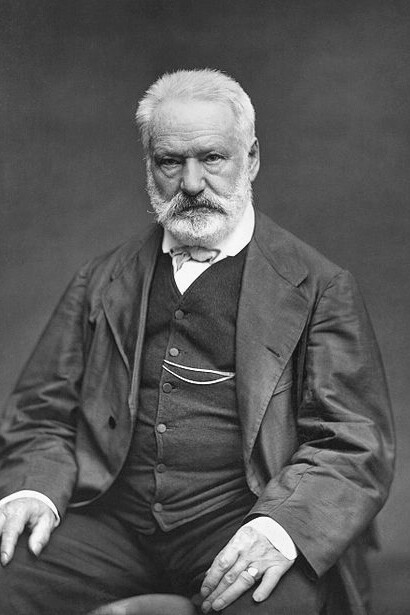
Victor Hugo’s protest against European wars
Victor Hugo, initially a royalist, became an opponent of the authoritarian rule of Louis-Napoleon Bonaparte (later Napoleon III). On August 21, 1849, at the Paris Peace Congress, Hugo declared:
A day will come when your weapons will fall from your hands! A day will come when war will seem as absurd and impossible between Paris and London, between Petersburg and Berlin, between Vienna and Turin… A day will come when you, France; you, Russia; you, Italy; you, England; you, Germany; you all, nations of the continent, without losing your distinct qualities and your glorious individuality, will be merged closely within a superior unit, and you will form the European brotherhood… A day will come when the bullets and the bombs will be replaced by votes, by the universal suffrage of the peoples, and by the venerable arbitration of a great sovereign senate, which will be to Europe what parliament is to England.
Hugo and Marx on the Crimean War
Unfortunately, however, despite Hugo’s eloquent forecast, the day when “weapons will fall from our hands” did not come in his time, despite the revolutionary hopes of the era. His plea against war and for a European parliament would be crushed by monarchist rivalries—by an alliance of Austria, Prussia, and Russia and by the rise of French imperialism that opposed German unification.
Hugo was subsequently forced into his exile due to his opposition to Napoleon III’s 1851 coup d’état. That was the coup that led Karl Marx to comment, citing Hegel, that “all great world-historic facts and personages appear, so to speak, twice: the first time as tragedy, the second time as farce.”
Hugo and Marx opposed Napoleon III, Tsar Nicolas I, and other European dictatorships. This opposition to authoritarianism created an ideological dilemma: Which form of dictatorship was worse when forced to choose sides?
By the time of the 1953-56 Crimean War, both Hugo and Marx found it problematic that France and Britain had aligned with the Ottoman Empire against Tsarist Russia. Hugo argued that the 1853 Crimean War would eventually provoke a revolution in Russia, such that "the Confederation of the United Peoples will emerge—it will be the czar. I will not say who desired it, but who caused it. Cossack Europe will have made republican Europe arise. At this very moment, citizens, the great revolutionary of Europe is Nicholas of Russia.”
For his part, Karl Marx advocated an all-out European war against Tsarist Russia. If the struggle against Tsarist Russia was victorious, this, he argued, would make Russia a giant without arms, without eyes, with no other recourse than trying to crush her opponents under the weight of her clumsy torso, thrown here and there at random, wherever a hostile battle cry was heard.1
In many ways, the calls by both Marx and Hugo for the revolutionary transformation of Tsarist Russia by means of war eventually did result in significant social reforms—but only because Russia was defeated in the Crimean War and Alexander II soon abolished serfdom. Yet the manner in which serfdom was eliminated largely served the interests of the aristocratic classes and provoked a burgeoning social conflict during the Age of Assassination that would eventually lead to the Russian Revolution in the midst of World War I.
Enter Bismarck
Despite significant domestic opposition, and not just from anarchists and socialists, the French saw a major opportunity to play the Tsarist Russian police state against Imperial Germany by forging a Franco-Russian military alliance against Imperial Germany in the period 1890-1894.
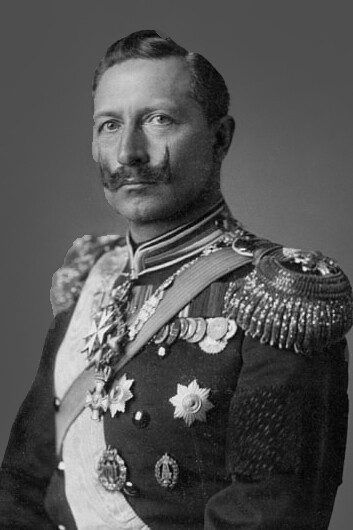
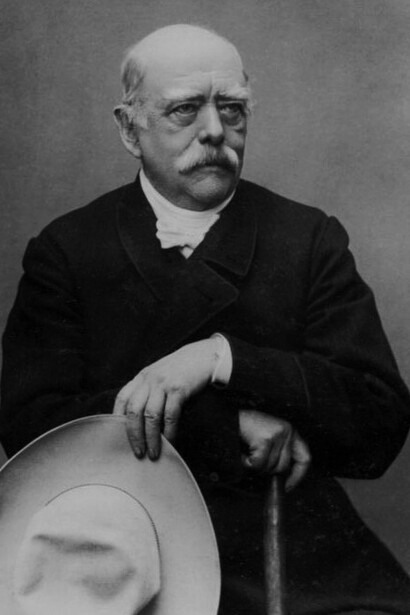
In 1890, Kaiser Wilhelm II forced Bismarck out of office. The new Chancellor von Caprivi then renounced the essentially secret 1887-1890 Reinsurance Treaty with Tsarist Russia that had been implemented by then Chancellor Bismarck to sustain positive German-Russian relations. Much as Bismarck had forewarned, European and global tensions soon began to mount as France moved to align with Tsarist Russia and “encircle” Germany.
As I argued in my book, The Failure to Prevent World War I, it was the French demands for revanche after Bismarck had annexed most of Alsace-Lorraine that were at the root causes of the so-called Great War.2 The mantra "Y penser toujours, n’en parler jamais" (“think of it [Alsace] always, yet speak of it never”), which was attributed to Léon Gambetta, MP of Alsace, haunted the French spirit.
The poet Paul Déroulède, founder of the Ligue des Patriots, perhaps best captured that revanchist spirit and hopes to regain Alsace in his doggerel: “And revenge must come—slow perhaps, but in any case fatal and terrible for sure; the hate is already born, and its force will continue to grow: it is for the reaper to judge whether the field is ripe.”
France and Tsarist Russia “Encircle” Germany
Imperial Germany did not begin to fully militarize until after France and Tsarist Russia aligned in the period 1890-1894—an event symbolized by the construction of the gilded Alexander III bridge in Paris. By 1897, Imperial Germany developed its risk fleet to counter superior French and Russian naval pressures and to try to threaten Great Britain into not forging an alliance with the two countries.
For its part, in the period 1901-1908, after it was able to strengthen its military alliance with Russia, Paris was able to draw both the Americans and the British into an “entente” against Imperial Germany as well. By 1901-02, Imperial Germany’s “risk fleet” was seen as a direct “existential” naval threat to Britain.
Rudyard Kipling’s shifting views of Russia and Germany
Britain’s “about-face"—in which British strategists began to focus on “containing” Imperial Germany and not France and Russia—was revealed in Rudyard Kipling’s geo-poetics. Suddenly, just like the British foreign office, Kipling was shifting his sardonic poetic focus from the Russian “Bear” to the German “Hun.”
In his 1898 poem, “The Bear that Looks like a Man," Kipling denounced Russian proposals for the 1899 Hague Conference to engage in disarmament as a tactical maneuver that could permit Russia to expand its power and influence in Asia—given historical British-Russian rivalries over what he called the “Great Game” in his novel about a child soldier, Kim.
By 1902, however, Kipling began to focus more on the German “Hun” in his poem “The Rowers"—when it appeared that Britain might forge an alliance with Imperial Germany that was intended to force Venezuela to pay its debts after it had defaulted on repayments to both Berlin and London.
Here, London was hoping closer ties with Berlin with respect to Venezuela could represent a step toward counterbalancing both France and Russia. Yet much as the poet Kipling argued the Germans had supplied the Boers with arms against British interests, many Brits argued it was not possible to cooperate with “the Hun.”
After London joined Berlin in a joint two-month-long naval blockade of Venezuela in December 1902—angering the US—British efforts to forge an entente with Germany failed in large part as France lobbied Britain for closer defense ties against Berlin.
Between 1908 and 1914, the battle lines were drawn. The globe had polarized between the Triple Entente of France, Britain, and Russia and the Triple Alliance of Imperial Germany, Austria, and Italy—even if Italy, as a pivot state, would switch sides during World War I.
The fact of the matter is that if the French had not been able to forge an alliance with the repressive Tsarist Russian empire in 1894, Paris would have never taken the risk to pursue its goals of revanche versus Imperial Germany—in the effort to regain Alsace-Lorraine.
In other words, the German militarism that Fritz Fischer in his book Germany’s Aims In The First World War had argued represented the cause of World War I was largely provoked by the Franco-Russia alliance.
Failure to reconcile with Germany
And while the British and French Socialists, such as Bertrand Russell and Jean Jaurès, argued for reconciliation with Germany and the formation of a British, French, and German entente versus the repressive Tsarist Russia, it did not prove possible to implement such a counter-strategy.
The fact that France and Russia had become strategically and economically interdependent (with heavy French investments in Russian railroads) made it nearly impossible for France to break relations with Russia. Moreover, lack of trust between France and Germany made it more difficult for French and British socialist leaders to alter the anti-German policies of their respective governments—even though London had been fighting the “Great Game” with Russia throughout the 19th century and even though London and Paris came very close to going to war over Fashoda in East Africa in 1898.
Unable to forge an entente with Berlin, London soon found itself siding with the French and Russians. On the one hand, Russia and France could both threaten Britain’s global colonial interests. On the other hand, Germany’s naval capabilities increasingly appeared to threaten the British navy, while the Berlin-Baghdad-Basra rail line through the Ottoman Empire appeared to represent a threat to the Suez Canal.
Given the rise of Germany as a perceived threat, it was quite astonishing how rapidly the British Foreign Office was able to make amends with France (in the period 1902 to 1904) and with Russia (in the period 1904-1907)—despite Britain’s historical animosity to both France and Russia.
By 1908, London, Paris, and Saint Petersburg were all aligned against Berlin, Vienna, and a fickle Rome.
The Europeans did not “sleepwalk” into World War I
Contrary to contemporary views, the Europeans did not sleepwalk into war.3 War was generally expected by French, British, German, and Russian military elites in the period 1911-14. Yet no one really expected the war to be so devastating.
Ezra Pound’s 1911 poem, Sestina Altaforte, represented an example of the militarist proto-fascist spirit of that era. I satirized that poem in my reading my own sestina, agressão dos cachorros, that I wrote in 1972 as a protest against the Vietnam War in front of Pound’s tomb in Venice.4
Russian revolution
The Franco-Russian alliance did not break apart until the Bolshevik revolution, in which Lenin was supported by Imperial Germany. Saint Petersburg broke away from the French capitalists in 1917 in the midst of that horrific war. Soviet withdrawal from the war was a major factor that led the US to enter World War I, as Russia was no longer doing the dirty work and sacrificing its soldiers against Germany.
Contrary to the hopes of both Victor Hugo and Karl Marx, the Russian revolution led by Lenin and the Bolsheviks did not lead the states of Europe to lay down their arms and join hands in brotherhood, even if that revolution was inspired by the great poetry of Alexander Blok, Mayakovsky, and Maxim Gorky.
A new repressive form of totalitarian Communist dictatorship came out of the ashes of the Tsarist empire—that perhaps resulted in Maykovsky’s suicide—as I depicted in my poem, Mayakovsky, No Longer a True Believer, that I read beneath his bust in Moscow.5
Short war illusion
Many elites expected and wanted war in the (false) belief that such a war would only last 6 months and would be like the 1870-71 Franco-Prussian War. This view overlooked the fact that the close Franco-Russian alliance meant that once a war was sparked, it would automatically widen and intensify—as was not the case for the Franco-Prussian War of 1870-71, in which France and Germany fought without allies.
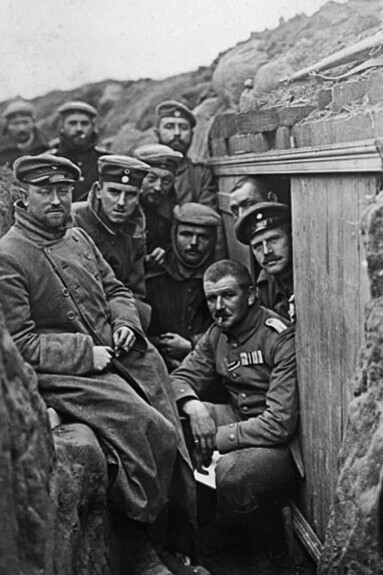
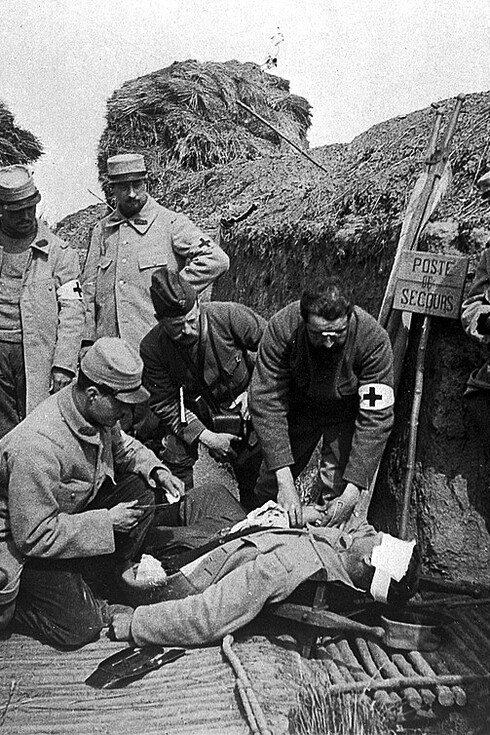
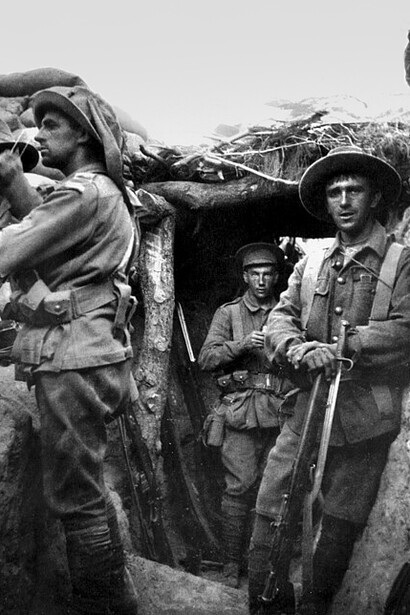
Once the so-called “Great War” broke out, it did not end easily, despite the horrific slaughter of trench warfare. On the one hand, the pro-war poet, Rudyard Kipling, protested against German war crimes in his poem, “For All We Have and Are.” On the other hand, the British poet Siegfried Sassoon, friend of the anti-war poet Wilfred Owen, protested against the war with his “Soldier's Declaration” in 1917—for which he came close to being court-martialed for treason.
Sassoon had written to his superiors, “That the war is being deliberately prolonged by those who have the power to end it… I believe that the war upon which I entered as a war of defense and liberation has now become a war of aggression and conquest… I am not protesting against the conduct of the war, but against the political errors and insincerities for which the fighting men are being sacrificed.”6
Relevance today
Contrary to Hugo’s hopes, not only have weapons not fallen from our hands today―after the protests against nuclear war and Vietnam of the 1960s and 1970s―but 21st-century weaponry has become even more powerful and destructive.
And, as Wilfred Owen’s great anti-war poem Dulce et Décorum Est should remind us, states are willing to use poison gas and other possible weapons of mass destruction to prevent themselves from losing wars—including using nuclear weapons.
Moreover, the alienation of both Russia and Germany from Hugo’s original call for a “Confederation of the United Peoples” in which states would not lose “their distinct qualities” and "glorious individuality” made the quest for such a confederation virtually impossible. And now that Europe has unified in the aftermath of two world wars—but not in the way Hugo envisioned—post-Cold Russia has found itself alienated from both NATO and European Union expansion—provoking its horrible war with Ukraine.
Britain’s last minute effort to make amends with France, USA, and Russia in the period 1902 to 1914 proved that it was possible to establish peace with both democratic and authoritarian rivals—contrary to anti-Tsarist Russian propaganda of the epoch. British efforts in that era can provide a model for the US and Europe to make amends with Russia today.
At the same time, however, those British efforts to achieve peace with both France and Russia failed to prevent war with Imperial Germany—precisely because Berlin had been alienated by the fact that London had begun to back Germany’s rivals, France and Russia, against it.
The question now is whether the US can find ways to reconcile with both Russia and China in much the same way that Britain was able to reconcile with France and Tsarist Russia. In working with China in particular, Washington will need to take solid steps toward bringing peace between Russia and Ukraine; Israel, the Palestinians, and Iran; North and South Korea; and China and Taiwan―so that these wars and conflicts will soon not draw Russia, China, and the US into direct confrontation―much as was the case when the conflicts over the Balkans and Alsace-Lorraine brought Britain, France, Russia, and Germany into the so-called Great War.
References
1 Hall Gardner, Karl Marx and NATO, MEER (18 June 2022).
2 Hall Gardner, The Failure to Prevent World War I: The Unexpected Armageddon (Routledge, 2015).
3 Christopher Clark, The Sleepwalkers: How Europe Went to War in 1914 HarperCollins (2013).
4 Hall Gardner, Sestina: agressão dos cachorros. See also Hall Gardner, The Wake Up Blast.
5 Hall Gardner, Mayakovsky; No Longer a True Believer. See also Hall Gardner, The Wake Up Blast op. cit.
6 Siegfried Sassoon, “Soldier's Declaration” June 15, 1917.