English
 Español
 Français
 Deutsch
 Italiano
 Português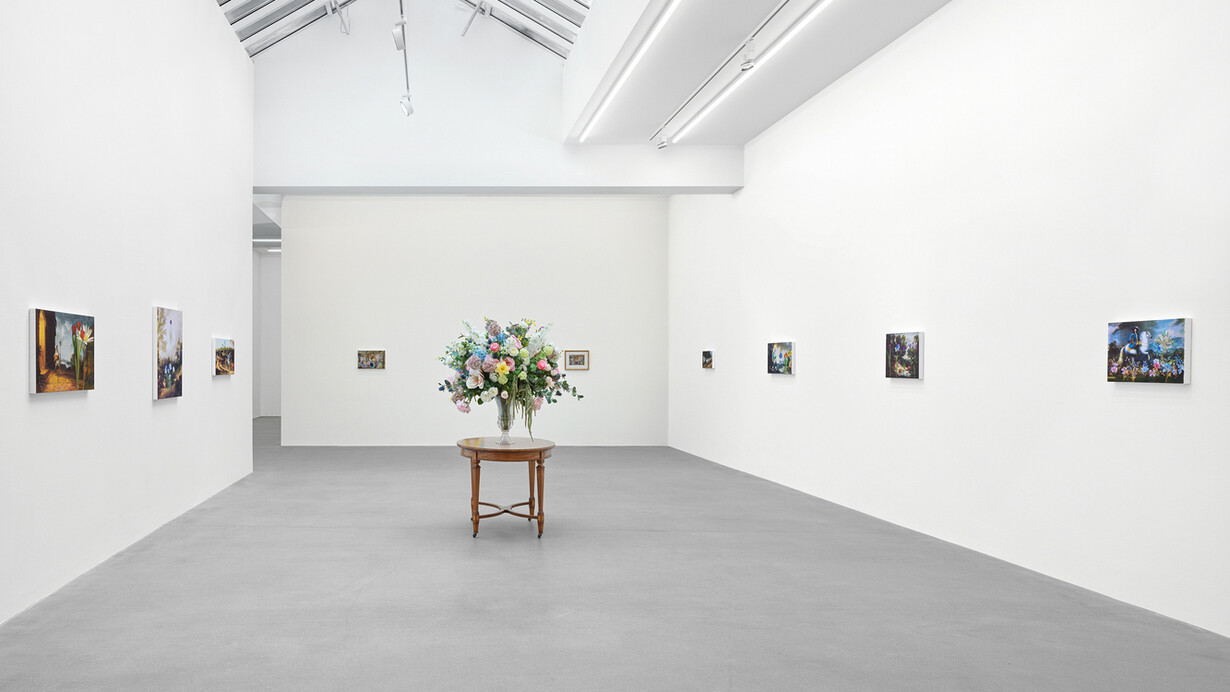
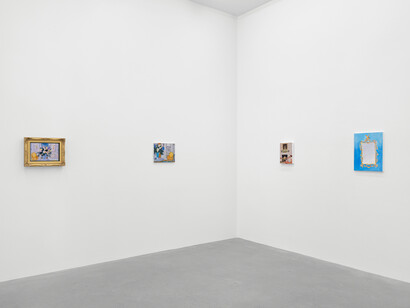
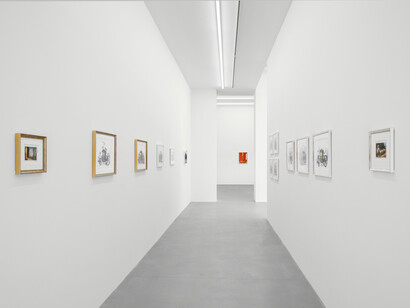
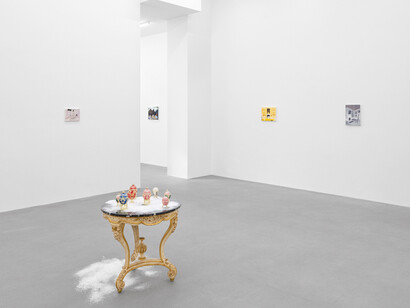
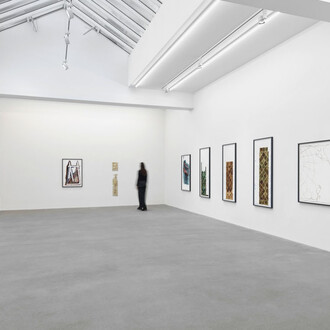
Galerie Eva Presenhuber is pleased to present its ninth solo exhibition with the US-American artist Karen Kilimnik.
Since the late 1970s, Karen Kilimnik has consistently incorporated a wide variety of media into her work—from drawing and painting to collage, and mise-en-scène-sculpture to photography and video. Despite this openness to different media, her work follows a conceptual precision. Kilimnik operates with an iconographic archive that spans several centuries: from 17th- and 18th-century court painting to romantic landscapes and history painting to references to popular culture, fashion, television, and movies.
However, these diverse image sources do not appear as linear art-historical quotations. Rather, they appear in Kilimnik’s works as cultural recurring forms—as pictorial formulas that have sedimented over the course of history and are becoming visible again in the present. Her images therefore often appear as multi-layered pictorial spaces: layers of art history, decor, popular culture, and fantasy overlap to form a peculiar pictorial world that seems both familiar and unsettling.
One possible approach to Karen Kilimnik’s work is to examine the concept of glamour, which is repeatedly used as a descriptive category in the reception of her work. In her work, glamour does not appear as mere glitz or luxurious surface but unfolds its meaning in the depth of its etymological origin. The word “glamour” dates to the Scottish glamer of the early 18th century and originally referred to a spell that deceives the eye and makes the world appear more beautiful than it is. This meaning, in turn, is derived from “grammar,” a term associated in the Middle Ages with scholarly, sometimes occult knowledge. In this sense, glamour refers less to beauty than to a form of knowledge and power over appearance—an artificially created, dazzling visibility.
(Text by Dr. Raphael Gygax)