English
 Español
 Français
 Deutsch
 Italiano
 Português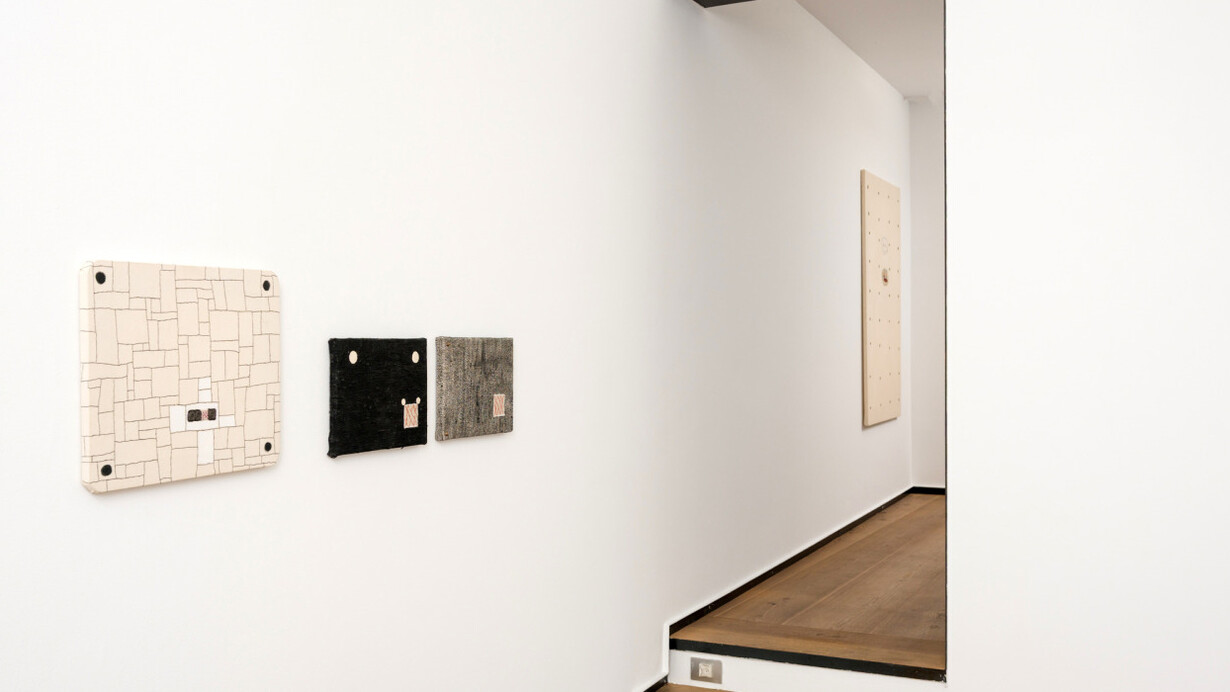
In art it is always a mistake to push a concept to its logical conclusion.
Art comes into being not through correct reasoning but through
uniting contradictions of reason in the ambiguities of a metaphor.(Harold Rosemberg)
We assume that the ultimate question a viewer asks themselves when faced with any given work is: ‘Is this any good?’.
To resolve this uncertainty, the viewer is given a text to help them make up their mind. If the text is well-written, if it draws on ideas they are familiar with, if it introduces concepts they hadn’t considered, if it is clearly expressed and/or well-intentioned, then, hopefully, that viewer will be more inclined to answer the nagging question in the affirmative.
But perhaps, I say, perhaps it is more productive to accept that art lies in the realm of uncertainty, perplexity and ambiguity. Perhaps we should not try to cling to certainties at all costs, and it would be better to leave our comfort zone, that world of ideas where it is easier for us to judge.
When I explain what I do, I find it misleading because it is so partial and anecdotal; in reality, I am diverting attention to something else. I believe that to fully appreciate art, one must approach it in a different way.
We insist on a conversion that is impossible without falling headlong, and at best, into some form of reductionism. It would, in a way, involve retracing the path one follows when creating. But that path can only be travelled in one direction.
Nor is it necessary for you to react immediately. Sometimes we need a little more time for our impressions to settle, and for that critical judgement to reach maturity.
I encourage you to open your eyes wide, look with curiosity, and, when contemplating my works, to ignore the noise that reason inevitably introduces. Let yourselves be carried away, just as you surely do when listening to music.
Thank you for your attention.
(Text by Marta Barrenechea, 2026)