English
 Español
 Français
 Deutsch
 Italiano
 Português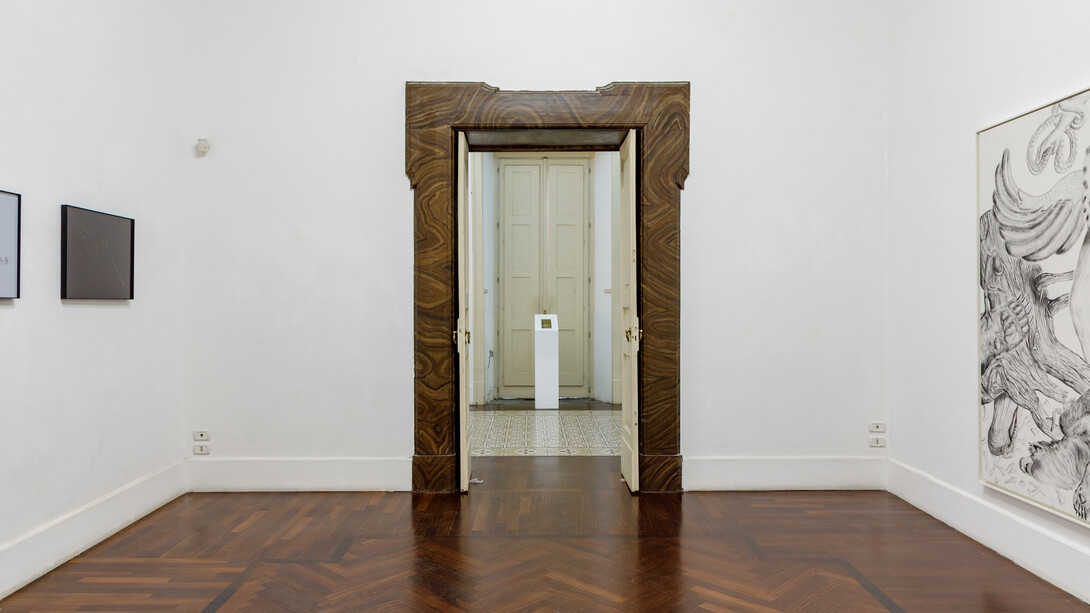
Galleria Tiziana Di Caro is pleased to announce the opening of the group exhibition entitled Dove il futuro fu, il passato sarà, il forse è (Where the future was, the past will be, the maybe is), featuring works by Lorenzo Coletta (Napoli, 2001), Luca Gioacchino Di Bernardo (Napoli, 1991), Theo Drebbel (Napoli, 1990), and Renato Grieco (Napoli, 1991). The exhibition will open on Thursday, 4 June, 2026, at 7:00 PM.
The exhibition title is borrowed from a poem by Betty Danon, featured in her 1973 artist's book Poesie nel quadrato (Poems in the square).
The works of Lorenzo Coletta, Luca Gioacchino Di Bernardo, Theo Drebbel, and Renato Grieco are firmly anchored in the present, yet they transcend objecthood. The opening line of the poem reads: My dimension is outside the square. Grounded in this premise—which Danon applies to herself—the project explores the potential relationship between practices that are deeply embedded in the contemporary discourse, driven by an autonomous and conscious critical approach, yet far removed from conventional logic. Each of the four artists' practices moves beyond the everyday to highlight a rigorous and independent critical framework. Their work aims to subvert what is perceived as reality, venturing into a realm that concerns not only what we can see, but, above all, what we can imagine.
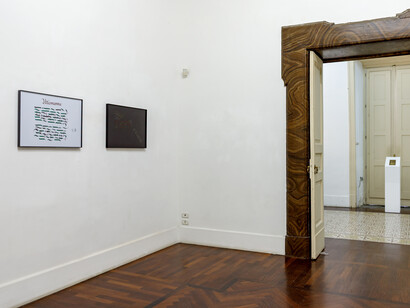
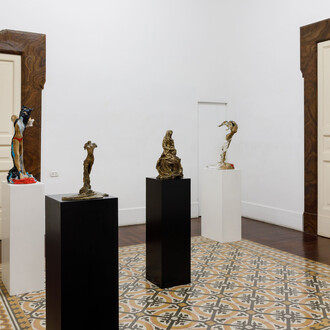
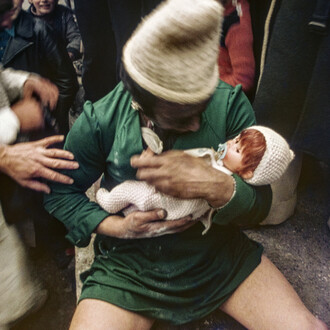
The relationship among the three works by Lorenzo Coletta constitutes a mise-en-scène that never begins, in which the Venus senza titolo (Πάθεμάθος), embedded within a small proscenium, serves as a parable for the impossibility of movement of a man turned toy, trapped in a moment of decay that may culminate either in metamorphosis or in immutability. The photographs, titled Tentazione della dedizione - Mi portò in una chiesa era nuova e brutta... (Temptation of dedication - He took me to a church, it was new and ugly...), depicting the same church at two different moments, attempt to escape the grueling fixity to which the Venus appears condemned. They generate an illusion of movement and light, which is nevertheless dominated by the overall static nature of the scene.
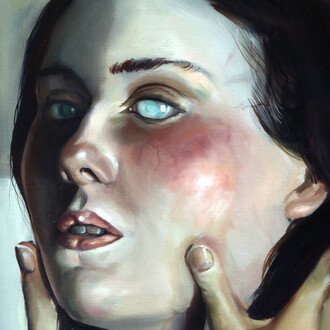
The large-scale canvas by Luca Gioacchino Di Bernardo, previously exhibited at the last Quadriennale di Roma, is titled Dio è con noi (God is with us). The figures crowd together within a dimension devoid of spatial coordinates. Two busts of angels rise above a pile of bones and monkey bodies, looming over a cow that does not seem to suffer from the situation, yet nonetheless yields. We are confronted with a sequence of aggregated figures that represent humanity—the byproduct of an industrial society that dominates nature by destroying it.
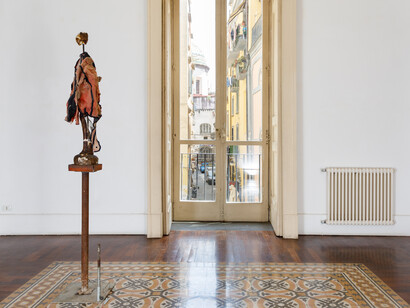
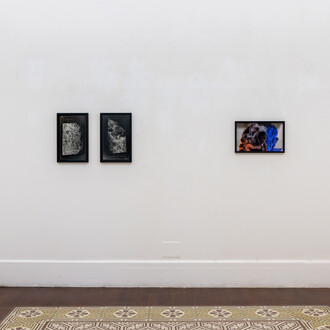
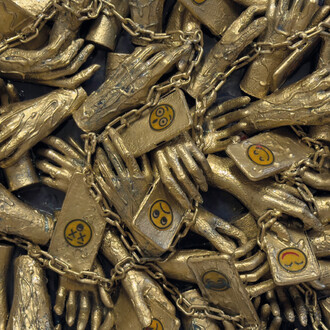
The works of Theo Drebbel emerge from a dual movement of invocation and apparition, rooted in the conviction that any image can be summoned and brought out of its latent state, provided one possesses the means to interrogate it. Through minimal marks, traces, and correspondences, the work activates an unstable relationship among memory, matter, and language, entering past time not as a closed space, but as a field still open to possibilities.
Micro-landscapes articulate themselves within the space like letters of an alphabet that predates the spoken word. Metal serves as the site of manifestation for its own inner spirit; through abrasions, grafts, and minimal marks, the work seeks to activate a quasi-divination dimension of the image, as if matter itself harbored the potential for an oracle. The Soglie (Thresholds) are places of passage, yet when drawn, they form a plane—much like how Drebbel now conceives memory, which reconfigures itself with a question: what will happen in the past?
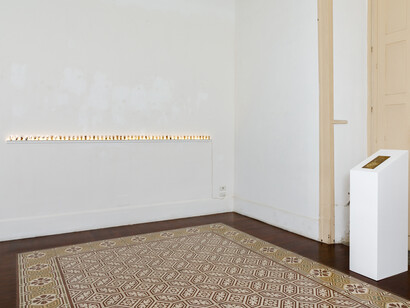
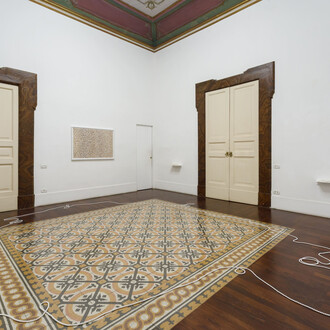
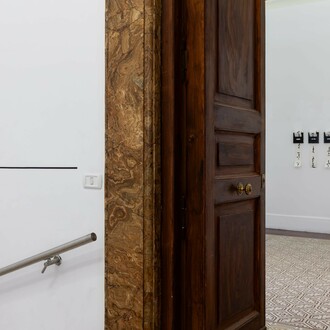
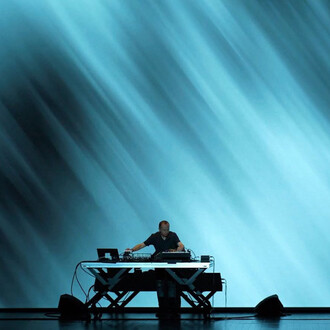
The scores of Renato Grieco render the invisible visible. The sound is codified through a system of signs not found in conventional contemporary musical notation, but which instead resembles that of Renaissance tablature. Upon observation, we encounter a semantic structure that prescribes the set of gestures required to perform the music, rather than the exact notes. It is precisely this theme of listening that Renato Grieco's work emphasizes: a site-specific installation grants access to a tape loop that renders an audible harmonic dimension as one traverses the space. Accompanying this work is a score which, unlike the manuscripts, precisely reflects the structure and movement of the sound.
The decision to invite four artists evokes the image of the square—an archetype representing earthly reality, matter, physical form, and consciousness. In this group exhibition, the concept of the square becomes an ideal figure to articulate a unique perspective, an expressive segment that offers a tangible structure and volume to thought.