English
 Español
 Français
 Deutsch
 Italiano
 Português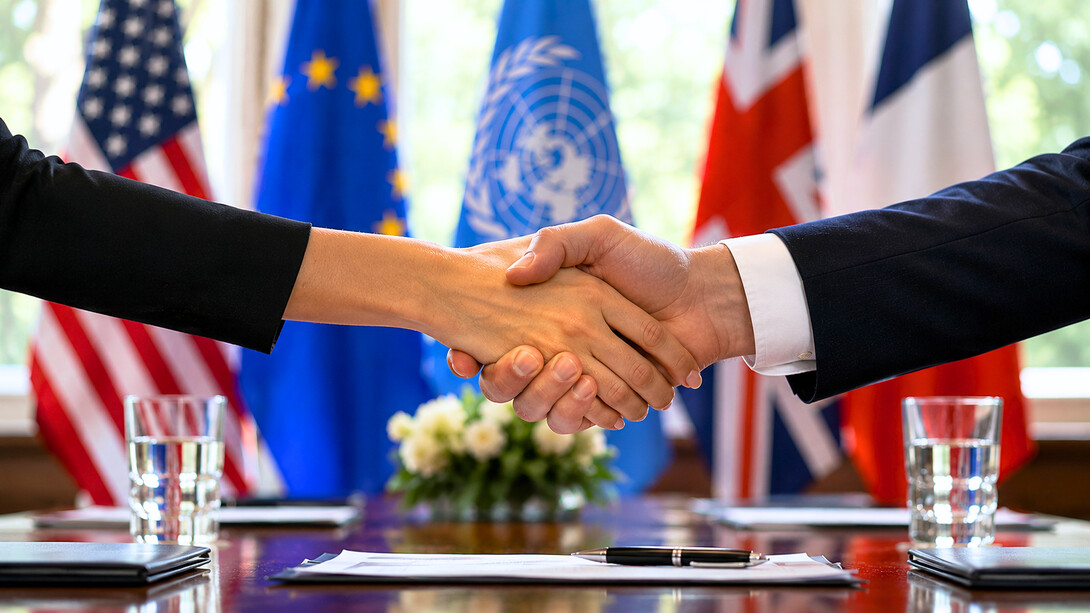
It has been 81 years since the United States used the world’s first nuclear weapon and demonstrated why such a device should never be used again. Since then, countries have entered into more than 20 agreements to limit, end, or reverse the proliferation of the weapons or, ideally, to ban them altogether.
Although the world has avoided using them again, it has not taken the necessary steps to ensure they never will be. Instead, we have arrived at a fraught and fragile moment when more countries are trying to develop these weapons, the nine members of the “nuclear club” are modernizing theirs, geopolitical tensions are rising, and existing arms control agreements are failing.
Now, Israel and the United States have demonstrated an alternative to diplomacy. If members of the club don’t like another country that’s trying to join, they can bomb them back into the Stone Age.
In the past on these pages, I described nuclear weapons as one of three “horsemen of the apocalypse.” Climate change and the uncontrolled advance of artificial intelligence are the other two. However, nuclear weapons are the most dangerous. They can be launched in a moment of fear or anger, misunderstanding, technical failure, poor judgement, or bad luck. They can travel from North Korea to the United States in less than 40 minutes, from Russia to the United States in less than 30, and from Russia to Ukraine in less than 15.
With more than 12,000 nuclear warheads scattered around the world, including nearly 4,000 that are ready for use, an attack by any country could set off a chain reaction of retaliation that ends civilization as we know it. The result would be a nuclear winter that devastates life on the planet, including radioactive contamination for centuries, causing cancers and genetic damage among those who survive. (Already, 2.4 million people in the world are expected to die from cancers caused by nuclear weapons testing between 1945 and 1980.
It is a miracle of diplomacy and good luck that a nuclear exchange has not occurred in all these years. But as the Iran war demonstrates, diplomacy can fail, and, as one diplomat put it, “Luck is not a policy.” There are several reasons why the Bulletin of the Atomic Scientists has set its Doomsday Clock at 85 seconds to midnight, the closest humanity has ever been to a worldwide catastrophe.
The taboo about threatening to use nuclear weapons seems to be disappearing. Vladimir Putin has threatened to use them in his war against Ukraine. In April, U.S. President Donald Trump threatened that Iran’s “whole civilization will die tonight, never to be brought back again” if it did not allow oil shipments to resume through the Strait of Hormuz.
Trump is an example of our precarious situation when the single leader of a nuclear-armed nation is given sole authority to trigger Armageddon. At age 80, he is impulsive, quick to anger, and intent on retaliating against anyone who defies him. He is making bad decisions, including his rejection in 2018 of the three-year-old agreement between Iran, the U.S., and several other countries to restrict Iran’s nuclear program in exchange for sanctions relief.
He has made demonstrably bad decisions, including the one in which he aborted new negotiations with Iran and joined Israel in launching the war. He apparently did so without understanding or acknowledging Iran’s ability to hold the entire world economy hostage by cutting off oil shipments.
However, a nuclear-armed world cannot be led by people who make bad decisions. They must always get every decision right.
Nevertheless, Trump’s authority to launch a nuclear attack extends beyond the United States. He has sole authority over the use of an estimated 100 U.S. weapons stored in at least five NATO countries: Belgium, Germany, Italy, the Netherlands, and Turkey. Similarly, Russia has deployed nuclear weapons in Belarus and possibly in Crimea.
Last February, the last remaining arms control agreement between the U.S. and Russia expired. The two countries control 83 percent of the world’s nukes. Now, there are no legally binding limits on the number of weapons they can have, so the door is open for a new arms race between them.
In the meantime, China is rapidly enlarging its arsenal, India and Pakistan are expanding theirs, and North Korea continues to develop weapons capable of reaching not only South Korea and Japan but also the U.S.
The United States has tried to discourage proliferation in the past by placing allied nations under its “nuclear umbrella,” its guarantee that it would use its nuclear weapons to defend non-nuclear allies. But Trump’s actions recently have undermined Western Europe’s trust in America’s commitment to NATO. That has led more European nations, including France, the UK, Germany, and Poland, to consider developing their own weapons or sharing those of other European countries.
The most important and sensible global agreement – the first to call for a comprehensive ban on nuclear weapons – is the 1970 Nuclear Non-Proliferation Treaty. Nearly all countries (191) have signed it. Arms-control advocates explain that “It prohibits nations from developing, testing, producing, manufacturing, transferring, possessing, stockpiling, using, or threatening to use nuclear weapons or allowing nuclear weapons to be stationed on their territory. It also prohibits them from assisting, encouraging, or inducing anyone to engage in any of these activities.”
In addition, “A nation that possesses nuclear weapons may join the treaty, so long as it agrees to destroy them in accordance with a legally binding, time-bound plan. Similarly, a nation that hosts another nation’s nuclear weapons on its territory may join, so long as it agrees to remove them by a specified deadline.”
However, the treaty is reportedly “under strain.” Nuclear powers have only agreed “in principle,” and non-nuclear signatories believe the nuclear states are not fulfilling their obligations. Trust between members of the nuclear club and the rest of the world is said to be eroding.
At the same time, the threat of nuclear war or accident is heightened by new factors. In addition to the Iran and Ukraine wars and tensions between nuclear powers Pakistan and India, the U.S.-China rivalry has grown; nuclear command systems must cope with cybersecurity risks; the U.S. is planning a “Golden Dome” system that could upset the deterrent of mutually assured destruction (MAD), and the rapid growth of artificial intelligence has raised concerns about the use of AI to replace human judgement in military decision-making.
The late Mikhail Gorbachev was a foremost advocate for abolishing nuclear weapons, the only way to effectively end the threat of an uncontrollable, humanity-destroying, life-extinguishing war. It is madness that such an event remains a hair-trigger possibility today. Gorbachev understood that so long as these weapons exist, they will eventually be used.
"It is my firm belief that the infinite and uncontrollable fury of nuclear weapons should never be held in the hands of any mere mortal ever again, for any reason,” he said. “A nuclear war cannot be won and must never be fought...As long as weapons of mass destruction exist, primarily nuclear weapons, the danger is colossal. All nations should declare—all nations—that nuclear weapons must be destroyed. This is to save ourselves and our planet."
Are we smart enough, and do we care enough, to comply?