English
 Español
 Français
 Deutsch
 Italiano
 Português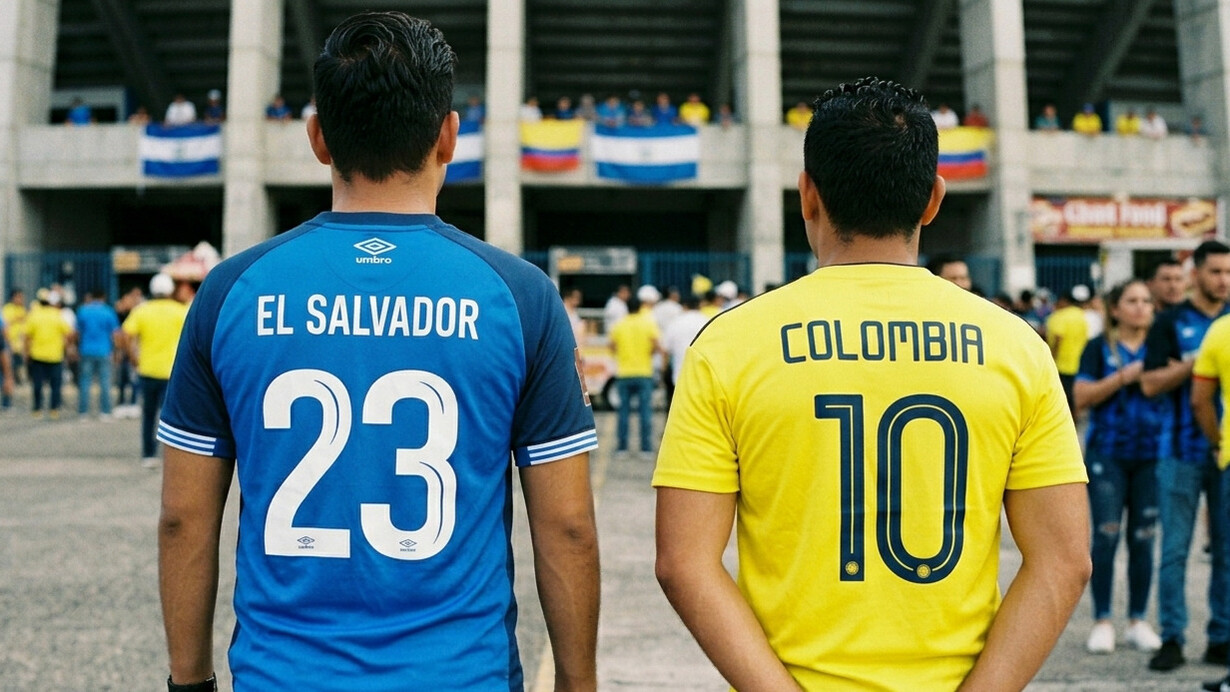
United we stand, divided we fall.
(Aesop)
Relations among Latin American countries range from friendly to respectful rivalry. The latter exclusively for soccer matches. Other than that, most countries maintain cordial relations, focusing on trade. All of this revolves around our mutual cultural heritage as former territories of the Spanish Empire. The Brazilians are our cousins and we all stare in awe at how similar yet how different we are.
Anyhow, there are two particular countries unaware of the effect they've had on each other. As a citizen of one of those who lived in the other, it was a weird feeling being liked by just saying where I was from and often, with admiration.
Salvadorans absolutely love Colombia. One would think they have nothing to do with Colombia. With different climate zones including deserts, rainforests, savannahs, and coasts on both oceans, Colombia has over 8 times El Salvador’s population. The tiny Central American nation sits on the Pacific and is so small that its demographic concentration in the capital makes it seem like a city-state.
How can the “unaware brotherhood" between the two be explained? Because they complement each other perfectly.
For most of the Salvadoran population, Colombia is a wonderful touristic destination. Beaches, nightlife, and a good exchange rate (El Salvador is dollarized, unlike Colombia, a factor that plays another role later on) make it the ideal getaway for Salvadorans. Salvadorans don't have a coast on the Caribbean so the multiple cities on the Colombian coast are all better than staying home for holidays.
Colombian nightlife is a diametrical opposite of the indoors and secluded social life that developed in El Salvador following decades of high crime rates. Meanwhile, Colombia has made tourism and a welcoming environment its country brand for the past 25 years. Another reason Colombia resonates so well with Salvadorans is that Salvadoran music is heavily influenced by Colombian music.
What Salvadorans, other Central Americans, and even Mexicans call cumbia is none other than the same Colombian cumbia. Famous artists like Aniceto Molina, beloved in El Salvador, also, and Lucho Argaín are two of the most famous cumbia artists from Colombia. They spent most of their career between Mexico and Central America. I personally had no idea this nexus existed until I was at a supermarket in El Salvador and I realized they were playing Se me perdió la cadenita. Most of you have no idea what I'm referring to but ask a Salvadoran and they will instantly understand what I mean.
In the 70s, Colombia was a powerhouse of music. Cumbia, salsa, and vallenato were the most popular genres in Latin America. All three had Colombians as their major exponents. Of those three, only salsa is not originally Colombian but to this day Cali is considered the world’s capital of salsa. Vallenato later influenced Dominican bachata and a lot of their artists even cover famous vallenato songs. Nowadays Colombia continues to export music via reggaeton and whatever genre Shakira falls into. This is a story for a later article.
Anyway, back to the topic of the unaware brotherhood.
As I said, most Salvadorans equate Colombia with music and tourism. Interestingly, a sector of them actually equate Colombia with big business and high finances. The issue is a matter of complementation, again.
In the early 2000s El Salvador decided to adopt the US dollar as its official currency. What was largely a measure to combat inflation similar to that of other countries1 exiting phases of instability and violence, Colombian banks saw as an opportunity to build assets in hard currency. Remember what I said earlier of Colombia not using the dollar? Not only does it not use it as legal tender, but the country is also completely closed off to the dollar.
Some countries in Latin America and worldwide allow dollarized accounts despite the physical currency itself not being used. This facilitates imports and facilitates international financial operations as well as raising capital. For Colombian companies, dollar operations are limited to those big enough to have operations in the US or in neighboring Panama.
When El Salvador decided to dollarize, the country had next to no experienced workforce but it now had dollars. Colombian banks, on the other hand, had experience and no dollars. Perfect match. Nowadays most banks in Central America are of Colombian origin. These include Davivienda, BAC (known in Colombia as AV Villas) and Banco Agricola (known in Colombia as Bancolombia and in Panama as Banistmo).
The other main deal between these two countries was the merger between Colombian airline Avianca and Salvadoran airline TACA slightly over 15 years ago. As of now, Avianca operates the most routes in Central America for any airline (mainly between Central America and the US) and the majority stakeholder is Salvadoran businessman Roberto Kriete. The fact that most banks and the most popular airline are of Colombian origin creates a situation where a heavy chunk of Salvadoran executives, journalists, and business school professors have knowledge of Colombian business affairs. Many have worked in banks and for Avianca. A lot have even lived in Bogotá for a couple of years.
I was amazed to hear all of these people talk to me about Colombia with such proximity when I know for a fact most Colombians cannot find El Salvador on a map. Sadly, I only encountered one other Colombian working there, Juliana, founder of a software development company.
Saying one is Colombian therefore makes for a great first impression with almost all Salvadorans. Eh, there are 50 million of us but it’s a soft flex.
The most interesting thing about this phenomenon is that it is constantly evolving and has started to come full circle. Ever since the advent of the Bukele era in 2019, the admiration has become mutual. As Colombia struggles with violence, many citizens and politicians look towards El Salvador as a role model. Politicians running for office openly claim to emulate President Bukele and seek his endorsement. All in all, these countries have a history of complementing each other in what they lacked and their admiration is now reciprocal.
As the cultural, business, and political ties are strengthened, we face a unique situation for Latin American countries to go from unaware asymmetric admiration to mutual admiration, and, why not, brotherhood. I hope citizens of these countries start becoming more and more aware of their similarities because frankly, 20ish balkanized countries pretending to be different instead of acting as a bloc is quite a missed opportunity.
Notes
1 DRC's dedollarisation: a bold shift to Franc Congolais. Meer. March 2025.