English
 Español
 Français
 Deutsch
 Italiano
 Português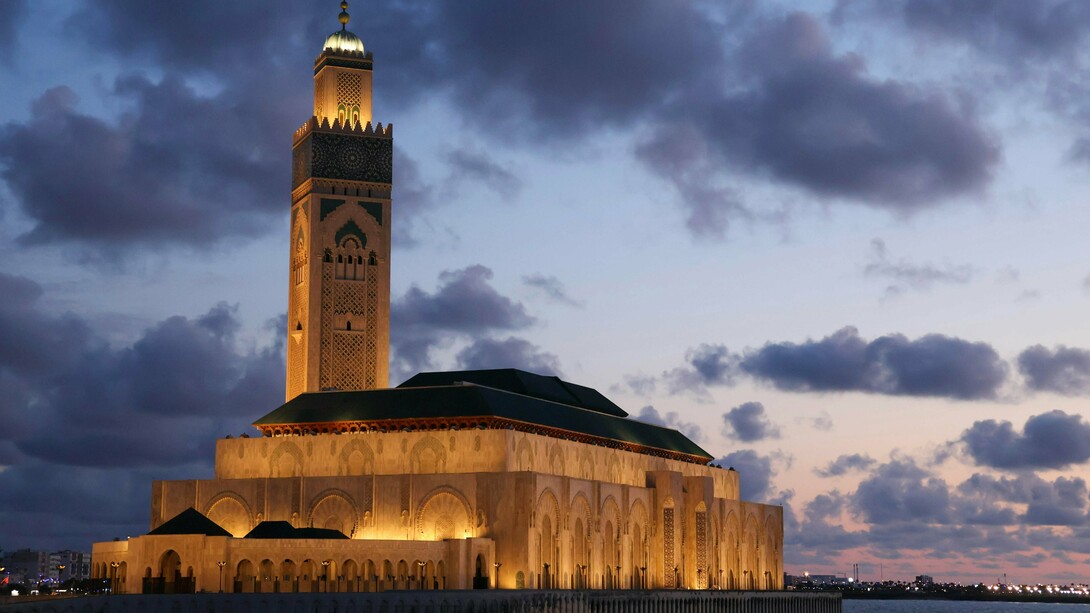
The Kingdom of Morocco serves as a distinguished example of how interfaith cooperation and cultural acceptance can flourish. While many regions struggle with social and religious fragmentation, Morocco offers a powerful alternative. This "Moroccan model" is far from a contemporary marketing tactic; it is a fundamental reality woven into the country's constitutional framework, its physical landmarks, and the everyday interactions of its people.
Roots of a diverse society
Morocco’s history as a sanctuary is most clearly seen in its long-standing embrace of the Jewish community. Unlike many nations that marginalised minorities, Morocco frequently provided a safe harbour. A pivotal moment occurred in 1492 when Sephardic Jews, escaping the Spanish Inquisition, found a new home in Moroccan hubs like Tetouan, Meknes, and Fez.
This protective ethos was famously reaffirmed during the Second World War. When the Vichy government pressured King Mohammed V to surrender Jewish citizens for deportation, the monarch notably asserted that all citizens, regardless of faith, were simply Moroccans. This courageous stance saved thousands of lives and remains a proud pillar of the national identity.
Spiritual leadership and the "Commander of the Faithful"
The Moroccan monarchy is the cornerstone of the nation's religious stability. King Mohammed VI, holding the title of Commander of the Faithful, provides spiritual guidance that encompasses both Muslims and those of other faiths.
Under his direction, the Kingdom promotes a moderate interpretation of Islam rooted in Sufi spirituality and Maliki jurisprudence. This proactive approach includes the updating of religious studies to prioritise human rights and universal ethics; the training of male and female religious guides to ensure a balanced spiritual discourse; and the Mohammed VI Institute for the Training of Imams that educates scholars from Europe and Africa, championing a version of Islam that rejects extremism in favour of dialogue.
The confluence of identities
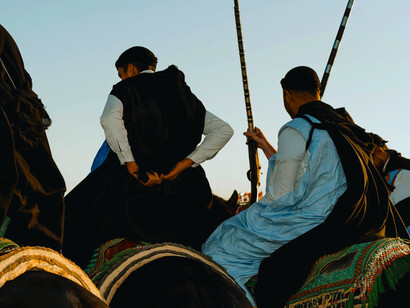
Morocco’s geographic position at the crossroads of Africa, Europe, and the Arab world has made it a natural laboratory for coexistence. The Moroccan identity is officially recognised as a blend of several distinct components, starting with its Amazigh foundations. This indigenous Berber culture provides the bedrock of Moroccan society, emphasising community-based governance and a deep connection to the land that remains central to the national character today.
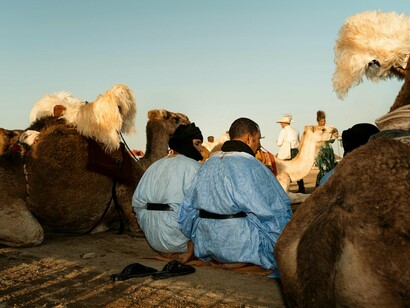
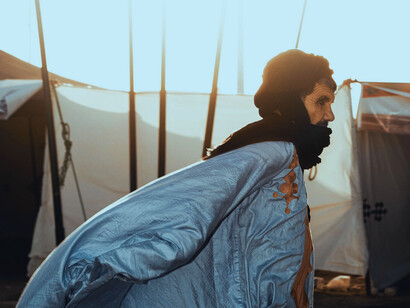
The Arab-Islamic influence further enriched this landscape, as the arrival of Islam introduced a unifying spiritual and linguistic framework. Rather than erasing local customs, this influence adapted to them, creating a unique synthesis of faith and tradition. This was complemented by the Hassani (Saharan) heritage, where southern nomadic traditions contributed a distinct poetic and social dimension, weaving the vastness of the desert into the national fabric.
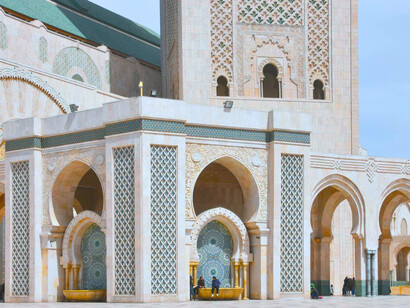
Finally, the Andalusian refinement added a layer of sophisticated urbanity to the Moroccan identity. Following the Reconquista in Spain, waves of Muslims and Jews fled to Morocco, bringing with them advanced urban planning, intricate music, and diverse culinary arts. Together, these multifaceted influences have cultivated a society where diversity is not just tolerated but is a fundamental structural reality.
Constitutional protection of identity
Following the 2011 Arab Spring, Morocco codified its commitment to diversity through landmark constitutional reforms. The 2011 Constitution is unique in the Islamic world for its explicit recognition of the many threads that make up the Moroccan tapestry. The preamble acknowledges that national unity is built upon Arab-Islamic, Amazigh, and Saharan-Hassani roots, further enriched by African, Mediterranean, Andalusian, and Hebrew traditions. This legal foundation guarantees the right of all citizens to practise their faith freely.
The geography of coexistence
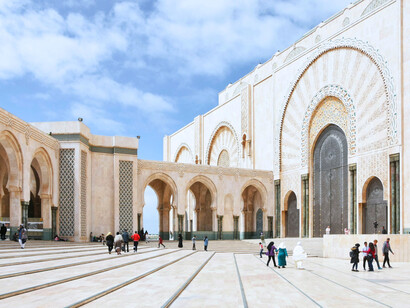
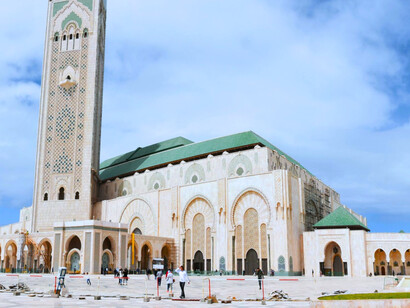
In Morocco, tolerance is a lived experience. It is common to find mosques, synagogues, and churches standing in close proximity within the ancient medinas of Casablanca or Marrakesh.
The coastal city of Essaouira stands as a primary symbol of this shared history. Formerly a city with a significant Jewish population, it now hosts Bayt Dakira, an iconic place that embodies the spirit of coexistence, tolerance and interreligious dialogue. Here, Jewish and Muslim artists reunite to perform music that celebrates their common Andalusian heritage, proving that culture can bridge any religious divide.
International leadership and outlook
Morocco’s influence extends into the global diplomatic arena. In 2016, the Kingdom spearheaded the Marrakesh Declaration, a framework designed to safeguard religious minorities in Muslim-majority nations. The 2019 visit of Pope Francis further underscored the Kingdom’s role as a leader in interfaith diplomacy.
While the "Moroccan Model" is robust, it is not immune to the pressures of a polarising world. Continued efforts in education and policy are necessary to ensure these values extend to everyone, including the expanding Christian migrant communities from sub-Saharan Africa.
A path forward and modern institutionalization
Tolerance in Morocco is defined by active engagement and mutual respect rather than a mere lack of tension. It serves as a "living museum" of how varied faiths can collectively enhance a nation’s culinary, cultural, and social identity. Ultimately, Morocco demonstrates that a country’s true power is found in its ability to integrate, rather than erase, its differences.
Today, Morocco’s historical harmony is maintained through active and deliberate institutional efforts designed to protect its pluralistic past. A key pillar of this is education reform, where national curricula now include Jewish history and the Amazigh language. By making Tamazight an official state language, the government has ensured that the country’s foundational roots are preserved and respected within the modern academic and administrative framework.
State-led restoration projects serve as a physical testament to this commitment to diversity. Massive initiatives have been launched to restore synagogues, Jewish cemeteries, and ancient medinas across the kingdom. These efforts go beyond mere architecture; they aim to preserve the tangible evidence of a shared history, ensuring that the physical spaces where different cultures once thrived continue to tell the story of Moroccan coexistence.