English
 Español
 Français
 Deutsch
 Italiano
 Português
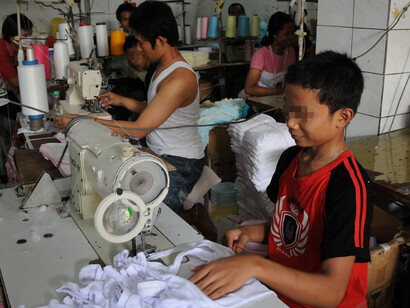
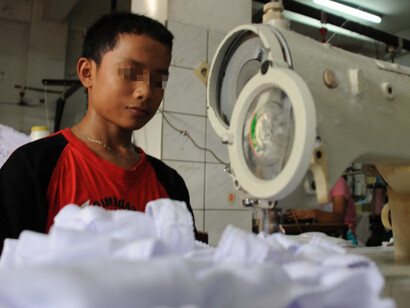
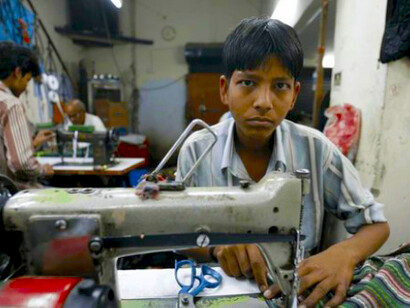
Who among us would want their child to work instead of learning? Who would like to expose their child to hazardous and exhausting labor? And who could feel content seeing a child out of school and forced into work? These questions strike at the moral core of the child labor issue. Child labor refers to work that deprives a child (anyone under the age of 18) of their childhood, their potential, and their self-respect, and that harms them physically and mentally. It stops a child from getting an education (by not allowing them to go to school), leaving school too soon, or making them do too much work on top of going to school. According to statistics released by the United States Department of Labor, "Worst Forms of Child Labor" findings, there are 218 million working children aged 5-17 globally. These global figures demonstrate that child labor is not an isolated moral concern but a widespread structural problem that requires clear conceptual definition and international legal attention.
The International Labor Organization (ILO) defines "child labor" as taking away a child's ability to experience their childhood and reach their full potential and taking away their dignity by hindering physical and mental development due to hazardous mental, physical, social, or moral long-term employment. Children can be denied access to a school and/or forced to attend school while performing very long hours of hard labor. While the Convention on the Rights of the Child calls for children to be protected from economic exploitation and from engaging in hazardous work, child labor continues to be significant around the world, especially within developing countries.
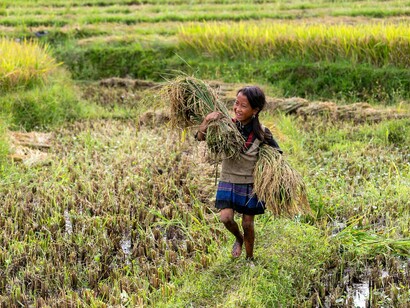
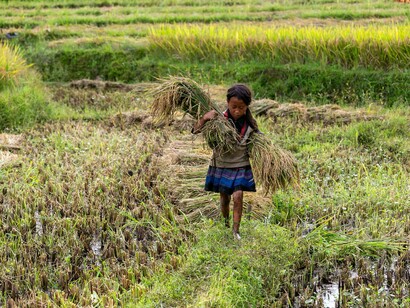
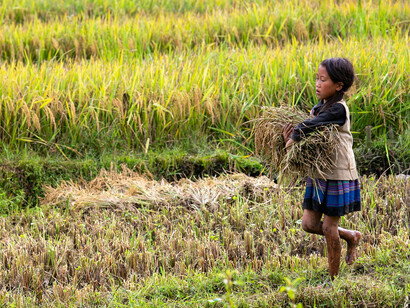
The ILO Global Estimate of Child Labor report indicates that 70.9% of child laborers (5-17 years) are employed in agriculture globally, which equals over 108 million children. Child labor in Africa and Asia and the Pacific regions is among the highest in the world, with 72 million children involved in child labor in Africa and 62 million involved in child labor in Asia and the Pacific. And both regions are concentrated upon agriculture as their primary economic sector activity. While international definitions and statistics describe the scale of the problem, understanding why children enter labor requires examining the social and economic realities of their families and communities.
The primary reason for most children starting work at an early age is due to poverty, as well as the urgency to survive, as the primary caregivers or heads of their families are in poverty. As a large majority of children (81%) who have been studied reportedly considered their parents’ perspective on working to be to help support them. Lastly, there are ongoing efforts by some nations that have ratified the ILO Conventions to amend the Children and Young Persons Employment Act as a deterrent to offenders, and there is a plan to impose harsher penalties against those exploiting children that use child labor, with more severe penalties being part of the amendments, including a maximum sentence of five years imprisonment with a minimum fine.
Child labor is spreading so rapidly throughout the world, with a wide variety of studies providing opportunities for ongoing investigations into community perceptions regarding the problem using a research-based methodology. The primary objective of this investigation was to identify the key causes and risk factors sustaining child labor and to propose strategies for its elimination. The site for this investigation was in several countries throughout Southeast Asia. Given these conditions, it becomes essential to explore how society itself perceives child labor and how public attitudes may influence both policy and practice.
Society as a whole must be examined to understand the problem of child labor, as the situation is continuing to get worse. To that end, an initial public perception of child labor was gathered by conducting a quick survey with several participants. Although this survey contained some alarming results, the majority of people responding to the survey recognized that there is a social responsibility for child labor in all of our communities. Some respondents indicated that they were supportive of child labor because children produce merchandise at a much lower cost than adults and that children could financially support themselves through child labor. Additionally, some respondents were sympathetic to low-income children but failed to realize that this group of children represents a great deal of child labor abuse. These mixed responses reveal a tension between moral concern and economic justification, pointing to the need for deeper analysis of the factors shaping public opinion.
Indeed, the majority of people responding to the survey also recognized that many children engage in labor to support their parents and contribute to household income; however, most of those people responding stated that they oppose the exploitation of children. At this point, many different factors contribute to the continued prevalence of child labor today, including poverty and insufficient income for families, armed conflict and forced displacement, barriers to education, lack of awareness by parents of their children's rights, and lack of awareness that it is inappropriate to use their children as a means of financial support instead of sending them to school. These findings suggest that child labor is sustained by a complex interaction between economic necessity and social attitudes rather than by a single cause.
Overall, those surveyed were very cognizant of how household income inequality/wealth disparities, coupled with limited access to education, are root causes of child labor and believed education alone can assist an individual to rise above poverty. Almost all respondents believed that effective law enforcement is crucial for the prevention/curing of child labor through the use of robust legal frameworks. The conclusion drawn from these results is that there exists a compelling public awareness to impact government action within both individual behavior and negative attitudes towards child labor through collaboration of the community with authorities for the purpose of addressing the issue of child labor as a global social issue.
In addition, the overwhelming majority of respondents indicated their understanding and agreement with the moral/ethical reprehensibility of child labor and that children should be protected from harm at all times. This level of ethical consensus could contribute to increasing public support for the implementation/enforcement of more stringent labor laws and child protection policies worldwide. However, public rejection of child labor does not imply consensus on all forms of children’s work, particularly within family-based agricultural contexts.
The overwhelming majority of respondents agree that children should be included in employment as a mechanism to learn skills and knowledge. Farm households typically rely on some sort of agricultural production for their income. Where this is the case, agricultural production usually has the characteristics to be viewed as a family-run business, such as through oil palm plantation and rice production in rural areas. As such, passing down skills and knowledge of agriculture is key for children to succeed in farming when the time comes for them to inherit the operations of the family farm. However, the transfer of any skill or knowledge must be done within the bounds of existing laws and regulations and best practices in agriculture to prevent any risk associated with agricultural work.
Skills and knowledge represent some of the most significant assets that a child can have to help them make a career out of agriculture. In addition to their long-term value, a majority of people who responded strongly agreed that there is value to children working with the farm to develop a relationship with their parents, thus preparing them for future agricultural operations. There were also a significant number of respondents that children working on the farm produce children who can work on the farm as a result of developing a work ethic. Finally, an overwhelming number of respondents believe that children should be permitted to work with their parents, especially if the child is interested in making agriculture a career. This distinction between skill transmission and exploitation highlights the importance of regulatory oversight and responsible engagement by both governments and the private sector.
Consequently, there is an urgent call for authorities to partner with the agricultural sector and the corporate world to create policies that will eliminate exploitation while also helping to support sustainable livelihoods. Children can be a source of income for their families in impoverished areas, due to the lack of viable options beyond working in agriculture. Child labor can create a vulnerable circumstance for a child to be exploited by employers who want to make a profit. Therefore, it is necessary to create legal frameworks to eliminate child labor, as well as broader strategies aimed at reducing economic inequalities, creating adequate social safety systems, and providing universal access to quality education for all children.
To summarize, poverty and low household income are the leading causes of child labor, as families depend on their child's income. Low income is due to economic increases in expenses and other factors such as limited access to financial services and family debt, which pushes children into working to support themselves and their family's living expenses. Armed conflicts, political instability, and being displaced from their homes disrupt children's ability to go to school and create a larger risk for labor exploitation. In addition, poor quality education, unsafe paths to school, and a lack of education prevent children from attending school, further increasing their likelihood of working as child laborers. In addition, families do not know their family's children's rights; therefore, parents do not see why working as a child is acceptable, especially in family or horticultural agricultural work. Lack of law enforcement or strict regulation of the laws concerning child labor makes for easy exploitation of children for cheap production through business avenues.
The elimination of child labor is dependent on the development and robust enforcement of strong legally based systems to prohibit exploitation and punish those who exploit. Strategies to reduce poverty are needed, such as a strategy to provide income support to families, as well as access to financial services, an expansion of social safety nets, etc. The need also exists for a guarantee of access to quality educational opportunities through improved physical conditions of schools, safe transportation to schools, and creating an interest in attending school.
Equally important is the need for public campaigns to educate and change public perceptions about children and children's rights. In addition, government efforts to regulate participation of children in various sectors (i.e., agriculture), including partnerships with business enterprises (i.e., farms), will be necessary to enforce limits on how children can legally and safely develop/learn work skills. Therefore, integrated action between law enforcement, education, economic assistance, and community engagement will be needed to address child labor.