English
 Español
 Français
 Deutsch
 Italiano
 Português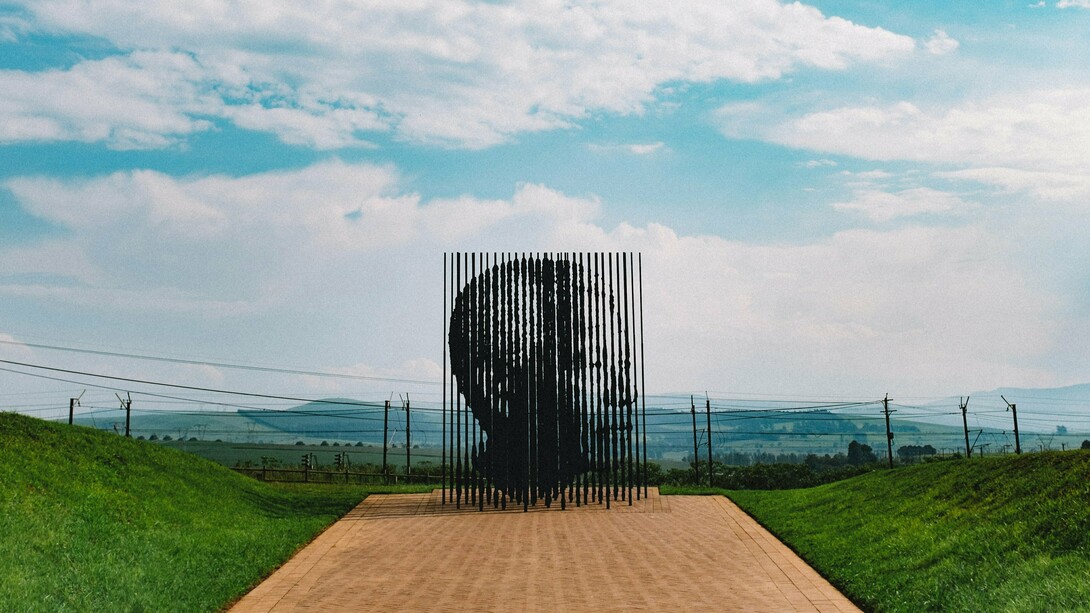
One of the most common words in the universe today is 'democracy'. It is common for so many reasons; very obvious are the sound and syllables, which are very attractive. It is also common because it is championed by one of the most influential nations in the world.
A lot of aura goes with this word, 'democracy', because many view it as redemptive... In its foundational properties, it negates political, social, and cultural marginalisation, and man, born free, always desires, among other things, his freedom.
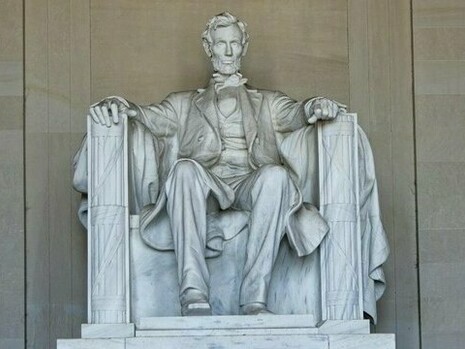
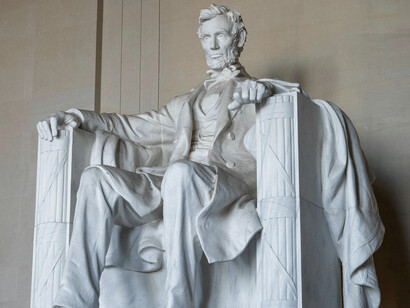
What then is democracy? According to Abraham Lincoln (1863), “Democracy is government of the people, by the people, and for the people.” This definition is the most demystified of all definitions. It shapes out the crux of any democratic entity, that is, "the people," it gives the people the will, the right, and the advantage. Anything short of this is a form of it but certainly can't be democracy.
Aristotle (4th century BC) defined democracy as a form of government in which the free-born and poor “majority” control the government; emphasis here is on the “majority”, the free-born, and the poor. While the majority are captured here, the slaves’ “minority” is left out, making them less than other categories of humans. It is at this point that this definition falls short. This is not to dismiss this definition but to state categorically that it is not all-encompassing like the definition of Abraham Lincoln.
Just as said above, Abraham Lincoln's definition still stands tall today as one of the most esteemed definitions of democracy. It covers all sentiments, agitations, and unrest, especially among the marginalised in any given society.
It is safe to say that democracy is a government that is established by the people of a defined society; in other words, the government is programmed to function for the society, and the existence of that government is determined by the people. More so, if the majority of people in any society can not initiate or discontinue a government, for justified reasons by law and morality, it is not democratic.
Democracy is arguably the best form of government because it is people-focused. But as beautiful as the principles of democracy are, it seems to be a disadvantage for some countries in the world today, especially countries within the Global South, with the continent of Africa as a focal point.
Africa is described as the cradle of humankind; it is the second-largest continent in the world and also the hottest in terms of temperature. It also possesses the largest number of young people with abundant resources, making it a very rich continent in natural and human resources. Not to forget, Africa is also very rich in culture, traditions, and religion. As a matter of fact, many believe that tradition, culture, and religion are a major bane to the speedy development of Africa.
Back to the discussion on democracy, why is democracy not working effectively in Africa, as compared to Western nations? The science of politics is divided into two basic areas: the traditionalist and the behaviouralist.
While the traditionalist focuses on intuitions within a society, the behaviouralist focuses on social relations, patterns, and cognitive perceptions.
It is the behaviouralists who have postulated that having strong institutions is not enough to ensure the success of a democratic system; rather, credence must be given to existing patterns, norms, and beliefs of the people. They hold that humans are more easily conformed to cultural and religious beliefs. It is believed that the African system might never fully see democracy run smoothly because the African system is an entity wrapped in culture, tradition, and religion.
For instance, most cultures and traditions believe in the superiority of a certain individual, most times addressed as 'king' or 'spiritual head'. Furthermore, these individuals are neither voted for nor appointed by the people in most cases. They are mostly born rulers, and their offspring are also groomed to take over, dividing the society into two classes: the rulers ordained by divinity or the ancestors and the ruled bound to serve the rulers. And this is against the tenets of democracy.
Africa seemed to have forcefully relegated the known established system to quickly adopt a system handed over to them by their colonial masters, which was not well-rooted or common to the old system. And for that reason, among so many others, Africa is finding it difficult to objectively practise democracy.
There are instances where the governor of a state can lose an election for sacking a commissioner who is from a prominent family or ethnic group. It sounds funny, but it's true. The commissioner, even though wrong, will see the sack as a disregard for his personality and family, and, in some cases, that family or ethnic group can stand against the political system and ensure it relinquishes power to another.
There are other instances where a more qualified person may come from a minority religious group but, despite his or her qualifications, will lose the election to another who is less qualified but comes from a majority religious group. These scenarios are not always the case, but for flimsy reasons, democracy seems to be fighting for survival in Africa.
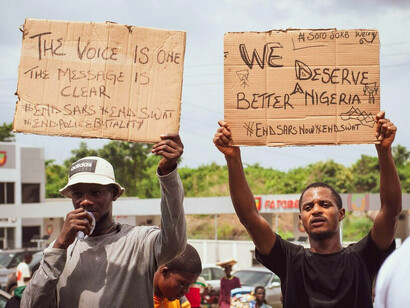
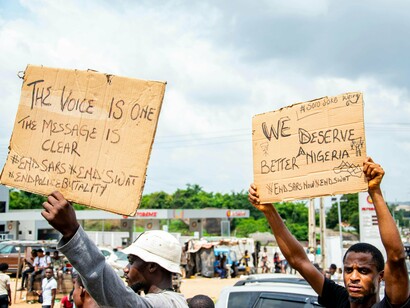
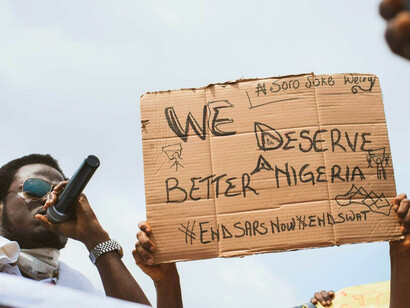
Very recently, there have been instances where political leaders are turning traditional stools into objects of control. In Nigeria, for instance, at least three prominent traditional rulers have been dethroned by state governments. These are issues that could have been settled out of the media without much division, but for reasons best known to the political actors, things are the way they are. I must state categorically that not all political actions against traditional rulers or offices are wrong; however, what I am saying is that these actions should be shielded from the public because they cause resentment against the government, no matter how justified the action.
The African system, no matter how advanced it becomes today or in the future, will never be totally alien to the traditional system. The honour some kings in Africa command from their subjects is almost as great as that given to God, and surprisingly, some political leaders who themselves are products of the traditional system are finding this fact too painful to accept. So, they most times end up being the casualty whenever issues arise between them and traditional leaders. It might not be immediate, but there are always consequences...
So, we can say that democracy, a very good form of government, is yet to find a footing in Africa and somehow is standing against the African traditional systems. But to be honest, is it democracy that is against the traditional system or the actors? That's a question for you to answer.
Also, bordering on the question above, it has become important to ask, can Africa ever get democracy right? Will there ever come a time when democracy will run smoothly as it’s been practised in the United States of America and other advanced systems, or should Africa go back to the drawing board and pick a more suitable system?
Because the Arab world is doing well today, even as monarchies, the British have been able to fuse the monarchical system with a parliamentary system. Africans need to find an impeccable, or should I say, a tailor-made system that will expedite the continent's advancement and, in a sacred manner, preserve its culture and traditions. This is because anyone who entirely walks away from history will find the future scary.
Ultimately, the choice for a pristine system is a decision that must be taken strategically with wide consultations. In addition, leadership must be redefined in Africa. When I say leadership, I mean all strata of leadership. When the right persons rule, the Bible says the people rejoice.
Leaders must be truly qualified to man positions at all levels. I mean all-around qualification. It is high time we stop giving leadership to persons without formal education or grounded skills or training. People without character, with little or no modicum of humanity. A lot of bad leaders got into power just because they are close or have been close to power. They were neither trained in any way nor self-educated. It is time we raise the bar for attaining leadership positions.
Furthermore, I must state clearly that I am afraid that letting the people decide who rules them in certain parts of Africa will not ensure good leadership. There are some communities I know where a person determines who others will vote for, and in a cult-like following, that will be the case; nobody will ask, 'Is the person we intend voting for going to protect our interest, or is he or she going there for other reasons?'
Nelson Mandela said, and I quote: “Democracy means that all voices are heard and that the people’s will shapes the destiny of the nation.” This is a reminder that African democracy is rooted in participation, not perfection. To be honest, even if democracy works effectively in Africa, it will take a very long time. However, we must begin to orient the people, create more awareness for quality education, and make the people know their rights and their responsibilities to both the government and society at large. Yes, these are happening already, but they need more coverage, more visibility, more hands, and a more patriotic and nationalistic mind.
Kofi Annan (former UN Secretary-General) said: “Democracy must be built patiently, inclusively, and from within societies themselves.” This speaks directly to Africa’s struggle against imposed or shallow democratic systems.
As Africans, let's not leave this for civil societies; let's all march towards the line and ensure Africa, the cradle of civilisation, stands out globally. Yes, we can. And it begins with you.