English
 Español
 Français
 Deutsch
 Italiano
 Português
There are places you choose because they are convenient. And then there are places that quietly become part of the story you’re trying to tell. South Lodge Hotel & Spa, set amid the rolling South Downs of West Sussex, turned out to be both. I’d come to scout it as a possible location for a future creative retreat—a place that could hold space for deep work yet offer genuine restoration. By happy coincidence, the reconnaissance trip happened to fall on my birthday.
From the moment you turn off the country road and wind up the gravel drive, South Lodge has that unmistakable sense of arrival. The main house—an ivy-clad Victorian mansion with steep gables and honey-colored stone—sits gracefully above a sweep of parkland. At first glance, it feels almost domestic, as if you’re arriving at a private estate rather than a hotel with more than eighty bedrooms. That was, as it turns out, entirely by design.
A house that grew without losing its soul
South Lodge began life in the mid-nineteenth century as a family home. Its original owner, Frederick Du Cane Godman—a wealthy naturalist and collector—built it as a country retreat to house his growing family and his even larger collection of rare plants and butterflies. Over the next century, it changed hands several times, each owner adding something: a wing here, a conservatory there. When the Exclusive Collection took it over, they extended the building with remarkable sensitivity. From the front, it still appears like a generously proportioned country house. But viewed from above, you see the full scale of its evolution—an architectural waltz of old and new.
The estate now unfolds across several wings and garden terraces, with event spaces, a wedding pavilion, and expansive guest rooms that fan out discreetly behind the main façade. It’s a masterclass in illusion: the house remains charmingly human in scale, yet holds a hotel capable of hosting conferences, weddings, and creative gatherings without ever feeling impersonal. Only the slightly confusing layout—an inevitable legacy of so many extensions—reminds you how much the property has grown.
A modern spa with a sense of place
The heart of the property—and the part that most guests will remember—is the spa. Built as a separate modern wing, it manages to feel light, open, and connected to the landscape. The design avoids the usual heavy luxury of hotel spas. Instead, everything here breathes: wide corridors filled with natural light, subtle scents of eucalyptus and citrus, warm woods, and soft neutral fabrics.
The pools are positioned to catch the long Sussex light, and the sauna opens through a vast picture window onto an uninterrupted view of the South Downs. It’s a breathtaking touch: to sit in heat and stillness while the green folds of the English countryside stretch endlessly before you. Even the air smells fresh, as if the entire building has been built to inhale.
The treatment rooms are immaculate, and the service is warm but never intrusive. There’s a quiet confidence about the place—the sort that doesn’t need to impress you because it already knows it works. If there’s a quibble, it’s that the spa’s popularity occasionally breaks the spell; at peak times, its serenity gives way to the low hum of conversation from day visitors.
Imagining a retreat
As a potential venue for a future leadership retreat, South Lodge ticks many boxes. The meeting rooms are bright and uncorporate, with large windows overlooking manicured lawns and distant hills. There’s no drone of air-conditioning—just the sound of birdsong through open windows. The house’s many terraces, nooks, and drawing rooms offer natural breakout spaces for small-group work or quiet reflection.
You can picture a dozen leaders arriving from across Europe or the US and immediately softening into the rhythm of the place—morning sessions in sunlight, unhurried walks between discussions, and conversations continuing over tea and scones by the fire. It’s the kind of environment that does half the work for you.
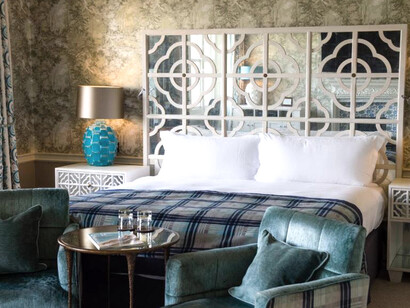
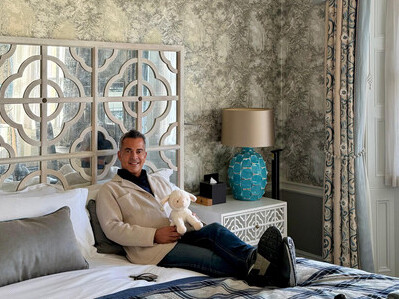
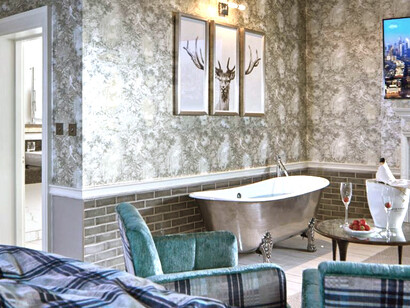
During my visit, I stayed in the Earl of Athlone room, one of the heritage suites in the main house. The décor was a mix of period and playful: carved furniture, rich fabrics, and deep colors. The bathroom, though beautifully finished, was on the small side, and the bathtub had been placed rather boldly in the bedroom—never my favorite design choice. Still, the bed was vast, the linens crisp, and the morning view across the gardens made up for any eccentricities of layout.
Dining at The Camellia
Dinner at The Camellia, South Lodge’s flagship restaurant, was the highlight of the stay. On a quiet Monday evening, the room had just enough atmosphere to feel private, and the staff struck that delicate balance between attentiveness and ease.
The menu is a celebration of local, seasonal produce, much of it sourced from the hotel’s own gardens. Every dish arrived with a sense of place: heritage tomatoes from the greenhouse, lamb from a nearby farm, and honey from hives on the estate. The scallops were perfectly caramelized; the dessert—a lemon and thyme confection—was confident without being showy. If the dining room itself lacks a touch of intimacy, the food more than compensates.
Breakfasts here are leisurely affairs: fresh pastries, local yogurts, and poached eggs on sourdough. The service team is impressively consistent—warm, professional, and seemingly unflappable.
Wellness with a modern ethos
At the spa’s Botanica Restaurant, the tone shifts entirely. It’s contemporary, plant-based, and entirely dairy- and gluten-free. For anyone with dietary sensitivities, it’s a revelation. For the rest of us, it’s an education. Every plate was bright, beautiful, and light—perhaps a little too light for a working lunch, but admirable in its conviction. It’s a clever counterpoint to the indulgent main house and speaks to South Lodge’s commitment to modern wellness without moralizing about it.
Between meals and meetings, I explored the grounds: long walks through the gardens, the occasional swim in the infinity pool, and more than one quiet hour in the sauna watching the sky shift from gold to grey. Even the rain, soft and English, felt part of the design.
A birthday to remember
It was only on the final evening, glass of wine in hand, that I remembered it was my birthday. There’s something restorative about spending that kind of day alone but not lonely, somewhere that seems to understand the art of quiet celebration. A slice of cake appeared at dinner, unbidden but perfectly timed. It’s a small thing, but hospitality often reveals itself in gestures like that.
A place that balances past and present
What sets South Lodge apart is not just its location or its luxury, but its balance. The old house retains its intimacy; the new spa brings freshness and light. Together they form something rare in British hospitality: a hotel that feels both stately and alive.
There are grander hotels and flashier spas, of course. A few may even deliver smoother service or more avant-garde design. But few manage to marry history, design, and authenticity so quietly and convincingly. South Lodge doesn’t shout for attention. It simply opens its doors and lets the landscape and the experience speak for themselves.
As I drove away, the gravel crunching beneath the tires, I glanced back once more at that deceptively modest façade. Behind it lies a world of calm and creativity, slightly imperfect, utterly English, and all the better for it.