English
 Español
 Français
 Deutsch
 Italiano
 Português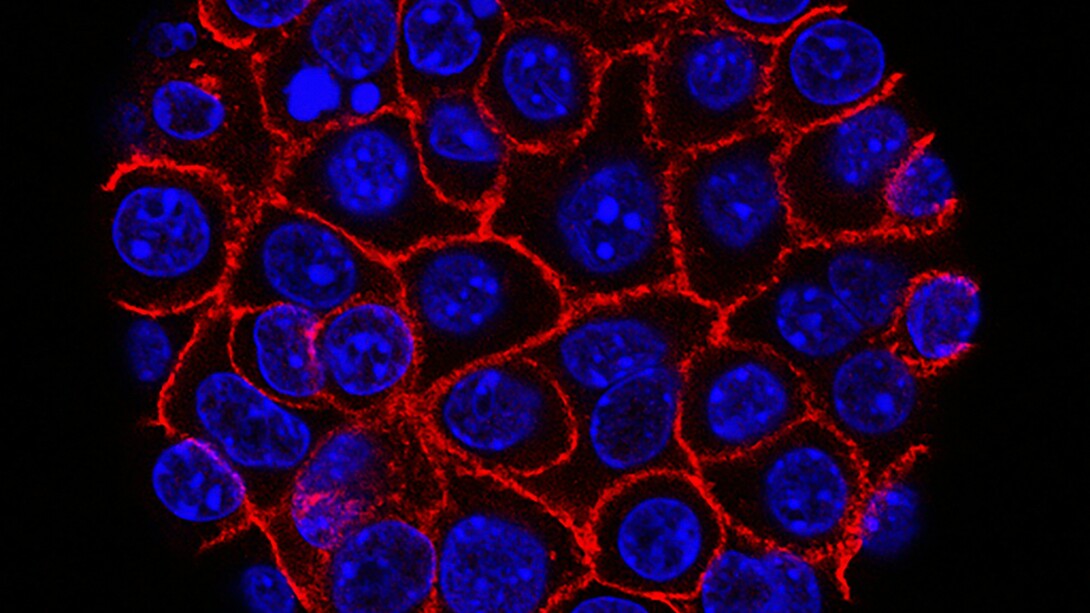
Pancreatic cancer is one of the most aggressive and lethal forms of cancer known. When it is diagnosed, it is often found at an advanced stage with a poor prognosis for the patient. Part of pancreatic cancer’s difficulty with diagnosing early is the organ’s location within the body, and no early detection tools. With an overall survival rate of thirteen percent, pancreatic cancer poses a major issue in cancer medical care.
Thankfully, researchers at Changzhi Medical College in China have identified a protein that can serve as a prognostic marker for pancreatic cancer. Prior to their discovery, the diagnosis of pancreatic cancer was performed using imaging tests, such as MRI and CT scans, after symptoms developed. Another protein, CA19-9, has been used as a marker for pancreatic cancer, but a study from Lanzhou University in China found it unreliable. The Changzhi Medical College researchers worked on identifying an early-detection method for pancreatic cancer, preferably a blood test, to catch pancreatic cancer at an earlier, and treatable, stage. The protein identified is called “Capping Actin Protein, Gelsolin Like” or CAPG, and belongs to a classification of proteins called actin-binding proteins. Actin is a major structural protein that creates the cytoskeleton, the cell’s version of a skeleton that gives it shape. Actin-binding proteins like CAPG are essential in regulating the actin cytoskeleton and help control it during movement, cell division, and even cell death. Actin-binding proteins have also been found to play roles in cancer development.
Researchers from the Tianjin Clinical Research Center for Cancer in China found that the actin-binding protein TWF1 was a driver of cancer progression in lung, pancreatic, and breast cancers. The Nicolaus Copernicus University in Poland investigated various actin-binding proteins and found that they are heavily involved in cancer cell division, migration, invasion, and metastasis. With this extensive role in cancer progression, actin-binding proteins like CAPG have become prime targets for research in cancer detection and treatment.
Earlier research on CAPG from the Centre Hospitalier Universitaire Vaudois in Switzerland found that it was associated with gastric, breast, lung, liver, and prostate cancers. Researchers from Hangzhou Medical College in China took a closer look at how CAPG is involved in cancer and found that it is part of a critical cell signaling pathway that controls cell fate. Furthermore, both research groups and others studying CAPG find that the protein is overproduced in cancer cells, making it a prime target for therapeutic development. One area of CAPG research that remains is its use as a marker to diagnose cancers and determine cancer stage.
The researchers from Hangzhou Medical College have identified CAPG as a marker for early gastric cancer, showing CAPG’s potential. Another study from China’s Agricultural University found that a segment of CAPG is both a marker and therapy target for triple-negative breast cancer. With the role of CAPG in cancer progression and its potential as a marker for diagnosis confirmed, the Changzhi Medical College study wanted to confirm if CAPG has the same potential for pancreatic cancer.
For their study, the Changzhi group worked on understanding how CAPG is involved in pancreatic cancer in different ways. Their first method was looking at datasets from the NIH’s National Cancer Institute’s Cancer Genome Atlas Program, which catalogs genes involved in cancer development and progression. Currently, the program has 2.5 petabytes (2,500 terabytes, or 2,500,000,000 megabytes) of genetic data on 33 cancer types, including pancreatic cancer.
The Changzhi group wanted to confirm that CAPG was overused by cancer cells by examining how the CAPG gene was used. From 179 tumor sample data and 171 normal samples, they found that the use of the CAPG gene was significantly higher in cancer cells than in normal cells, confirming their suspicion. Delving deeper into the data, the group also found that cancer patients who had higher CAPG gene use and CAPG protein levels had a lower survival rate. These results confirm that CAPG can be used as a marker for pancreatic cancer stage, but the group didn’t stop there.
To further explore how CAPG is used by pancreatic cancer cells, the group used isolated pancreatic cells in experiments that associated the protein with cancer cell survival. Even from cells in petri dishes, the group observed that the amount of CAPG protein produced was significantly higher in pancreatic cancer cells than in normal cells. After this confirmation, the group shut off the CAPG gene in the cancer cells to see what would happen.
When no CAPG was produced, the cancer cells hardly divided, showing that CAPG is critical for them to reproduce. Not only did this lack of CAPG affect cancer cell reproduction, but it also affected their movement. The group simulated wound healing with the cancer cells by scraping cells from the bottom of the petri dish and observing the remaining cells closing the “wound.” After the CAPG gene was shut off, the cancer cells were unable to fully close the simulated wound, meaning that they couldn’t move to the wound site or replicate. In a clinical context, this would mean that a pancreatic cancer cell lacking CAPG would not be able to metastasize. But the group also found something interesting in cancer cells lacking CAPG. No CAPG rendered the cancer cells susceptible to the chemotherapy drug gemcitabine, thereby making the drug more effective at killing them.
From their work, the Hangzhou group has confirmed that not only is CAPG critical for cancer cell survival, but it can also be targeted as a diagnostic marker and therapy for pancreatic cancer. More work can be made to optimize CAPG detection in pancreatic cancer patients to provide early detection, and new therapies can be developed to reduce cancer cells’ reliance on the protein. For now, this work is confined to labs and conferences, but with time, it could be an early intervention, better recovery, and more hope for victims of pancreatic cancer. Finally, progress is being made to provide a solution to the void of detection methods that have defined pancreatic cancer.
References
Qin Z, Li K, Li X, Wang H, Zhang Y (2026) CAPG serves as a prognostic biomarker and promotes proliferation and migration in pancreatic ductal adenocarcinoma. PLoS One 21(3): e0346011. DOI
Mukund A, Afridi MA, Karolak A, Park MA, Permuth JB, Rasool G. Pancreatic Ductal Adenocarcinoma (PDAC): A Review of Recent Advancements Enabled by Artificial Intelligence. Cancers (Basel). 2024;16(12):2240. pmid:38927945
Kaur S, Baine MJ, Jain M, Sasson AR, Batra SK. Early diagnosis of pancreatic cancer: challenges and new developments. Biomark Med. 2012;6(5):597–612. pmid:23075238
Wood LD, Canto MI, Jaffee EM, Simeone DM. Pancreatic Cancer: Pathogenesis, Screening, Diagnosis, and Treatment. Gastroenterology. 2022;163(2):386-402.e1. pmid:35398344
Ge L, Pan B, Song F, Ma J, Zeraatkar D, Zhou J, et al. Comparing the diagnostic accuracy of five common tumour biomarkers and CA19-9 for pancreatic cancer: a protocol for a network meta-analysis of diagnostic test accuracy. BMJ Open. 2017;7(12):e018175. pmid:29282264
Pan C, Wang S, Liu C, Ren Z. Actin-Binding Proteins in Cardiac Hypertrophy. Cells. 2022;11(22):3566. pmid:36428995
Nguyen MT, Dash R, Jeong K, Lee W. Role of Actin-Binding Proteins in Skeletal Myogenesis. Cells. 2023;12(21):2523. pmid:37947600
Huo G, Wang Y, Chen J, Song Y, Zhang C, Guo H, et al. A Pan-Cancer Analysis of the Oncogenic Role of Twinfilin Actin Binding Protein 1 in Human Tumors. Front Oncol. 2021;11:692136. pmid:34113576
Izdebska M, Zielińska W, Hałas-Wiśniewska M, Grzanka A. Involvement of Actin and Actin-Binding Proteins in Carcinogenesis. Cells. 2020;9(10):2245. pmid:33036298
Pellieux C, Desgeorges A, Pigeon CH, Chambaz C, Yin H, Hayoz D, et al. Cap G, a gelsolin family protein modulating protective effects of unidirectional shear stress. J Biol Chem. 2003;278(31):29136–44. pmid:12754261
Long Y, Wu J, Shen Y, Gan C, Zhang C, Wang G, et al. CAPG is a novel biomarker for early gastric cancer and is involved in the Wnt/β-catenin signaling pathway. Cell Death Discov. 2024;10(1):15. pmid:38191512
Song R, Guo P, Ren X, Zhou L, Li P, Rahman NA, et al. A novel polypeptide CAPG-171aa encoded by circCAPG plays a critical role in triple-negative breast cancer. Mol Cancer. 2023;22(1):104. pmid:37408008