English
 Español
 Français
 Deutsch
 Italiano
 Português
It's a feeling we've all had. You ask a chatbot a simple question and get a lecture about "appropriateness." You paste in a private document to get a summary, and you feel that digital chill, that little voice in your head wondering, "Who, exactly, is reading this?" We've been trained to accept that to use futuristic AI, we have to send every thought, every query, and every piece of our private data to a massive server owned by a handful of companies. We are, once again, just renting our digital lives from a few corporate landlords.
And then, there's PewDiePie. The guy who used to be the world's biggest gamer, now living in Japan, apparently got bored and decided to go full mad scientist on this exact problem. In a recent video, he revealed he's not just using AI; he's hosting it. All of it. In his own house, on his own terms. He got fed up with the same censorship and privacy concerns we all have and just… built his way out of it. He's now running models that are "just like ChatGPT but much faster," completely offline, with zero data sent to the cloud.
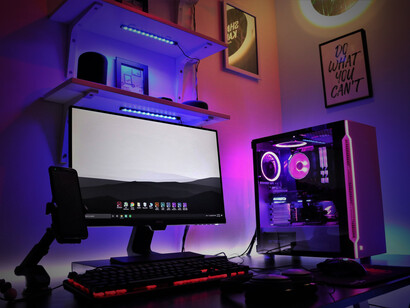
Of course, this being PewDiePie, his "solution" is a little different from ours. He didn't just download an app. He built what he calls a "mini data center" in his house. This monster is a $20,000, 10-GPU rig, featuring eight custom-modded NVIDIA RTX 4090s, just so he could run the biggest, baddest open-source models available. Not satisfied with just running them, he "vibe-coded" his own user interface called "ChatOS" and, in a moment of pure, unfiltered curiosity, created a "council" of different AIs that would vote on the best answers.
It's an amazing, hilarious, and inspiring story of personal computing. He had a problem, and he solved it with raw hardware and curiosity. And here's the best part: you don't need to do any of it. You don't need to spend $20,000. You don't need to solder your own graphics cards. The hardcore hobbyists (and, apparently, Felix) have paved the way. For the rest of us, running a private, local AI is now almost as easy as installing a video game. It's time to take the keys back.
So, how do you do it? Forget the 10-GPU rig; you just need to understand three simple things: the software, the "brain," and the hardware. The "software" is your "app store" for AI. You don't need to code your own "ChatOS." You just need a program that can manage and run the AI models. The two biggest and best options right now are LM Studio and Ollama. Think of them as Steam, but for AI. They give you a clean interface, a list of available models, and a "download" button. They're both free and run on Mac, Windows, and Linux.
Next, you need the "brain," which is the AI model itself. Inside LM Studio or Ollama, you'll find a search bar. This is where you download the AI. You won't be running the 235-billion-parameter beast PewDiePie is testing, but you can easily run models that are way better than you'd expect. Look for names like Llama 3 (from Meta), Mistral, or Gemma (from Google). The key is to look for "quantized" versions. "Quantization" is a fancy word for a process that shrinks the model to a manageable size, like a ZIP file for an AI. It runs faster, fits on your computer, and has only a tiny drop in "smartness."
Finally, the one catch: your hardware. This stuff doesn't run well on your grandparents' old laptop. AI models run on your graphics card (GPU), and the most important spec is its VRAM (video memory). A modern NVIDIA card (like an RTX 3060 12GB or anything in the 40-series) is a great starting point. The new Apple M-series chips (M2, M3, and M4) are also shockingly good for this, because they have "unified memory" that the AI can use. You can still run models on just your main processor (CPU), but it will be painfully slow. And that's it. You download LM Studio, find an Llama 3 model, click download, and start chatting.
This sounds cool, but is it actually better than just using ChatGPT? That depends on what you care about. The biggest, most profound "pro" is absolute privacy. Your chats are yours. They are never sent to a server, never used for training, and never seen by another human. You can ask it to summarize your sensitive medical records, analyze your private company documents, or write embarrassing poetry, all in perfect secrecy. This privacy also means you have total control. Most open-source models are "uncensored." This isn't just for weird stuff; it means the AI won't scold you for asking complex or "sensitive" questions about politics, philosophy, or anything else. You get the raw, unfiltered output.
Then there are the practical benefits. It's free. Once you own the hardware, the models are open-source. You can run them all day long without paying a cent (besides your electricity bill). No more $20/month subscriptions. It's also offline. It works on a plane, in a cabin, or if your internet goes down. As long as your computer has power, your AI assistant is there. And often, it's just plain faster. You're not waiting in a queue with thousands of other users or sending data across the world. The response is generated instantly on your own machine.
But there are real trade-offs. The main one is the hardware barrier. PewDiePie’s $20,000 setup is the extreme, but even a good $800+ setup is a barrier for many. Your old work laptop probably won't cut it. It’s still complicated. It’s easier than ever, but it's not "open a web browser" easy. You have to download multi-gigabyte files, you might have to tweak settings, and sometimes things just don't work. You have to be willing to tinker a little.
Finally, you become your own IT department. When a new, better model comes out, you have to find it and download it yourself. And you have to accept that you're not getting the absolute, bleeding-edge frontier models. The very newest ones (like the next GPT) are still kept private by their creators and are generally a step ahead of what's available to download. The open-source stuff is amazing, but it's not magic. You're giving up a tiny bit of power for a massive gain in freedom.
At the end of the day, running your own AI is about the same feeling as building your own PC instead of buying a PlayStation. It's about ownership. It’s about privacy. And, like PewDiePie, it's about the pure, unfiltered fun of seeing what this stuff can really do when you're the one in charge.