English
 Español
 Français
 Deutsch
 Italiano
 Português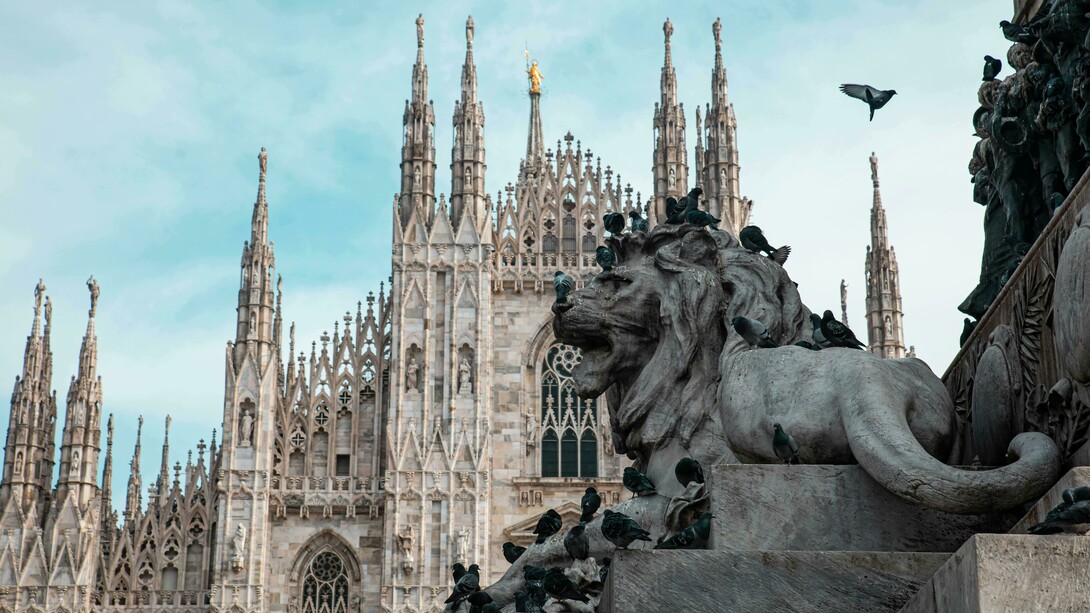
My introduction to Italy began not with a romantic sunset or a plate of pasta, but with confusion, fatigue, and a bus that smelled faintly of despair.
It was 9 PM at Milan Malpensa Airport, and I had just landed from Amsterdam after a delayed flight. All I wanted was a shower and a long sleep. But Italy, as I would soon learn, had its own rhythm—a rhythm that does not bow to schedules, timetables, or weary travelers. It was determined to give me my first lesson in its chaotic, unstructured, and yet beautifully slow way of life.
The lesson began immediately. According to my phone, the Malpensa Express train was running as normal. Reality, however, disagreed. The train had mysteriously vanished—no explanation, no announcements, just a sea of confused passengers. Eventually, we were herded onto a crowded airport bus with air conditioning that had long since given up the ghost. The driver, unfazed, hummed along to Italian pop while weaving through late-night traffic. What should have been a one-hour journey stretched into ninety minutes, courtesy of—you guessed it—“mysterious highway construction.”
By the time we arrived at Milan Centrale, I was exhausted and mildly delirious. The station was magnificent but intimidating at that hour—its grand marble halls echoing with footsteps, announcements, and the occasional impatient sigh. My next task: navigating the Milan Metro.
The ticket machine glared back at me like an ancient riddle. My freshly purchased RicaricaMi card refused to open the gate. I bought a second one—still no luck. Eventually, I noticed a local simply tapping his contactless bank card and strolling through with ease. Lesson two: sometimes, in Italy, the simplest solutions are the ones you overlook entirely.
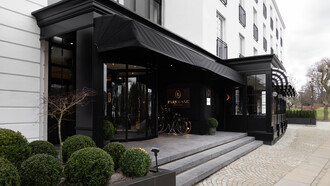
When I finally reached my stop in Affori, it was close to midnight. The streets were silent, and my hotel was tucked inside a gated complex that looked more like a residential maze than a place of rest. Following a YouTube-style video sent by the hotel, I stumbled through dimly lit pathways until I reached the gate. I timidly greeted the security guard with a nervous “Ciao!,” and miraculously, the gate buzzed open. Victory was short-lived, however—the hotel door was locked, and check-in had long closed.
A call to the emergency number was answered by a man with a thick Italian accent who said only one word: “Wait.”
Three minutes later, the door creaked open, and there he was—an Italian nonno, short and curly-haired, wearing a cardigan that looked older than the internet. Without hurry or apology, he began what could only be described as a masterclass in slow-motion hospitality. He took my passport, studied it as though reading a sacred text, printed my receipt, then gently handed me a paper bag labeled “breakfast.” Finally, he smiled. “Buonanotte.”
Collapsing into bed, I realized I had crossed a cultural border just as profound as any geographical one. After months of the efficient, punctual life of the Netherlands and the UK, I had arrived in a place where time flowed differently—where “soon” could mean five minutes or fifty, and nobody seemed to mind.
I didn’t get to explore Milan properly until my last day, but by then, Italy had already been teaching me its lessons—one chaotic adventure at a time. The turning point came after a long day trip to Venice and Verona. Returning late that evening, hungry and unwilling to pay tourist prices, I decided to hunt for a meal near my hotel.
Google Maps led me to a small, family-run pizzeria on an unassuming corner. Inside, a woman with an operatic voice was belting out Mario Venuti’s “A Ferro e Fuoco” while expertly tossing dough into a wood-fired oven plastered with stickers. The place wasn’t designed for Instagram—no neon signs, no curated decor—just a handful of tables and the smell of heaven.
I ordered a margherita pizza and a slice of lasagna and watched as she worked with the precision of someone who had turned cooking into art. Back in my room, I took one bite and nearly cried. The crust was blistered and chewy, the mozzarella melted perfectly, and the lasagna was pure warmth in edible form. That night, I understood that in Italy, good food isn’t a luxury—it’s a birthright.
By my final morning, I’d grown fond of the nonno who had once checked me in at midnight. I discovered he woke up at dawn every day to scrub the shared bathrooms and prepare coffee for guests. When I appeared in the breakfast room, bleary-eyed but cheerful, he was already waiting with a steaming cup of espresso and warm milk. “Buongiorno!” he greeted, grinning from ear to ear. I practiced my broken Italian—ciao, come stai, grazie mille—and he responded with patient nods and a grandfatherly chuckle.
When I checked out, I handed him my key and said a sincere “Arrivederci!” He placed a hand over his heart and smiled—the kind of smile that said, “You did well, kid.”
That day, Milan showed me its many faces. Milan Centrale dazzled me anew with its sheer grandeur—a cathedral of travel that felt more like an art museum than a train station. But Italy’s “beautiful chaos” wasn’t finished with me yet. A mass railway strike for Gaza had brought much of the city’s transport to a standstill. Demonstrators filled the streets, waving banners and chanting. One sign caught my eye: “Oggi in Italia si vendono più giornalisti che giornali.” — Today in Italy, more journalists are sold than newspapers.
It was a striking moment—literally and figuratively. The city pulsed with defiance, guarded by lines of police and soldiers. I could almost hear the old protest song “Bella Ciao” echoing in my head.
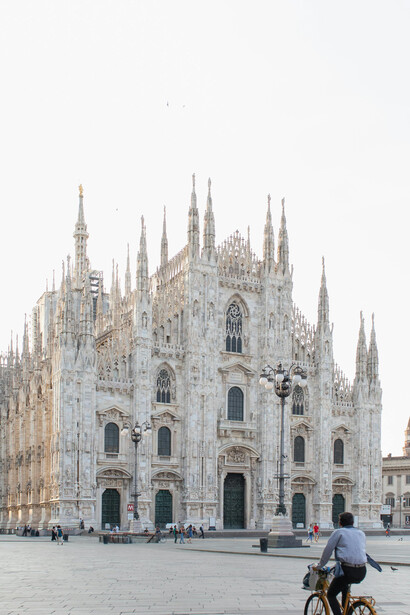
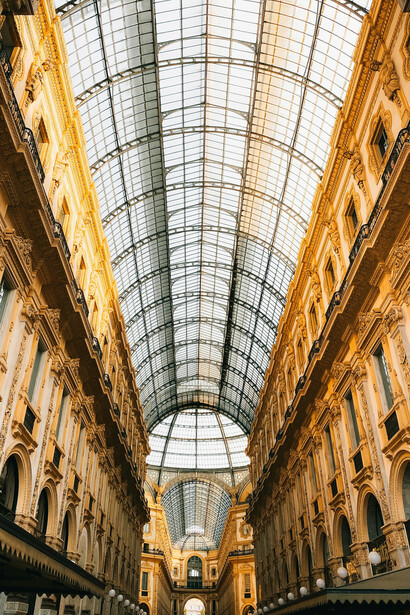
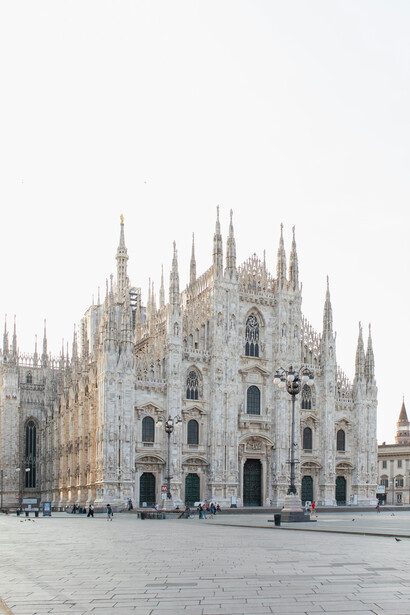
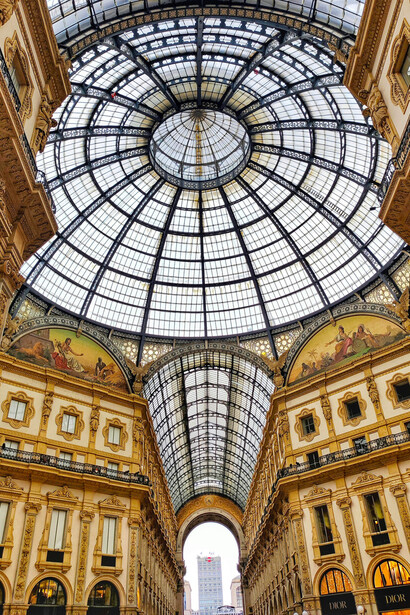
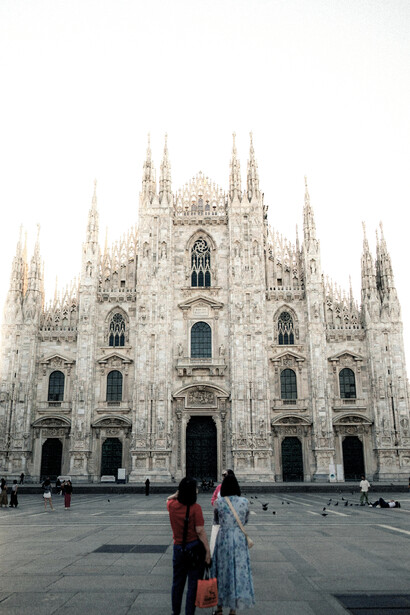
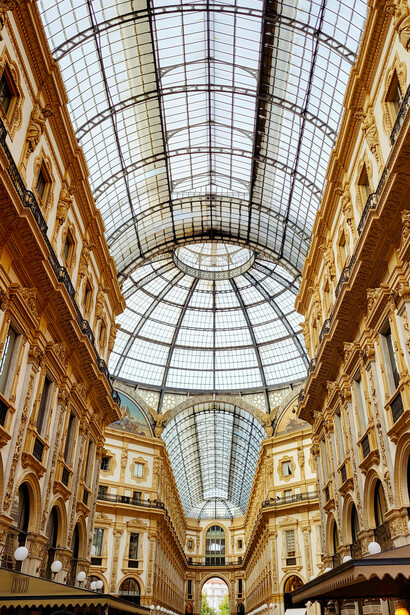
Yet the disruption didn’t ruin my day—it enriched it. I wandered to the Duomo di Milano, its white marble façade gleaming under the afternoon sun. I spun three times on the bull mosaic in the Galleria Vittorio Emanuele II for good luck, joined the crowd admiring shop windows, and then wandered toward Brera, Milan’s artistic heart.
At a small café, I ordered a €1.50 cappuccino—a price so delightful it almost made me laugh—and watched an elderly man carefully turn the pages of his Corriere della Sera. The world slowed to a gentle hum.
Later, I admired the Castello Sforzesco, though the moment was soured by the sight of scammers running shell games with unsuspecting tourists. Italy, I realized, is a country of contrasts—grandeur and grit, grace and imperfection, forever intertwined.
My final challenge came at Lampugnano bus station that evening. My FlixBus to Bergamo Airport was delayed, and when another bus—bearing the same number—pulled up to the platform, I nearly boarded. A last-minute check saved me: it was bound for Lyon, France. The thought of accidentally ending up across the border on my last day, with an almost-expired visa, sent shivers down my spine.
As I finally boarded the right bus and watched Milan’s lights recede into the distance, it struck me: Italy had taught me far more than I expected. It had taught me to find patience in chaos, joy in imperfection, and peace in slowness. It had taught me to laugh when things go wrong, to linger over coffee, and to savor the sweetness of doing nothing—dolce far niente.
Because in Italy, life may not always run on time. But it always runs beautifully.