English
 Español
 Français
 Deutsch
 Italiano
 Português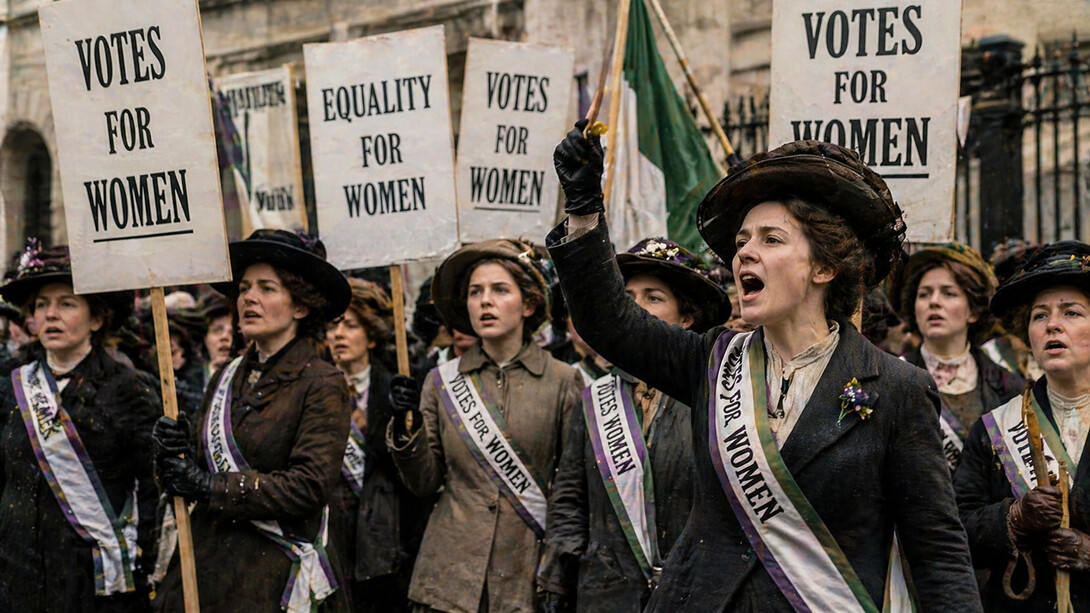
Politics, as defined by Harold Lasswell, a famous political scientist, is who gets what, when, and how. He explained that politics is about who has the power or influence; what resources, benefits, or decisions they get and when they get them; and how they manage to get them (methods, strategies, and power dynamics). Lasswell's definition summarises politics as the distribution of power and resources in a society.
So, politics is fundamentally a logical game of influence and interest. It is believed that anyone who intends to engage in politics, is already in politics, or was at one time involved in politics has one purpose at heart: it is to pursue a certain interest, which can be personal, group, regional, or national in nature.
From the above, it is safe to say every human being has at one time or another been involved in politics. Therefore, Aristotle, a political scholar, was not wrong when he said that humans are political animals, i.e., wherever two or more persons are found, the game of interest must ensue. In other words, long before the advent of modern political ideologies and systems of government, like democracy, communism, oligarchy, theocracy, and the like, politics was already built within the human system.
That is why two brothers can team up against a neighbour, two neighbours against a stranger, etc. This brings forth the notion that communion within the social sphere is not just a matter of relationship; it is a question of where the attainment of interest is more certain and the quickest way to attain such interest.
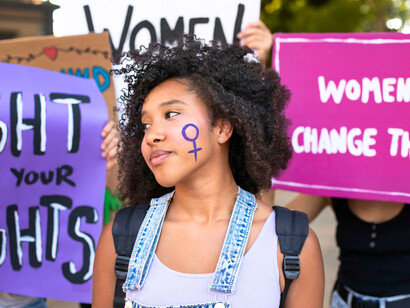
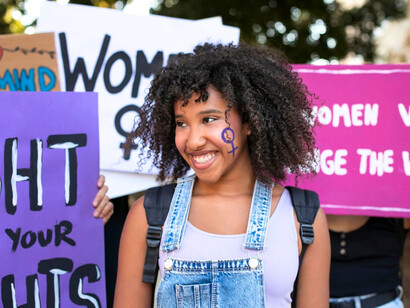
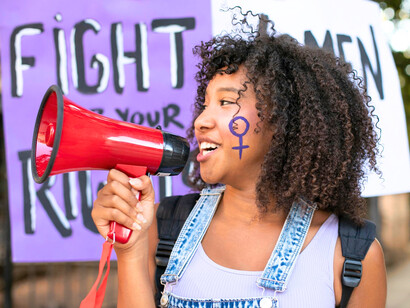
We have been able to establish the fact that politics is basically and fundamentally a game of interest. Let's now look at the players... If one should take a critical look at political systems all around the world, one will note that the key players are men. Men dominate the political world (administrative, legislative, judicial, and even the military). Just as it was centuries ago, when women were denied the right to vote or own property.
Although women around the world have been granted suffrage and the right to own property and even political freedom to hold political positions. However, the ratio between men and women in politics is still large. It is as bad as 80:20, with 80 for men and 20 for women. This includes the very advanced nations. It's surprising to note that parts of the Global South have had female presidents, but the foremost champion of democracy in the world today is yet to produce a female president.
Women in politics have become a subject of high priority. Because one might begin to wonder, is it that women do not understand yet the rudiments of politics, especially national and global politics, or do the men still not consider women good enough to get into politics in good numbers? In other words, probably the women themselves do not consider politics a safe terrain... Whichever the case, it might be difficult to give clear-cut answers to the questions above, because for every right answer, there will be a cogent counter-argument, and this leads to the question: if the coast is really clear for women, why are they not in politics as they should be?
The gospel of democracy is being propagated with unflinching resolve to all nations, even to the far east of Asia and eastern Europe. The wave is getting stronger by the day because it is championed by a nation considered the first among others. Regardless of the growth of democracy, gender participation is still a grey area that needs urgent attention. Women's participation in politics at the very top level is still not good enough.
Despite the great gospel of democracy, the question still stands: Will there ever be a time when a woman will be the president of places like the United States of America, Russia, modern-day China, Nigeria, and the like? Imagine a woman growing to become not just the head but also heading a very sensitive position in the military. Will that era ever come?
For the Arab world, religion has kept the women very quiet, but with the strong influence of Western education and cultural blending taking place, especially in Saudi Arabia, the United Arab Emirates, and Qatar, maybe we are getting close to the era where the Gulf countries will have women holding very top political positions, like being the prime minister? Time, they say, will tell.
As I begin to draw this to a conclusion, it is generally agreed that the participation of women in politics has seen a progressive movement from time past till now. We have seen women do well as heads of nations and as prime ministers, and we have seen them manage other key positions around the world. In Africa, we have, among others, Ellen Johnson-Sirleaf, President of Liberia (2006-2018). In Europe, the list is a bit long; however, for space and convenience, I will point out a few: Margaret Thatcher, Prime Minister of the UK (1979-1990); Angela Merkel, Chancellor of Germany (2005-2021); and Georgia Meloni, Prime Minister of Italy (2022-present).
In Asia, among others, is Indira Gandhi, Prime Minister of India (1966-1977, 1980-1984). In the Americas, among others, is Michelle Bachelet, President of Chile (2006-2010, 2014-2018).
In Oceania, we have Helen Clark, Prime Minister of New Zealand (1999-2008); Julia Gillard, Prime Minister of Australia (2010-2013); and Jacinda Ardern, Prime Minister of New Zealand (2017-2023).
These are some of the women flying the flag high, representing the women's population in a distinguished manner. This article is not saying women are not in politics or active in politics, nor is it saying they have been relegated forcefully; however, it’s mainly demystifying that women are doing well in politics now compared to decades and centuries ago. However, there is still a huge room for improvement.
Women who have been able to display strength, wisdom, and unusual managerial skills in taking care of families will be very useful in building a world of peace if given a larger representation across the globe, but they must carry on with a golden heart, free from greed, ego, and self-serving interests; otherwise, the men will see themselves justified to keep them off, at least for a while. We need more women in politics, not because it’s a woman’s world, but because working together brings out the best in us.