English
 Español
 Français
 Deutsch
 Italiano
 Português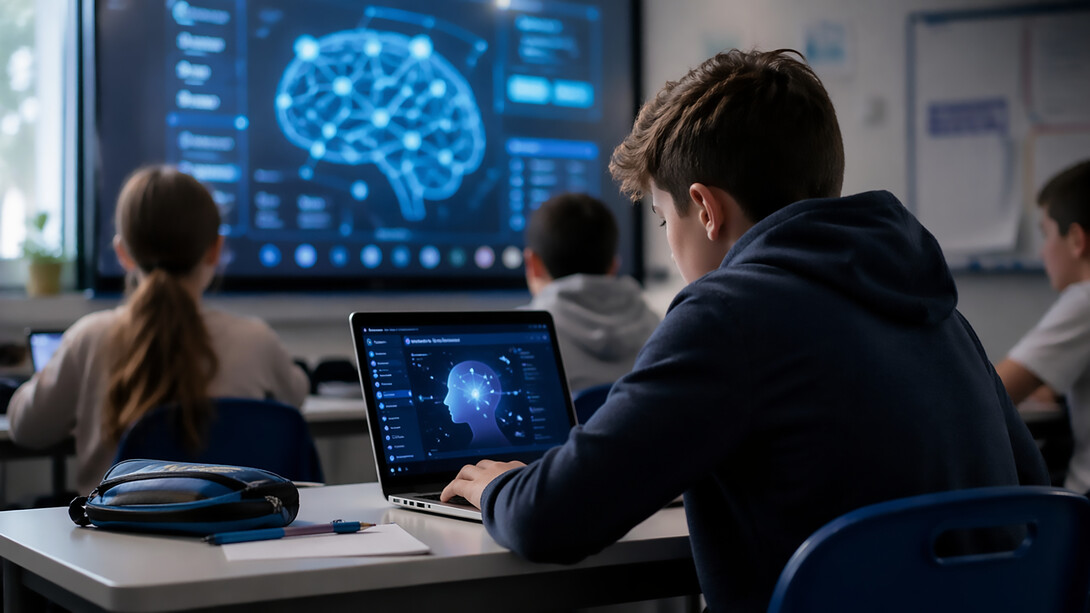
British education secretary Bridget Phillipson has managed to earn herself a lot of enemies in the relatively short time she has been in office. When the Labour Party won the UK general election in July 2024, and she took up her role, she made it her mandate to undo almost everything the previous government had done on education policy. For example, she has declared war on homeschooling, to the ire of many1. She also threw her weight behind the highly controversial decision to add value-added tax to private school fees.
Now, she must contend with how developments in the technology industry are affecting the world of education and the consequences that might have for British schools and the changes she and her government intend to bring into force.
As the Labour Party begins to overhaul the UK's education system, it is time to rethink how we assess students. Traditional exams, which emphasize written recall and adherence to rigid mark schemes, are no longer the best fit for the world our young people will be graduating into. With AI transforming how we access information, write, reason, and, crucially, work, it is time to explore new ways to assess our young people's education. The answer is verbal assessments.
Our current education system is built on the assumption that knowledge isn't always at our fingertips. For hundreds of years, the education system has compelled young people to memorize and perform written recall on huge amounts of information to succeed academically, born out of a world in which the history of mankind was not, quite literally, a click away.
The rise of AI search engines in particular now allows instant access to data in a way that even Google could never have imagined at its inception, making the necessity for rote memorization close to obsolete. Our young people are living in a world where their phones can already aggregate and distill almost all of the academic literature on a subject in an instant, with their ability to reason and analyze that literature progressing at a rate of knots. Why, then, should we compel students to sit traditional exams, performing a memory trick that they are already inferior at compared to their phones? The answer is that they shouldn’t, with oral examination2 better aligning with learning styles that value verbal articulation and critical thinking over rote memorization.
Traditional written exams often simply require students to produce structured responses that align with specific mark schemes. Young people are, ultimately, judged on their ability to regurgitate the talking points that get them marks, with little original thought necessary. With AI's ability to generate coherent essays and solve complex problems, young people are, once again, being demoted to a lower ‘set’ than their phone. Especially when doing coursework, the authenticity of the assessment is immediately compromised, but it will almost certainly produce better results.
The solution is not to revert to the soon-to-fail model of the past, which is tantamount to demanding students write with chalk rather than pen because it is quicker; it is to embrace verbal assessment. Critics will argue that verbal assessments are inherently subject to bias and subjectivity. This is true, but they must also recognize that traditional exams also enshrine biases, favoring individuals with strong written recall skills and, often, little else.
The moderate correlation between written and verbal assessment scores (r = 0.53), as found by a Cambridge study3, suggests that verbal assessment may begin to address this shortfall. Verbal assessments emphasize communication skills and the ability to articulate ideas clearly and eloquently, as well as perform under pressure and demonstrate an in-person understanding of a subject.
Edinburgh Napier4 found that students felt oral exams demanded deeper understanding compared to rote memorization for written tests and that young people felt that oral exams developed their "professional identities." Person-to-person assessments will provide a more accurate measure of a student's comprehension and critical thinking abilities, as well as prepare them more effectively for the job market they will ultimately move into.
The AI revolution is here, and the integration of AI into our daily and working lives necessitates a re-evaluation of educational assessment. To ensure that Britain remains a world leader in educational standards, we mustn't be held back by those who yearn for the return of factory-esque education where pupils sit in uniform lines, don’t speak, and write with quills and chalk.
Traditional exams, with their focus on memory, recall, and rigid structures, are not sufficient in preparing students for the future. Verbal assessments, which focus on critical thinking, communication, and adaptability, offer an alternative that will better prepare our young people for their working lives.
Whether people want to embrace the AI revolution in education or not, it is here regardless, and our education system must evolve to keep up.
This article was written by Noah Khogali. Noah is a British writer and politician. He serves as a local councillor in Perth and Kinross, Scotland.