English
 Español
 Français
 Deutsch
 Italiano
 Português
It seems that in life, as in a play, the performance of the role of what each one believes himself to be can only be carried out by isolating himself from the rest of the performance and the context of the play. But sometimes, for a moment, the intensity of the rest of the world reaches a point where one can no longer ignore it, and it ends up interfering with the isolation of our daily role. Incredible how the scene changes! Those were times of the Cold War between the former Soviet Union and the United States. An era of fear of communism and the domino theory of geopolitics. I was 18, living in San Juan, Puerto Rico, and in love with a beautiful young woman. Full of plans and visions, excited about my biology and chemistry studies, my girlfriend, and life in general.
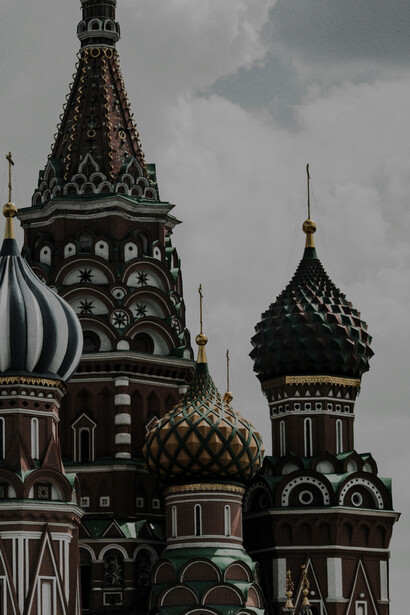
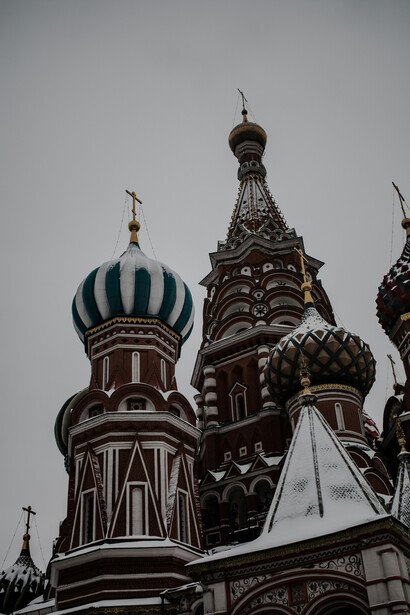
I was taking Russian and French courses as electives to help me in my future life as a scientific researcher. To practice Russian, I had subscribed to Sputnik, the Soviet counterpart of the US Reader’s Digest. Sputnik arrived in the mail, wrapped in a brown paper bag with no indication of what it contained, but it had a line below the shipping address in Cyrillic. The postman suspected something and asked the neighbors, "Who lives here?" Maybe he thought he was a Soviet spy....
At the end of 1962, the Cold War heated up, with the blockade of Cuba. I was listening to the news on the radio as I walked to college that day. The hysterical radio announcers describing Russian and American fighter jets flying menacingly close by, as Russian ships approached to break the blockade of Cuba.
So, the world was coming to an end. There was going to be a nuclear war! Children were being told to take shelter under their desks at school. Oh my God, and that night I was going to have a romantic date with my girlfriend. I decided to skip my class and ran to the faculty where she was, beckoned her out, and told her: “We have to get out of here, the world is going to end, and we won’t be able to make love to each other, we need to go now!" She didn’t listen and looked at me with disdain and dismay.
And the war became cold again. Some 27 years later, with the fall of the Berlin Wall, it ended up being frozen. Those were the years of Gorbachev and the fall of the so-called Iron Curtain. In that moment, another film in history began.
I was then 45 years old, in another role, married with children, living in Mexico, working for the United Nations. Instead of scientific research, I was promoting environmental programs. I used French and Russian to a very limited extent: the former very little to get by Geneva, where I lived for about three years, and the latter to read a little. But I never got to make them, fluid channels of language in my mind.
And the cold war of my younger years was followed and continues to be followed by other hotter wars, always far away, thank God, and always brought into daily life by headlines and journalistic and television reports, with an intense taste for sharing tragedies. It reminded me of Orwell’s minutes of hatred in 1984, that's how all these battles between people can be seen from afar, bombings, dead, wounded, destroyed cities, wounded children, threatening politicians and bullies, barricaded in their palaces and presidential houses. Always the same, in the story of my own time here. And also, when I was reviewing history books, it seemed the same before my appearance on stage, although not shared continuously or immediately across all parts of the planet like it is now.
The world’s military spending increased by 37% between 2015 and 2024. The global military burden, i.e., the share of global gross domestic product (GDP) devoted to military spending, increased to 2.5% in 2024. Global military spending per person was the highest since 1990, at $334.
In short, this thing of killing each other, of fighting between communism and consumerism, this and that, of wanting to have more and more, even if others get annoyed, seems to be part of the human play. And everyone has an explanation for why, and some even kill themselves to defend it.
There are the Trumps and the Hitlers. And also, those who are not yet so famous, from their positions of political leadership, or from their homes, neighborhoods, and lives, who subscribe to programs of hate and sympathize with the suppression of the "others". Yes, of those others that interfere with our points of view, our consumerism, communism, or whatever our ideologies are. Those of the left or the right, those of other beliefs. Those who interfere with our selfishness and points of view.
But as in any play or film, there are always moments of greatness, of love, of spirituality, even in the midst of constant hot and cold wars, public or personal. There are always moments of love. And who knows, maybe that's the purpose and theme of life’s play.
By the way, in the end, the Russian language did serve me for something. In 1997, when I was still working for the United Nations, I was asked to go and meet Mikael Gorbachev at the airport in Brazil. He came to participate in the Rio+5 event, commemorating the 5th anniversary of the Earth Summit. I was very excited about this request; I had always thought that this gentleman had been instrumental in cooling down the Cold War that affected my romantic date when I was eighteen.
So, I practiced a little of the Russian I had forgotten, never well learned, and when Gorbachev entered the protocol room at the airport, I received him. I said, bravely and with very bad pronunciation, "Mr. Gorbachev, it is a privilege for me to know you." He smiled at me and looked at his wife, Raíza, who was accompanying him. He replied in Russian (which had to be translated by his interpreter because I did not understand): I wish my compatriots thought like you. And the three of us laughed...
Yes, life is a play, an evolutionary flow of an Ocean of consciousness, where each one of us plays a role like a drop, until we end up in that Ocean of consciousness. As in any great theater play, the contrasts between characters, the moments of cold and hot war, and those of greatness, love, and peace, forge the theme and its teaching of love.
Let your love flow unceasingly, like a stream coming down the mountain into the Ocean. There will be obstructions of pleasures and pains. Let them pass as passing phases. There will be flowers and thorns in the flow of the water and on the banks. Don’t get attached, don’t get affected. Keep going, keep going until the creek turns into a river. Doubts will assail you; self-indulgence will attract you, but with love in your heart, continue to flow into the Ocean of love. Don’t worry, don’t be afraid.
(Meher Baba)