English
 Español
 Français
 Deutsch
 Italiano
 Português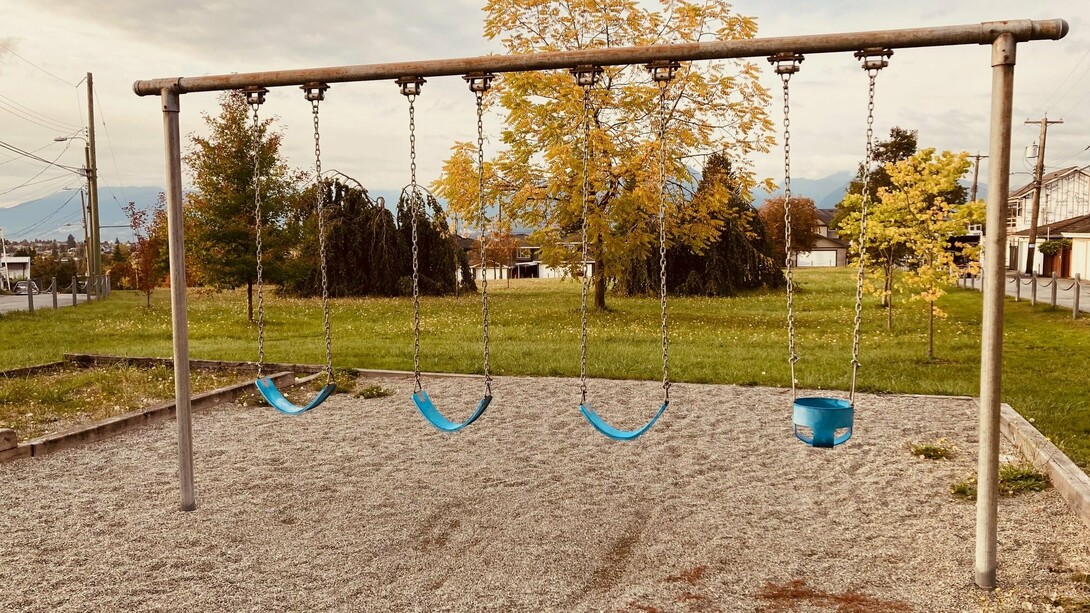
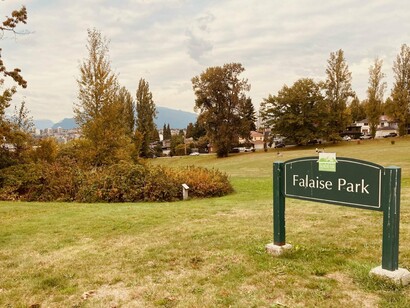
This short story is inspired by Vancouver’s Falaise Park, situated in the Refrew Heights neighborhood in the eastern part of the city. The park was dedicated to veterans of World War II, and the surrounding neighborhood was created for returning veterans during the Second World War to solve a housing shortage. Today, the neighborhood is mainly occupied by blue-collar families, immigrants, primarily from East and Southeast Asia, and international students from across the globe. Sunset in Falaise Park also depicts themes of urban seclusion, mental health, and the ways we interact and consume public spaces.
James could still remember when he first moved to Vancouver 7 years ago. He didn’t have much, but the opportunity for a fresh start was enough fuel to brave an unknown city where he knew no one and build a new life from scratch. The distinct four seasons were a solace after a year in the frigid, bone-chilling winters of Winnipeg. Gratitude was also felt for the trade-off of flat land and frozen lakes for mountains and ocean breeze.
He arrived on the west coast city at the start of fall, and unlike Winnipeg leaves, Vancouver’s didn’t instantly turn away from green and fall to the ground in less than a month. He loved that the leaves stayed around a while so he could see them change colors in gradual stages.
Strangely, the contrasting colors made him feel welcome. He didn’t need a dramatic event to mark this transition in his life; what he needed was something different, and a longer fall season was a first, causing a subtle excitement. He learned this subtlety as a coping mechanism, slowing time down and allowing him to take in the little things.
However, life in any urban center these days is not as straightforward for newcomers, immigrants, or loners. James fit all these boxes, and even though he managed to shrug off the complaints of many Vancourites about the rain that is a mainstay during the fall, winter, and early spring months, the gloom of the city, its constant wetness, and the hustle of living in one of North America’s most expensive cities eventually got to him.
He was no stranger to working hard and starting from scratch, and he didn’t mind the rain, because his childhood in Singapore provided him with a sense memory of being soaked in tropical rain. But it was the repetition of city life that got to him. The thrill of starting fresh in a new city, avoiding crowds, and making it back to his humble flat to sip tea while watching the rain, eventually wore off.
But whenever he needed solace in the bustle of modern urban living, he could count on a trek down Falaise Park during sunset to offer a moment of respite. Being an artist is not a common career path and not something he is comfortable revealing whenever he visits Singapore or when meeting random friends in Vancouver, whom he calls “hello and bye friends.”
He didn’t, however, mind going against the grain of cultural, traditional, and practical norms. He knew how to find rituals to paint his solitary path with moments to reflect and observe in the midst of living a life of quiet provocation.
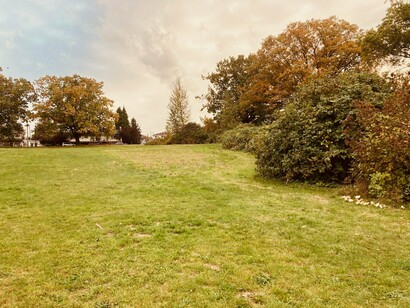
Falaise Park, a meadow-like park nestled in the middle of East Vancouver’s Renfrew Heights neighbourhood, never disappointed James. It was his solace in the storm of urban hustle. To James’ knowledge, it was first created after World War II to commemorate the services of the war’s veterans. It was built to address the housing crisis faced by these veteran war heroes.
Knowing this neighborhood was built during a housing crisis strangely comforted James because Vancouver is currently experiencing another housing crisis. It was not easy for James to find a place for himself without giving over half of his monthly income to live in a tiny duplex flat. He knew what he was getting himself into, but the fact that history was repeating itself and his backyard was a park-like meadow were simple joys that put the city grind at ease.
Making a hot cup of tea and walking down Falaise Park in the evening was a reset. A ritual that starts at the swing set on the northern tip of the park. He would become a child again, using the same swinging technique he learned as a child, giving it a good back kick to increase his flight while staring into the distinct light pink and red sky that painted Vancouver’s sunsets.
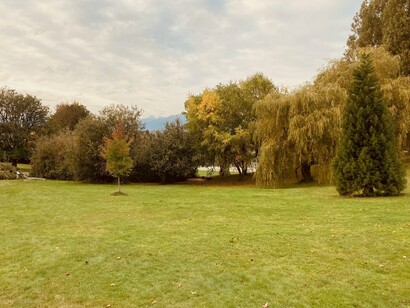
He would then walk over to what he believes are twin weeping European beeches. He named them Desolation and Dejection because of how they are shaped, but he always takes a knee between them and says, “Hey, why all the morbidity, look at The Twin Sisters in front of you.”
James admits to himself that it’s a dry and futile attempt at a joke, but it’s the best he has got, and it gives him a daily laugh. The Twin Sisters are the twin peaks Vancouverites call The Lions. James likes calling it The Twin Sisters because he was told by a stranger he met at Falaise Park that the Squamish people called it that before Europeans arrived in Vancouver.
The stranger said that they called it the Twin Sisters because two sisters of a powerful chief persuaded him to broker a peace deal with a rival tribe. When the sisters passed away, the great creator transformed them into twin mountain peaks so they could forever watch over the land.
James loved this story, and he began taking photos of the Twin Sisters from Falaise Park, incorporating them into his art installations. He would try to juxtapose them with images of the seedier neighborhoods of the city, but has thus far not found any interested investors or galleries who would take them.
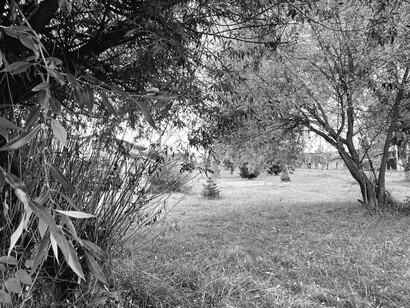
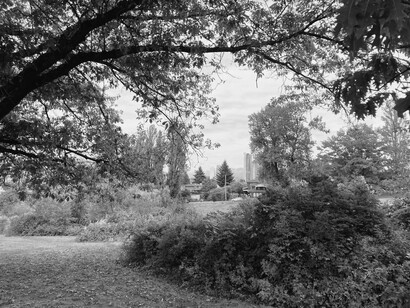
After taking in the majesty of the Twin Sisters, he would walk down Falaise Park past a Christian elementary and middle school and make his way to the South side of the Park, which is basically a giant meadow in the middle of the neighborhood. This part of the park is bordered by garry oaks and whispering willows, where visitors bring their dogs because they are allowed to go off-leash.
Here, James loved to watch people play with their dogs or watch them fail miserably in trying to train them to sit, do tricks, and not attack other people. This part of Falaise Park also introduced James to slacklining. This endeavor also gave James one of his biggest laughs when someone thought it would be a good idea to hit golf balls in the slackliner's direction.
“The contrasting things people do,” James thought to himself. “People end up in beautiful places for different reasons,” he summed up. He was glad to be an observer. An observer of first loves, the joy of a dog leaping full speed for a ball, the red fruits of red flowering currant and red elderberry, and a young family’s picnic, which revolved around their newborn's fear and fascination of being on grass for the first time.
Urban solitude is not a bad thing when you have a park. You can be an observer of the human condition while lying on the grass. Even when James was fixated on the mesmerizing colors of the sunset sky from Falaise Park, he would still listen to the chatter, the screams, the laughs, that intersect with the murder of crows flocking across the park or the little critters of the ground and stealthy hummingbirds that go about having their fill of nectar before the sun sets.
The sunset of Falaise Park, in the middle of blue-collar family homes, some formerly owned by veterans who potentially had PTSD, and contributed to the baby boomers who still own the overpriced properties all across what many magazines and articles call one of North America’s most liveable cities.
For James, coming from the city-state of Singapore and the city known as “The Peg,” he has learned that urban living is not about liveability anymore; it’s about urban ritual, away from the mundane, the repetitive routines, work routes, and trendy social activities. A ritual of silent rebellion in a man-made nature setting, where he can shut off the chatter, stay still, look at 5,000 feet of natural wonder, and stroll aimlessly to pass by regular lives he deems boring.
Solitude might turn to loneliness, and sunsets will turn to night, but just as there will always be a sunrise, James will always find a way to find an eccentric light in the bustle of it all. Right now, it’s in the confines of a park, nestled in the outskirts of a beautiful but very young city.