English
 Español
 Français
 Deutsch
 Italiano
 Português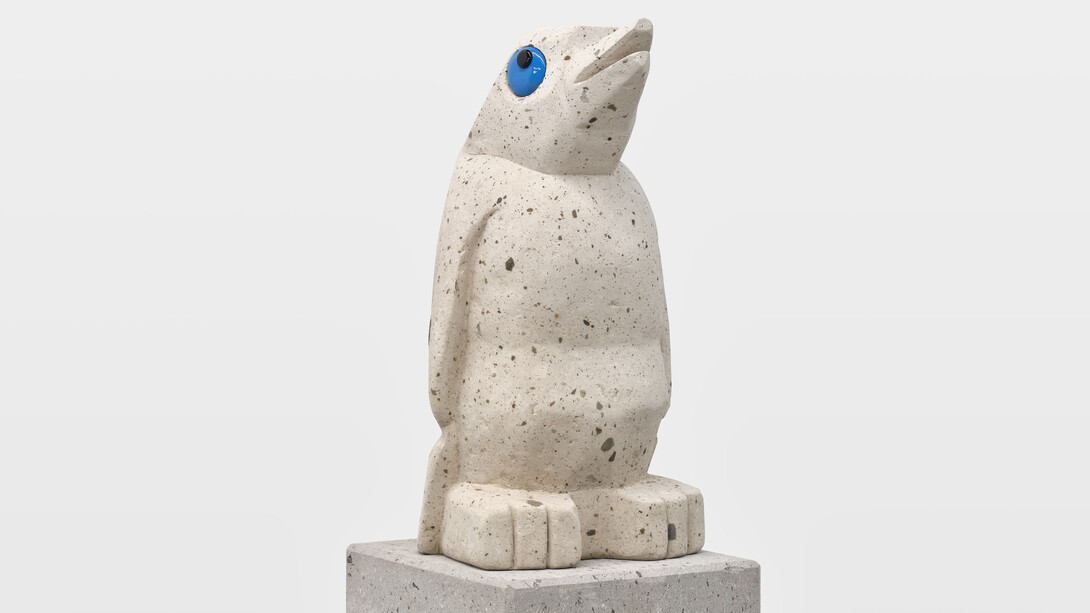
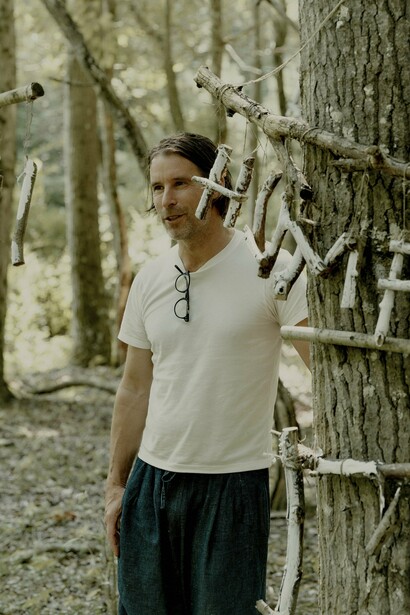
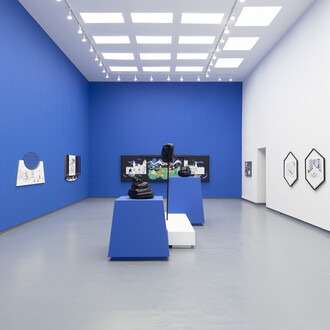
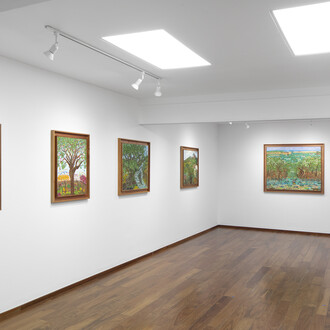
Violet butterflies brings together a selection of works spanning different moments in the career of artist Olaf Breuning, integrating pictorial, sculptural, and drawing-based pieces. Throughout his production, the artist has developed a visual language that combines representations of natural elements and scenes of everyday life featuring groups of humans and animals, adding a sharp sense of humor and a critical perspective that have become defining characteristics of his work.
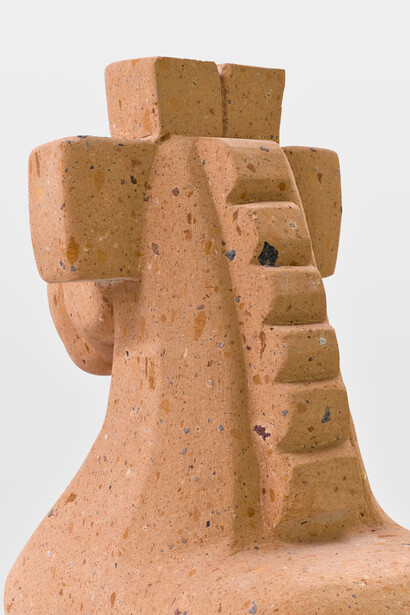
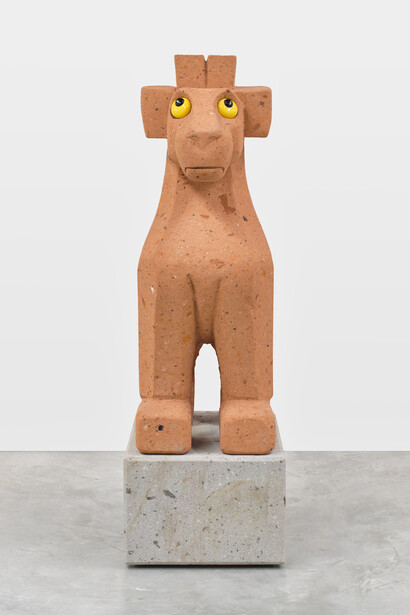
The exhibition includes sculptures from the Sad and worried animals series, made in various types of stone such as quarry stone and American black stone, in which animals take on expressions that are distinctly human. It also features recent sculptures in bronze and ceramics that revolve around the figure of “the artist,” depicted through different emotional states—sadness, uncertainty, and the unease of the contemporary artist.
The presentation is complemented by a selection of drawings that reveal the conceptual processes behind his practice. While some function as autonomous works, others have served as a starting point for the creation of photographs and sculptures, highlighting the interconnection between the different media Breuning employs.
In painting, the artist proposes a reflection on the medium itself through an unconventional process: he carves figures and forms into blocks of wood, which are then inked and transferred onto canvas through direct pressure. This method involves the artist positioning himself on top of the block placed on the surface, thereby producing an image that is directly imprinted.
The exhibition offers a broad perspective on more than three decades of production, allowing viewers to observe the evolution of the conceptual approaches that have defined his work. Rather than a closed retrospective, the show presents a dynamic approach to how Breuning’s work has engaged with the European art scene of the early 21st century, as well as the transformations resulting from his residence in New York over the past two decades—a context that has significantly influenced his processes, languages, and modes of production.
(Press release by Proyectos Monclova)