English
 Español
 Français
 Deutsch
 Italiano
 Português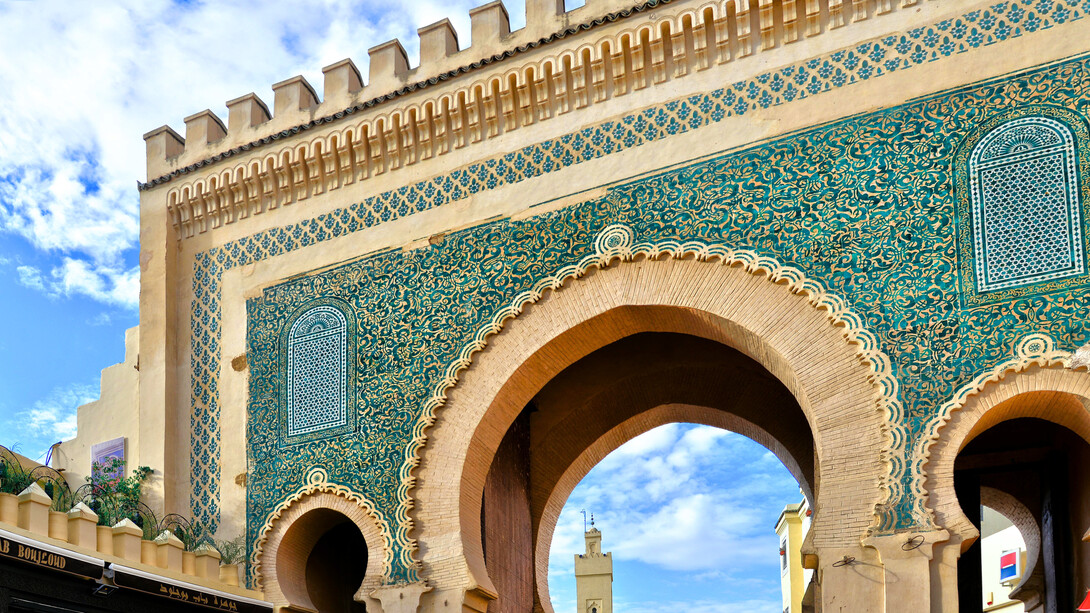
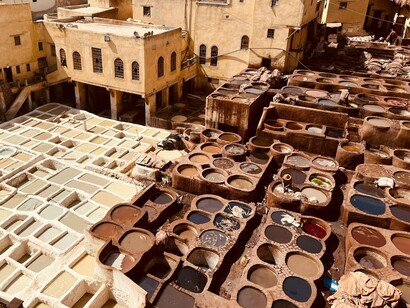
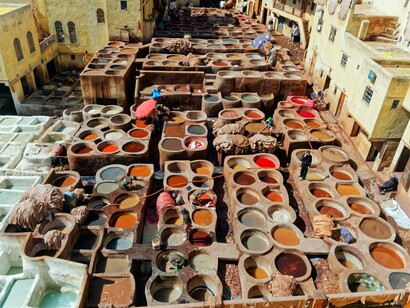
In the heart of Morocco, where the scent of cedarwood mingles with the sharp aroma of spiced leather, lies Fez, a city that does not merely exist in the present but breathes through the lungs of its past. To speak of the gates of Fez is to embark on a journey through a labyrinth of history, social stratification, and political intrigue. These portals, some standing defiant against the erosion of time and others fading into the hazy memory of oral tradition.
Fez el-Bali (the Old City), a UNESCO World Heritage site and the world’s largest car-free urban area, is often described as a living museum. Yet, it is the city’s massive stone gates, its abwab (gates), that act as the curators of this museum. They are the eternal witnesses to the rise and fall of dynasties, from the Idrisids to the Marinids and the Alawites, serving as both defensive shields and grand artistic statements.
The architecture of power and faith
The gates of Fez are the pinnacle of Andalusian-Maghrebi architecture. They were never intended to be mere holes in a wall; they were designed as a "visual identity" to project the prestige of the ruling Sultan and the aesthetic sophistication of the era.
Constructed with massive horseshoe arches, intricate stuccowork, and vibrant zellige (mosaic tilework), these gates follow a sophisticated military logic. During the Middle Ages, the city was a fortified citadel. As the sun dipped below the horizon, the heavy wooden doors of these gates would creak shut, transforming Fez into a "closed world." This nightly ritual fostered a unique spirit of internal solidarity, protecting the thousands of narrow alleyways, ancient madrasas, and scholarly circles from external threats.
Bab Boujloud is the blue mirror of the city
If Fez has a face, it is Bab Boujloud. Known globally as the "Blue Gate," it is the primary threshold for visitors entering the old medina. Though the current structure dates back to 1913, it was built upon ancient foundations. Its genius lies in its colour theory: the exterior is adorned in shimmering blue tiles, representing the signature colour of Fez, while the interior face is green, the colour of Islam and peace. Standing under its central arch, one can frame the distant minarets of the Bou Inania Madrasa, a view that has remained largely unchanged for centuries.
Bab Ftouh is the gate of conquest and eternity
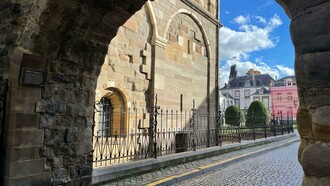
On the south-eastern edge lies Bab Ftouh, a gate deeply etched into the spiritual psyche of the Fassi people. Built in the 11th century by Ftouh ibn Donas, it is a gateway of contrasts. It connects the bustling neighbourhoods of the living with the silent, sprawling cemeteries that house the city’s most revered scholars and saints. Passing through its massive, weathered stones, one feels an immediate shift from the cacophony of commerce to an aura of dignity and tranquillity.
Bab El Mahrouk is the scorched sentinel
Near the Kasbah of Cherarda stands Bab El Mahrouk (The Gate of the Burnt). Its name carries the weight of a violent political history, marking the spot where the body of the rebel Al-Abidi was burned in 1204 AD. Unlike the decorative Bab Boujloud, El Mahrouk is a quintessential military gate—austere, solid, and intimidating, reminding all who enter of the price of insurrection.
Bab al-Rasif is the gateway to the core
Located at the city's lowest point, Bab al-Rasif serves as the functional heart of the medina's logistics. It provides the most direct access to the Al-Qarawiyyin University and Mosque. Today, the square surrounding it is a feverish hub of activity where traditional life meets modern necessity, serving as the main point where goods are transferred from trucks to the backs of donkeys.
The new city (Fes Jdid): the royal grandeur of the Marinids
While the gates of the Old City are defined by their intimate and defensive nature, the entrances to Fes Jdid, the "New City" founded in the 13th century, stand as towering expressions of imperial might. At the forefront of this grandeur is Bab Smarine, often described as the "Triumphal Arch" of Fez. Its soaring height and multiple arches were meticulously designed by the Marinid sultans to accommodate the pomp of royal processions and the return of victorious armies.
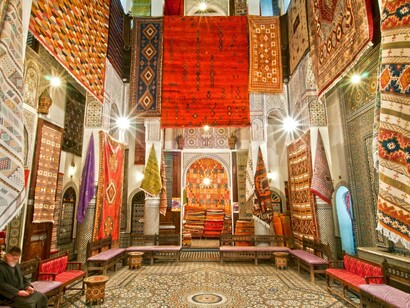
Today, this monumental structure has transitioned from a military checkpoint to a vibrant gateway for commerce, welcoming visitors into a bustling market renowned for its exquisite textiles and traditional jewellery.
Further along the royal axis lies Bab al-Dukakin, a gate that historically served as a bridge between the old and new Mechouars, or ceremonial parade grounds. Known as the "Judicial Shops," it was here that the city's judges and jurists once gathered to deliberate, blending the administration of justice with the seat of power.
In contrast to the celebratory nature of the other royal gates, Bab Jiyyaf offers a more sombre reflection of the city’s complex social fabric. Located in the heart of the Mellah, or Jewish Quarter, this gate bears witness to the historical religious diversity that has long defined Fez. Historically serving as the traditional route for funeral processions leaving the Jewish Quarter for the cemetery, it remains a poignant reminder of the multicultural layers and the shared history of coexistence that are essential to the Fassi identity.
Fez gates and its matter today
In an era of rapid globalization, the gates of Fez remain vital as both socio-cultural anchors and sensory portals that preserve the city’s unique identity. As socio-cultural anchors, these stone arches serve as the primary meeting points for residents, where phrases like "Meet me at Bab Boujloud" anchor modern social life to an ancient, unchanging geography.
Beyond their role as landmarks, the gates provide a profound sensory "reset" for anyone crossing their threshold; the modern roar of motorcycles and the glare of neon signs instantly give way to a world defined by the rhythmic "clink-clink" of copper beaters, the cool shade of stone corridors, and the timeless aroma of fresh mint and cedarwood.
Economically, these gates function as "shrines" of commerce, acting as the essential funnels that sustain the city’s labyrinthine internal markets. Because the medina remains the world’s largest car-free urban zone, gates like Bab al-Kisa and Bab al-Rasif are the lifeblood of the local economy, serving as the critical points where modern logistics meet traditional distribution.