English
 Español
 Français
 Deutsch
 Italiano
 Português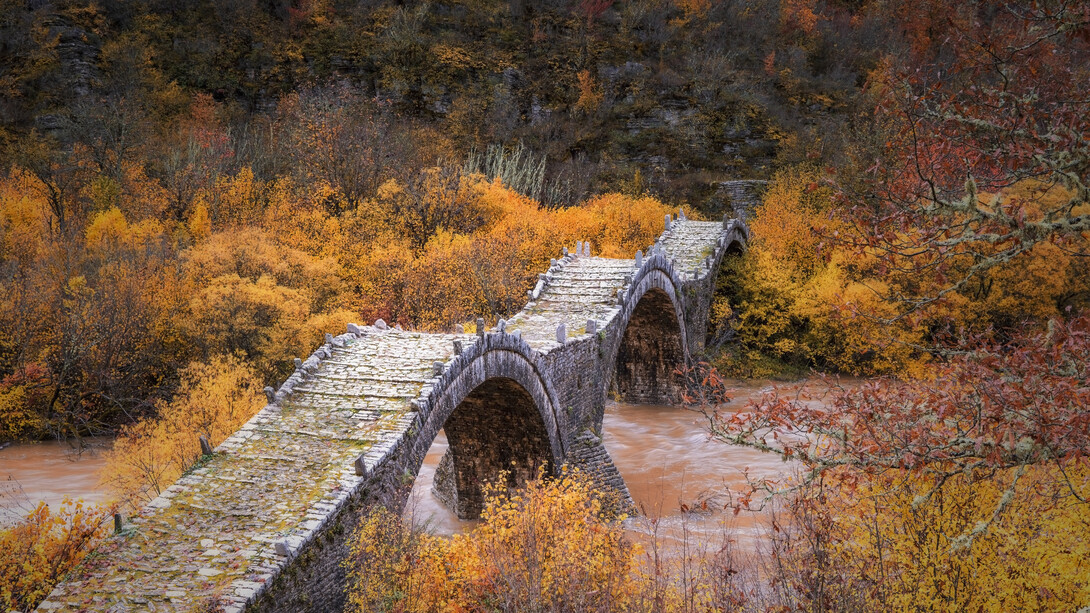
When Greece comes up in a conversation, the first thing that might come to mind for many is the white houses with the blue roofs and what seems to be an infinite blue body of water. While this is definitely one of the country’s most epic sceneries, Greece has much more to give, and it might surprise you what the country’s diverse nature has to offer.
In recent years, the Aegean islands, where the iconic white houses can be found, have been overrun by tourists, with the numbers increasing each summer. This has not only led to the islands being overcrowded but also to the shift in lifestyle and authenticity of Greek culture. Many culinary places take on a custom-made-for-tourists “personality,” which outside the high season is often nowhere to be found. For people who seek more of an adventure for their holidays, Greece might have just the thing.
Zagori
In the northwest of Greece, a wonderful little county called Epirus can be found. Located alongside one of the country’s most famous mountain ranges, named Pindus, also known as the “Spine of Greece.” High mountains and dark green forests, which unfold over the Mediterranean terrain, can be found alongside it. All year round, the area is a popular destination, especially for Greeks and for those who want to explore nature in its raw form and perhaps even participate in some adventurous sports. Zagori is a designated UNESCO World Heritage Site and home to two national parks, one at the river Aoos and the Vikos Gorge, the other around Valia Kalda, east of the Mountain Tymphe.
The toponym Zagori comes from the Slavic preposition "za," meaning "behind," and the accusative of the noun "gora," meaning "mountain," i.e., the area behind the mountain. The alpine lakes, ravines, rivers, and dense vegetation in combination with the Vikos Gorge create a landscape of wild and pristine nature in the area. Recognized by the Guinness Book of World Records, Vikos Gorge is the world’s deepest gorge in proportion to its width. Its pristine nature gives room to 24 mammal species and 186 species of birds, while its flora consists, among others, of over 50 species of forest trees and shrubs. A truly unique natural habitat that holds its visitors in awe.
Historical background
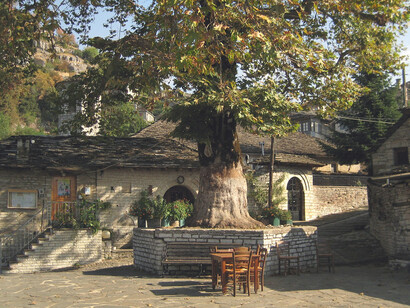
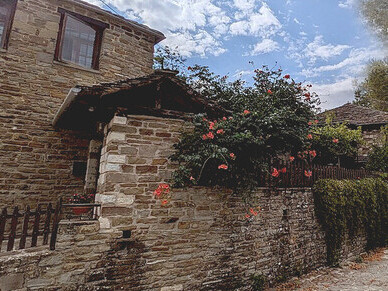
The Zagorochoria (which translates to villages of Zagori) are a group of small villages that are strongly characterized by their traditionally stone-made houses. There are a total of 46 villages, which are geographically organized into three groups: Eastern, Central, and Western Zagori. Although visitors have increased gradually over the last years, the cultural history of the villages is still strongly present and can be seen and felt when walking through the narrow, curved paths. The region has a rich history. There is evidence of settlements in ancient times, dating back more than 10,000 years ago. Later periods in modern history, such as the Byzantine and Ottoman times, were particularly impactful in the villages’ formation.
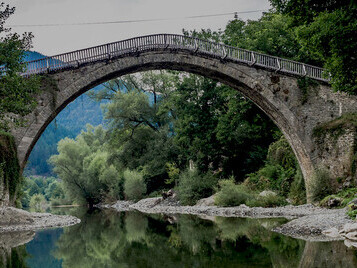
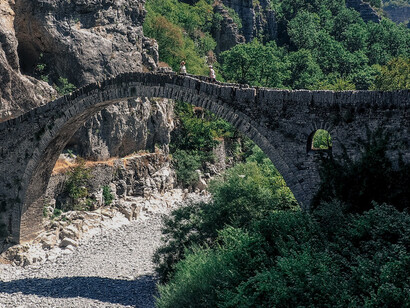
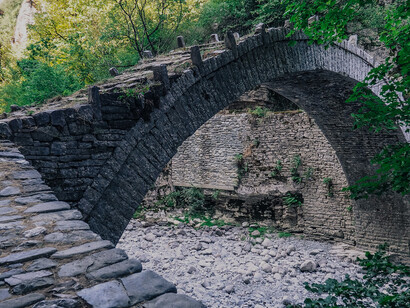
The architecture that came with the settlements is heavily influenced by Byzantine and Ottoman traditions, with villages centered around central squares and sacred forests. Stone construction techniques evolved to suit the terrain, leading to the development of dry-stone masonry paths, bridges, and staircases. Around 60 stone bridges can be found in the region of Zagori. Built between the 17th and 19th centuries, they represent a symbol of the region’s history, tradition, and culture.
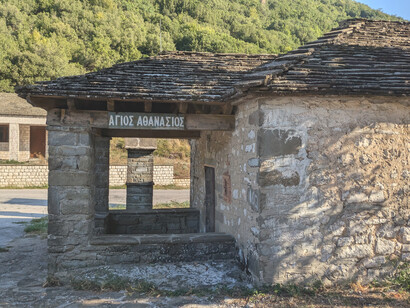
Today, with the increase in tourism, many new buildings have been built, like hotels. Most of them have been designed in a way that reflects the traditional architecture, built from stone. Megalo and Mikro Papigko, Aristi, Monodendri, and Vitsa are some of the most famous and most visited villages of the area. They also offer a variety of accommodations and a number of traditional restaurants, cafés, and taverns that are usually placed in the center of a village while providing a magnificent view over the mountainside. While the view can vary widely depending on the season, it never loses its magic.
What to do
Zagori is regarded as an all-year-round destination. The choice of the season depends, therefore, mostly on what a person desires to experience on the trip. Like with many other destinations, planning can be a good friend in the process of preparing for a holiday. Hiking is one of the most popular activities to do in the region, and it seems for a good reason. Whether you choose to walk along the banks of the Voidomatis River or explore remote paths that lead through the mountains, there is quite a good chance that the view will be unforgettable. Planning a hike with the focus on exploring the old stone bridges can be an excellent choice as well.
True fulfillment cannot only be found by nature lovers but also by those who have a spark for adventure in their blood. With sports like mountain biking, rock climbing, rafting, paragliding, andskiing in the winter, the region provides a fair amount of opportunities to explore one’s adrenaline levels. It is important to remember, though, that the natural environment lies here at the center of the experience, which means being in harmony and going with its flow will be an essential component of a complete and unforgettable trip. Besides, only that way can these sports truly be executed in their most raw and memorable form.
City excursion
A worthy destination for the beginning or end of the trip to Epirus is to drop a visit at the nearby provincial capital, Ioannina. A small town that will lure visitors inside its city’s walls. Heavily imprinted by the period of Ottoman rule in the area, Ioannina has a strong historical character, which can be seen in many locations inside and outside the city. Particularly mesmerizing is the old town, whose narrow streets lead up to the well-preserved castle. Although built around the end of the 10th century, the castle today is a strong reminder of Ottoman times, due to its important role in those years. Another piece of evidence of the Ottoman presence is the mosque, built in 1618. It can be found near the highest point of the inner castle, called Its Kale.
One of the city’s most recognized sites is Lake Pamvotida, located at the center of the town and the foot of the mountain, creating a unique panorama. Its distinctive location lets anyone hardly forget the proximity of the mountains. With its steep uphill streets, it offers a consistent view over the high mountains that emerge like a giant between the buildings.
Epirus offers many more chances to experience a memorable trip, as it also has access to the sea, where beautiful beaches located along the foot of the mountains can be discovered. The versatile nature of the Pindus area is truly special, and for any nature lover, it's worth considering giving it a spot on their bucket list.