English
 Español
 Français
 Deutsch
 Italiano
 Português
“Make America Great Again”, “America First”, controversy surrounding free trade agreements, continuing opposition to Mercosur in Europe, and growing success for nationalist parties. The era of globalization seems to be over.
From the outset, twenty or thirty years ago, there was confusion about the definition of “globalization”. For some, it was nothing more than trade, for others it was a whole range of elements that went far beyond the economy: politics, first and foremost, resistance movements, migration, development, culture and media, scientific research, tourism, and so on. Global contacts and exchanges between people.
With the MAGA movement surrounding US President Trump, one got the impression that this period had come to an end. “Make America Great Again” would mean “America first”, a return to a certain isolationism, an end to foreign interventions. This is not the case in practice. Trump looks around, hijacks the President of Venezuela, threatens Greenland, looks at Canada, and harasses Mexico. His favourite tools are customs tariffs, possible military intervention, and ultimately exporting as many goods and services as possible.
The World Economic Forum in Davos was the Great Celebration of globalization. The world's elites gathered there to work on a future for a “better world”. When Klaus Schwab resigned last year, things looked bleak for the formula. However, the 2026 edition, with a beaming and faltering Donald Trump, was once again a success. The world keeps turning, but it is organising itself differently, even more focused on business than before.
The counterpart to the WEF, the World Social Forum in Porto Alegre, fared less well. The initiators had failed to understand that politics was indeed being conducted in Davos and imposed this formula on the WSF as well. This inevitably ended in failure, because resistance and dissent without a voice are quite powerless and pointless. The WSF still exists but has completely lost its appeal.
Nevertheless, the first versions of the WSF were particularly correct on one point. It was not about being against globalization, quite the contrary. Social movements wanted a “different” globalization, away from free trade in the interests of the North and, above all, more cooperation between social movements, more culture, and more global contacts.
It is this approach that must once again be high on the agenda today, now that the post-Second World War world order and multilateralism are disappearing.
Interdependence
The successful far-right movements want us to believe that national interests must come first and foremost. That ethnic purity must be pursued, and migration must therefore be combated. That we must honor and remain faithful to our own – usually distorted – history.
On the progressive side, too, there is a movement that prefers local action to national and global action. Direct democracy, a social economy to meet group needs, and mechanical solidarity between all group members. Unlike far-right movements, they are less or not at all attached to state formation. Some of these movements do advocate global contacts, but the basic organization remains the local community.
This is a problem in both cases.
The main reason is that we are interdependent, regardless of the political level one wishes to emphasise. Climate change is the best possible example to prove this. Emissions reduction or forest management makes little sense in a narrowly defined area. This must be tackled globally. That is why, for decades, work has been done at the UN level to advocate a joint approach and achieve faster results. The fact that the US is now withdrawing from the agreements made is disastrous.
A second reason can be found in the tragic history of European countries, which have waged numerous wars resulting in millions of deaths. Developing one's own (national or local) identity is certainly not wrong, but it should never lead to supremacist and/or racist ideas that stand in the way of cooperation. This is precisely why the European Union and the UN were created. The UN drew up rules for conflict resolution, but unfortunately, they were applied far too little or incorrectly.
It is logical that the smaller the entities are, the greater the dependence on others and the faster conflicts can arise. Some production processes will always be continental or global – think of aeroplanes, cars, or computers – and that is why the much-praised social and solidarity economy can never be enough.
A third reason is healthcare. We saw this during the COVID-19 crisis, when a virus spread rapidly across the globe. Vaccines, therefore, had to be made available worldwide, which unfortunately did not happen to the extent that it should have. You cannot stop a virus at the border; we saw this happen before with HIV/AIDS. An effective World Health Organization can therefore work wonders.
A fourth reason is the shameful and unsustainable inequality in the world. Urgent action is needed to develop a system that helps poor countries move forward, that thinks in terms of solidarity and redistribution, as well as a fair and global tax system.
Trade
And finally, trade. Of course, food security and sovereignty must be pursued. It makes little sense to transport eggs, milk, or chickens from the other side of the world. A few countries cannot produce these things themselves. Questions can certainly be asked of the World Trade Organization, which included agriculture in its free trade agreements when it was founded. Agriculture is not an economic sector like any other; it is necessary to meet people's basic needs and is best regulated locally or nationally.
On the other hand, it is of course quite nice that, as a European, I can also drink coffee and eat bananas, oranges, and mangoes. I would not want to miss out on that.
There are other problems with global free trade agreements.
Progressive groups, especially the alter-globalization movement, have consistently opposed the WTO. The movement originated with 'the battle of Seattle', where a WTO ministerial conference was held. There were understandable reasons for this, mainly because the usual power relations were at play there too, and it was mostly poor countries in the South that lost out. However, this opposition also had a negative effect. Instead of a single global agreement, dozens or even hundreds of bilateral agreements were concluded, which are difficult to oversee, let alone analyze properly by social movements. In hindsight, it might have been better to focus strongly on better conditions for a global trade agreement.
Geopolitics
Moreover, today we need to think about the changing geopolitical relations. The old world order is disappearing, and the US is increasingly turning against the European Union and doing everything it can to divide its Member States. Even within NATO, major problems are arising with Trump laying claim to Greenland.
For the European Union, this means thinking carefully about how to move forward. It used to be so simple: a 'Western' bloc against the Soviet Union and, since the war in Ukraine, against Russia, and a growing conflict with China, which is becoming stronger in terms of technology and economic power, and is accused of being guilty of espionage.
But what if the Western alliance itself falls apart? Isn't it in the European Union's best interest to strengthen itself and defend its unique values – the rule of law, democracy, human rights, solidarity, and standard of living? Must Russia and China remain guaranteed 'enemies', or is it in our interest to build a more reasonable relationship? They do not necessarily have to become allies, but perhaps they could become partners with whom we can talk and negotiate?
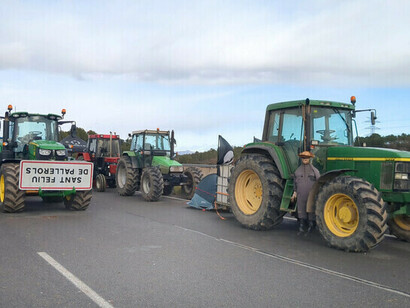
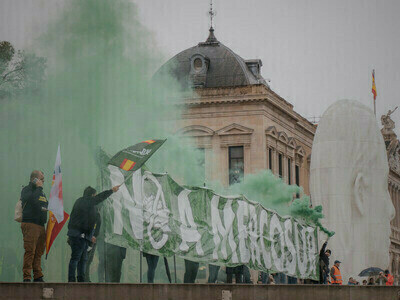
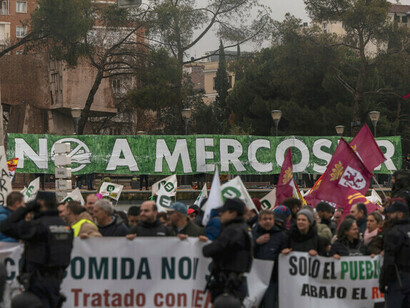
The recently concluded trade agreement with Mercosur should also be viewed in this light. Once again, progressive movements were right to oppose it, because there is certainly no need for meat from across the Atlantic. And whether Brazil really needs Volkswagen and Mercedes cars is highly questionable.
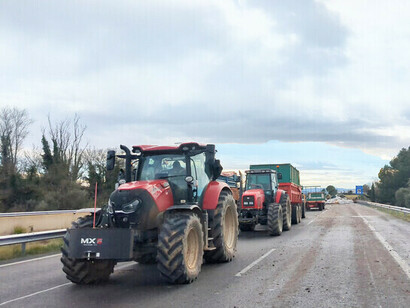
However, viewed from the new geopolitical situation, a different picture emerges. Isn't it good to have a free trade area of 700 million consumers, completely independent of the US? To make Europe less dependent on the US? Moreover, and in all fairness, isn't Argentine meat of much better quality than European meat? And aren't we already importing large quantities of genetically modified soya anyway? Isn't there a degree of hypocrisy in European opposition? And do the growing far-right farmers' movements have health in mind? The European Union undoubtedly has better legislation to protect consumers and regulate the agricultural sector, but can we claim that we now only get high-quality meat on our plates?
We urgently need to think more and better about “globalization”, which is a fact of life anyway. People travel, discover new worlds, as tourists or migrants, scientists work together, we try to help poorer countries, we listen to African music and admire their dance, and we try to protect biodiversity and reduce CO2 emissions. And yes, strong resistance is needed against oil barons and chemical companies that are slowly poisoning us with PFAS and other hormone disruptors.
In short, globalization needs to change, because, as such, it is a good thing, alongside and above trade. Davos is alive and well and will continue to work with its elites. A progressive movement that can work on an alternative, global policy is urgently needed. Fortunately, there are still a few globally active movements left, such as Via Campesina, but they are too few, they are weak, and their voice is barely audible.