English
 Español
 Français
 Deutsch
 Italiano
 Português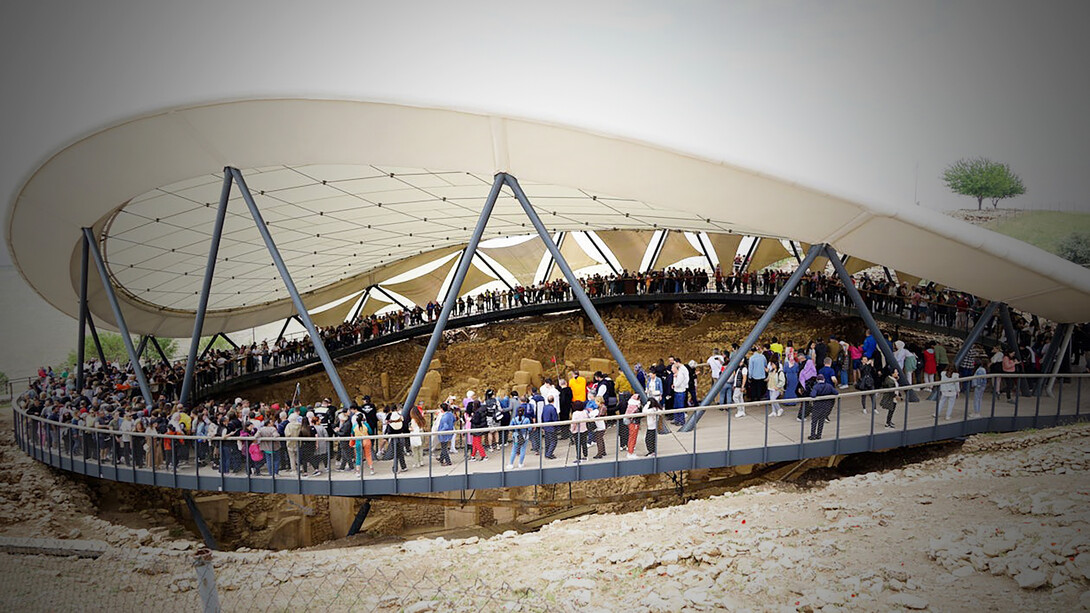
Humanity’s artistic journey began with small, intimate expressions, figurines carved from bone, mythical beings sculpted from mammoth ivory, and the first etchings on cave walls.
These early works, from the Lion Man of Hohlenstein-Stadel to the Venus figurines, reflected personal and spiritual beliefs, crafted to be carried or displayed within small social groups.
However, around 9600 BCE, art took an evolutionary leap, one that required collective effort, architectural ingenuity, and an emerging sense of the sacred.
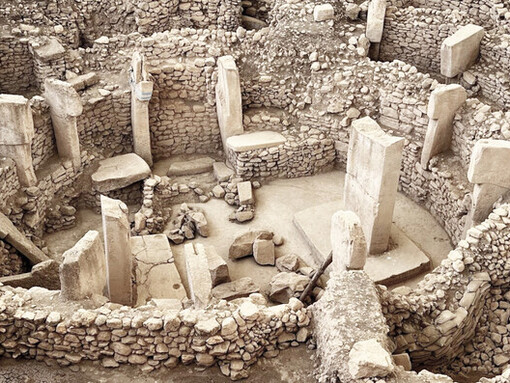
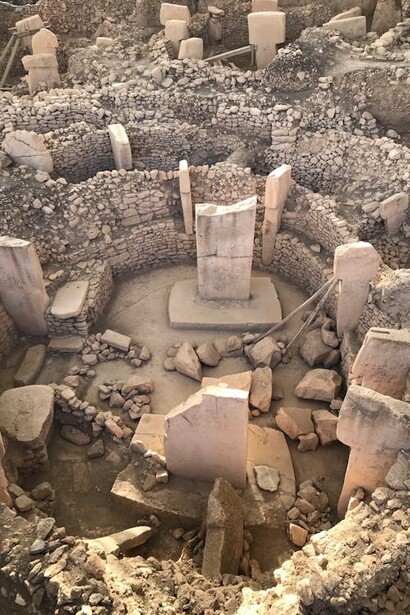
Göbekli Tepe, an ancient site in present-day Turkey, stands as the first known monumental structure built by human hands.
It was neither a home nor a defensive fortress; it was a sanctuary, a sacred space designed for ritual and communal experience.
This shift from portable art to megalithic architecture marks one of the most profound moments in human history, revealing how early people moved from individual artistic expression to shared monumental creation.
Discovery of Göbekli Tepe: a site that rewrote history
Until its discovery in 1963 (and its excavation beginning in the mid-1990s), archaeologists believed that large-scale architecture only emerged after the rise of agriculture and permanent settlements. The assumption was that humans first needed to develop farming, stabilize food sources, and establish villages before creating grand monuments.
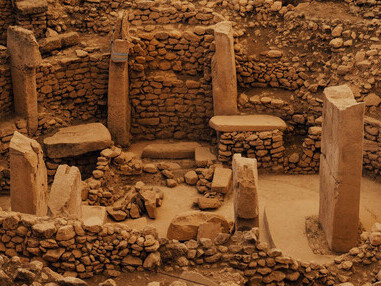
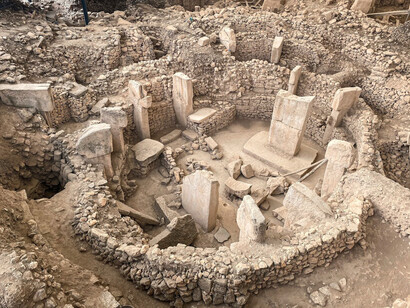
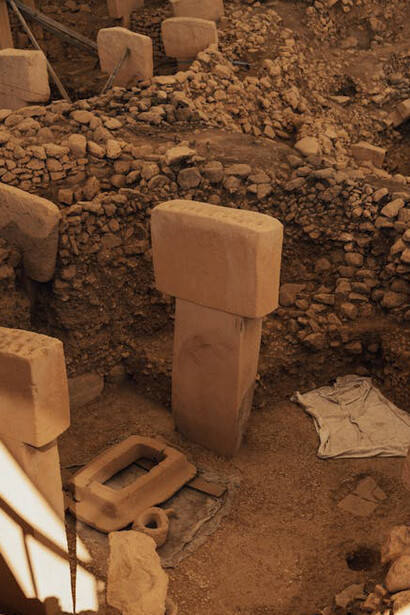
Göbekli Tepe shattered that theory. Its T-shaped stone pillars, some over 5.5 meters tall and weighing 10-20 tons, were crafted by hunter-gatherers, predating known agricultural societies.
The realization that nomadic groups had pooled their efforts to build such a complex structure forced a reevaluation of human history, suggesting that the need for ritual and artistic expression may have preceded permanent settlements, rather than the other way around.
A monument to the sacred: art and symbolism at Göbekli Tepe
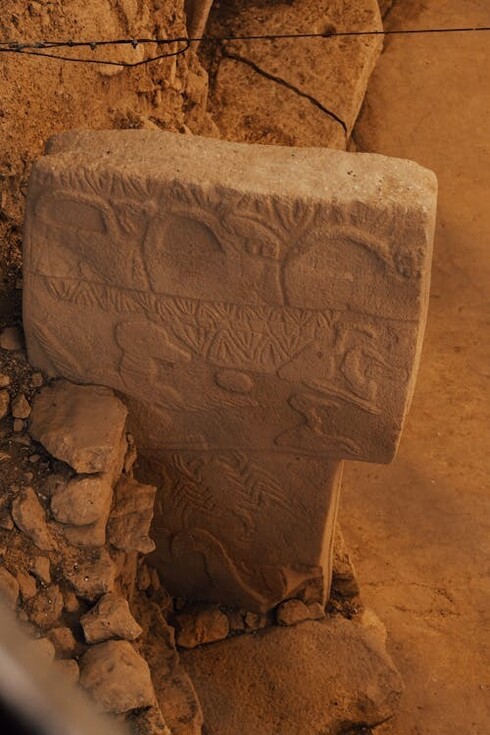
The carvings and reliefs at Göbekli Tepe provide a visual language that speaks to the beliefs and fears of an ancient world. Unlike earlier figurines, which focused on the human body, these monolithic stones depict animals, abstract symbols, and anthropomorphic beings, suggesting a broader mythological framework.
Animal reliefs: carvings of snakes, scorpions, foxes, and birds dominate the site. These animals may have held spiritual significance, representing protective spirits, supernatural forces, or creatures tied to mythic narratives.
Anthropomorphic Ppllars: some of the T-shaped pillars feature human-like arms, suggesting they represent deities or ancestral figures. Unlike the Venus figurines, which emphasized fertility, these figures convey a more commanding presence, perhaps linked to the celestial or divine.
Abstract symbols: geometric patterns and hand-like motifs appear alongside the carvings, hinting at early forms of sacred script or proto-writing systems.
Building the impossible: engineering feats of early humans
The construction of Göbekli Tepe, without the aid of metal tools or domesticated animals, is a testament to early human ingenuity.
How did groups of hunter-gatherers move multi-ton stones across distances? How did they coordinate labor without centralized governance?
Quarrying and transport: stones were carved from nearby limestone quarries using stone tools, then transported using wooden sleds, ropes, and human effort.
Architectural planning: the pillars are arranged in circular enclosures, suggesting an advanced understanding of spatial design. The symmetry of these arrangements indicates intentionality, not random placement.
Labor and organization: the sheer scale of the project implies long-term planning and the ability to mobilize large groups, which would have required social cohesion, shared beliefs, and a guiding vision, perhaps that of early religious leaders or shamans.
The role of Göbekli Tepe in human society
Why would hunter-gatherers expend such immense effort to build something that wasn’t a shelter or a food storage facility?
The answer likely lies in the emergence of shared identity and collective ritual.
Sacred spaces before cities
Göbekli Tepe suggests that the motivation to build monumental art came from a desire to create sacred gathering places. It is possible that early human groups traveled great distances to participate in rituals here, making it a spiritual hub long before the rise of cities.
A site of ritual, not residence
Unlike later settlements, Göbekli Tepe shows no evidence of permanent habitation, no hearths, and no domestic structures. This supports the idea that it functioned as a ceremonial center, where rituals involving feasting, burial rites, or astronomical observations took place.
The transition to agriculture
Interestingly, the surrounding region of Göbekli Tepe is where some of the earliest evidence of domesticated wheat was found. Could it be that gathering for religious or artistic purposes led to experiments in agriculture, rather than the other way around?
If true, then monumental art did not emerge as an afterthought to civilization; it may have sparked civilization itself.
Göbekli Tepe’s legacy: the foundation of later monumental art
As humanity progressed, sites like Göbekli Tepe influenced the construction of later sacred structures. We see echoes of its architectural and symbolic elements in
Stonehenge (~3000 BCE, England): another ring of massive stones, possibly aligned with celestial movements and ritual gatherings.
The Pyramids of Egypt (~2600 BCE): monumental tombs reflecting a sophisticated belief in the afterlife, built with a level of planning that mirrors Göbekli Tepe’s early designs.
Ziggurats of Mesopotamia (~2100 BCE): towering temple complexes that became centers of early cities, solidifying the idea of grand architecture as a focal point of civilization.
The fact that similar structures appeared across cultures suggests that the idea of monumental sacred spaces was deeply ingrained in the human psyche. Göbekli Tepe was not an isolated phenomenon; it was part of a broader human instinct to create, gather, and honor the unseen forces of the world through art and architecture.
Conclusion: from symbol to structure, from myth to monument
Göbekli Tepe marks a defining moment in the journey of art: the transition from small, portable expressions of creativity to immense, immovable testaments of human belief.
It suggests that art was not just a reflection of life but a force that shaped it, one that brought people together, inspired complex societies, and even influenced the birth of agriculture.
What began with handheld figurines and cave etchings evolved into something far greater: structures that stood against time, whispering the stories of our ancestors.
Göbekli Tepe is the first known example of this monumental shift, but it was only the beginning. As humanity continued to explore, build, and innovate, art would become an even greater force, one that would soon leave its mark on entire civilizations.
The next step in this journey? The rise of megaliths and monumental art, where ancient cultures refined and expanded upon the foundations laid at Göbekli Tepe, creating even more intricate and powerful testaments to their existence.