English
 Español
 Français
 Deutsch
 Italiano
 Português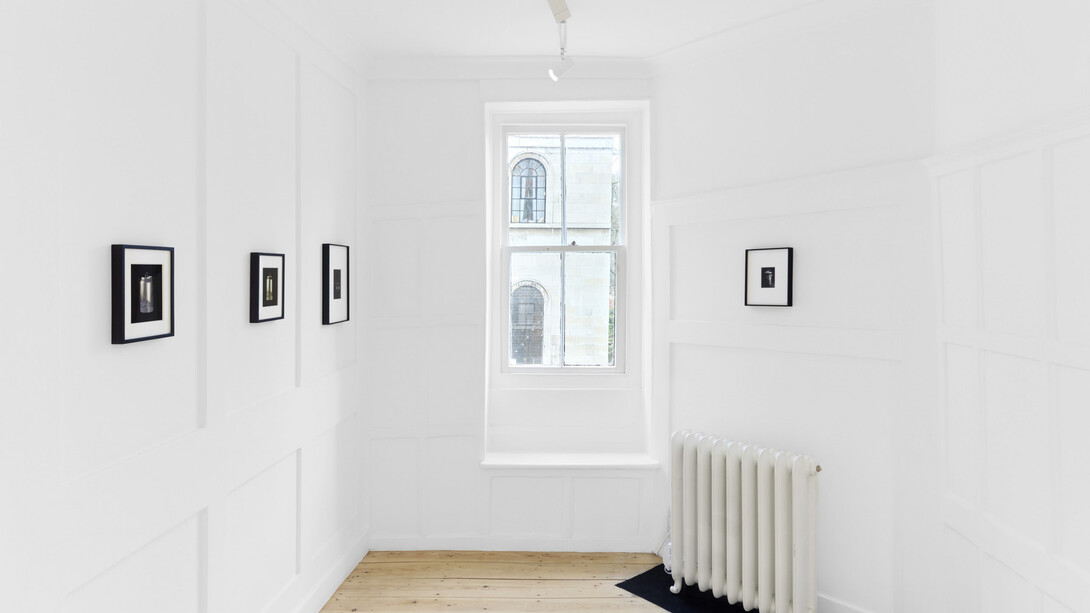
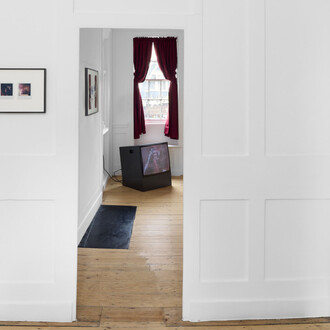
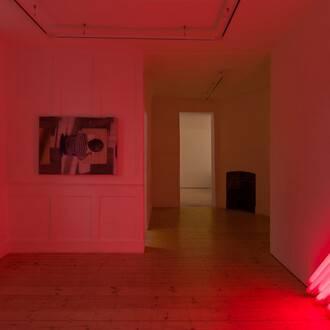
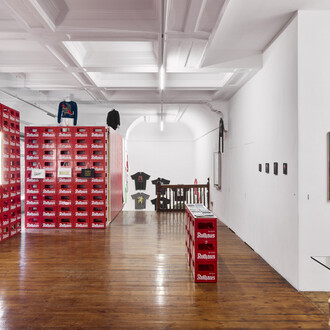
Emalin is pleased to present Welcome in1, Megan Plunkett's third solo exhibition with the gallery.
'You think about how many times an object has produced an economy around itself,' Gaddis told me. 'I like being in the food chain. I nibble on something, something nibbles on me'.
(Paige Williams, Land of the flea, The New Yorker, 2024)
The prop exists in a permanent conditional tense. It is always almost the thing. It was made to be recognized and to stop just short of being believed, to hold the shape of meaning without closing around it. This is, of course, also what images do. And money. And language. The title Welcome In is a prop too. A threshold phrase engineered to feel warm; a little familiar. Somewhere between a ‘welcome’ and a ‘come in’.
Plunkett’s photographs, too, operate in the register of the almost-familiar – depicting props, but also found objects, consumer detritus, film industry replicas. They cultivate estrangement within things you thought you already knew. Working with objects already legible within the circuits of consumer culture and film production, she works serially, spatially, through long exposures and accumulated attention, letting meaning gather obliquely rather than arrive directly. In that excess of looking, the object begins to signify beyond the systems that produced it – opening towards the strange and unknown.
Annie Dillard wrote of sight as a kind of overwhelm, like vertigo, where 'darkness appalls and light dazzles; the scrap of visible light that doesn’t hurt my eyes hurts my brain. What I see sets me swaying.'2 It is in this condition of neither full darkness nor full illumination that the unknown finds its opening. Many scholars of anomalous activity, such as Jeffrey Kripal and Whitley Strieber, argue that the unknown presents itself in the register from which we are able to receive it – arriving in costume rather than in revelation3. We never encounter the unknown directly, only ever through the forms already available to us — it borrows the shapes of the everyday in order to reach us, surfacing through the image, the dream, the half-remembered film, the object on the table one finds inexplicably alluring. For Plunkett, the familiarity of the object is precisely what makes it permeable, a way of working toward the strange through the already-known, of finding the unknown inside the legible. Her images remain open and speculative, linked to the strange and meandering archives of Western consumption from which their materials are drawn.
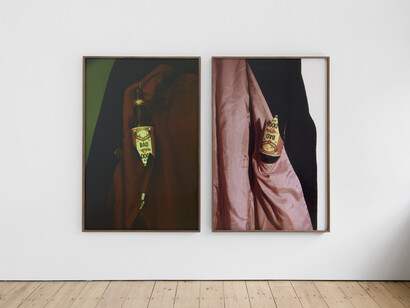
I knocked and they let me in
Two coats open toward the camera: a navy wool coat inherited from the artist's mother, a jacket found years ago in a thrift store and kept in storage. One frame presents the left interior, the other the right. Assembled together, they invoke the archetype of the trench-coat peddler, the figure who opens a coat to reveal goods concealed within its lining – and they trace the outline of a body that does not appear. The source stays out of frame, held in abeyance. Mark Fisher called this the eerie: the failure of absence, or the specific unease of something that should be there and isn't, a gap that registers as a kind of lost signal.
The bottle in the image is rented from the Hand Prop Room in Los Angeles, a plastic replica designed to appear shattered, drawn from a section of the prop house devoted to pre-broken objects and foam weapons – items engineered for staged violence on film sets, permitting actors to strike without consequence. Plunkett has returned to it repeatedly, photographing it again and again, as though prolonged attention might finally register what it is. The prop, however, was made to resist such resolution, to exist permanently in the conditional, to gesture toward the thing rather than be it. To look at it long enough is to find that the human subject is not required to anchor the scene – that meaning does not cohere around a visible centre, that the object holds its own terms (I knocked and they let me in).
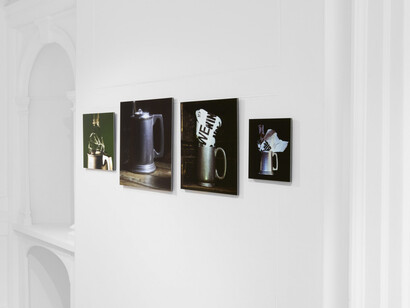
Anything you need
The titles for this series derive from a line in the recently released Brazilian film The secret agent (Kleber Mendonça Filho, 2025). The phrase is casual, open-ended and oriented towards use, alluding to the fulfilment of desire, the servicing of want, of 'anything you need'. The secondary titles – Beings, Grail, Big news, We win, Silver, Gold, Crass – pull in the opposite direction: towards an ontology, what the objects are rather than what they can do. They also allude to older symbolic economies; to the alchemical, theological, mythological and sacred, from which consumer culture has always borrowed. These are objects that have crossed from use into being – or appear to have. A pour suspended mid-air, hardened into permanence. A chalice-style mug holding a La Croix can, stripped of its branding, lacquered silver. Prop newspapers that the artist replicated from Rocky, The X-files, The twilight zone, The dead don't die. They address fictional readers with fictional headlines from fictional worlds, stuffed into voids rather than being read.
Time does not exist and yet it controls us anyway
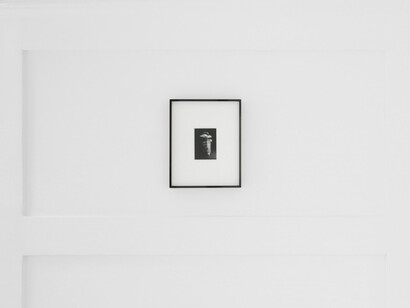
The object in the image is a toy trash can from a WWE wrestling set, six centimeters tall, pre-scuffed, manufactured to simulate wear, so that action figures may throw it at one another with convincing realism. Shot handheld on 35mm black-and-white Wolfman film in a Southern California desert motel, the long exposure registering the movement of the artist's hand. The object vibrates in the frame.
Like the previous series, the title here is also gleaned from a film, One battle after another (Paul Thomas Anderson, 2025), where it appears as a password, one that Leonardo DiCaprio's character cannot quite recall: time does not exist and yet it controls us anyway. Conjured from nothing, exerting undeniable pressure on the real. This is, of course, also what images do. And money. And language.
Notes
1 The title of the exhibition is derived from Joe Pinsker's article Welcome in: the two-word greeting that's taking over and driving shoppers nuts (The wall street journal, 2025), which traces the unlikely proliferation of the phrase across American service industries in the 2020s. The phrase has been interpreted by linguists as a deepening of hospitality's affect, an attempt to render commercial exchange intimate through the addition of a single preposition.
2 Annie Dillard, 'Seeing', in Pilgrim at Tinker creek (1974).
3 Jeffrey Kripal directs the Department of Religious Studies at Rice University and oversees the Archives of the Impossible, a collection dedicated to the study of anomalous experience in the history of science, religion and culture. Whitley Strieber is an author and advocate of metaphysical concepts.