English
 Español
 Français
 Deutsch
 Italiano
 Português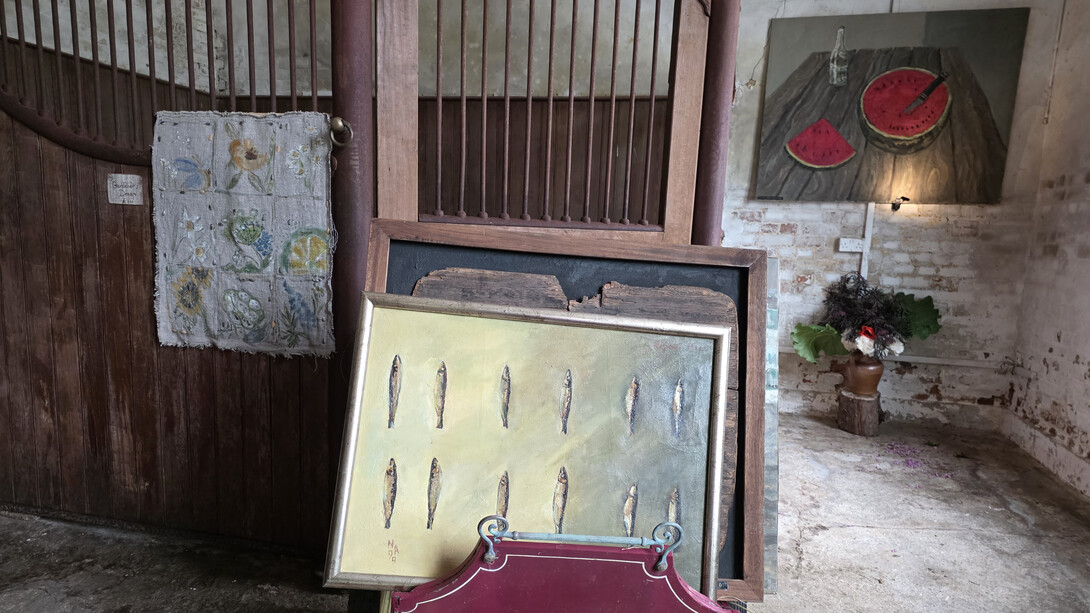
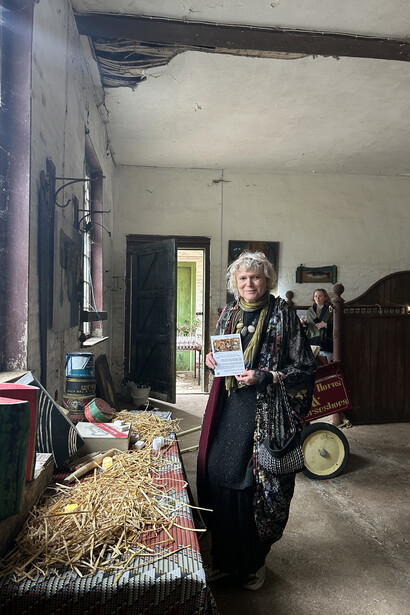
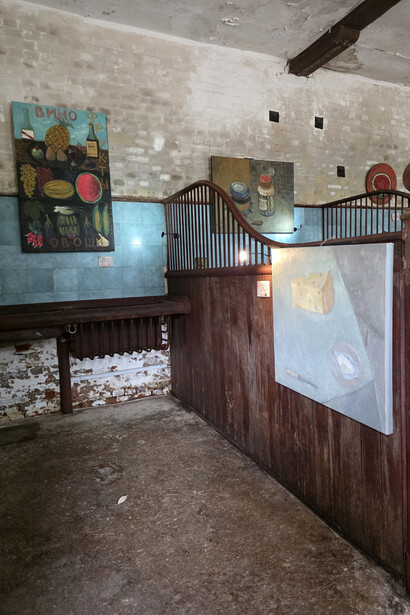
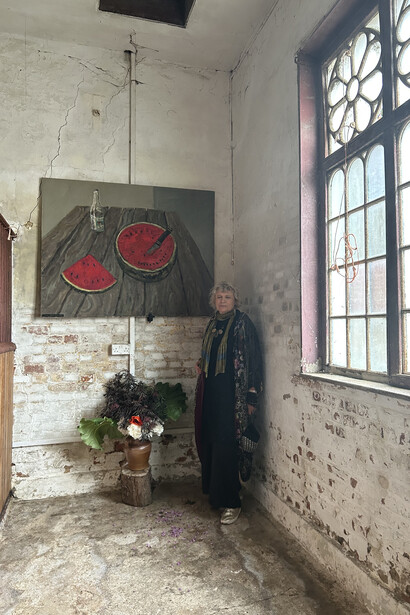
A new exhibition entitled as Thread of fortune inaugurates this summer season at the historical Milton Manor House in Oxfordshire. The exhibition is mounted by Natasha Arendt, the first artist-in-residence at Milton Manor, and curator Stephen Lacey. It presents approximately thirty works by the artist, charting two decades of her practice from 2000 through to 2026.
This is the first contemporary art exhibition ever staged at Milton Manor House — a significant moment for the house whose identity became part of the historical fabric of Oxfordshire. Set within the lived-in 18 th century interiors of the royal lacemaker’s residence, the exhibition gradually unfolds to connect the past with the present.
Milton Manor House remains largely a privately owned family home, presently in the care of Anthony Mockler-Barrett and his family and accessible to the public on special days. Within this context, Arendt’s works enter not as disruptive intrusions but as organic presences woven into the historical fabric of the house —attuned to scale and the invisible histories embedded in domestic space. Natasha repurposes antique lace and even dried up flowers from the Milton Manor gardens in her artworks.
Natasha Arendt’s practice is concerned with the thresholds between material culture, narrative, and perception. In Thread of fortune, her works engage the manor as both the setting and collaborator, entering a dialogue with its architecture, displayed objects, its enduring sense of lived time and even its domestic animals who freely roam through some exhibition spaces. Rather than imposing a singular interpretation, the exhibition allows multiple temporalities to coexist past and present, human and non-human, visible and implied. Her materials, so closely allied to the craft of the manor’s first master, seem almost to awaken the long-forgotten memories and narratives of the place itself.
Here, the manor is not simply a backdrop but an active participant. The exhibition gently reimagines its histories—suggesting not only the lives of its inhabitants, but also the quieter presences shaped by use, craft, and the flow of time.
Originally Moscow-born, Natasha Arendt grew up in a culturally rich artistic environment, where she had the chance to immerse herself into art-making from early on. Her practice is shaped by a lineage of artists reaching back to the nineteenth century. She received her training as theatre designer at the Moscow Art Theatre School, and one can easily say that her paintings and installations know how to draw attention to themselves through presence. Natasha has long been part of the London art scene.
One of her remarkable artistic features, is her ability to sustain into adulthood a rare sense of instinctive freedom, freshness of perception and childlike spontaneity. Her practice draws upon the legacy of neo-primitivism while developing a highly personal visual language rooted in material experimentation, transformation, and sensory association.
Being a multimedia artist, working across assemblage, collage, and graphic media, Arendt employs unusual and often reclaimed materials — aged wood, seeds, pods, sea pebbles, fish scales, and found fragments — embracing what she describes as a “waste-free assemblage.” Sustainability in her practice is not merely conceptual but poetic: discarded materials are transformed into objects, which, though fragile, are charged with memory, mystery and powerful presence.
More recently, her practice has evolved into an open-ended form of “laboratory research,” exploring how sound, scent, dreams and memories can weave together into a visual form. This ongoing investigation remains intentionally unresolved, allowing intuition and possibility to remain central to her artistic practice.
Within the spaces of Milton Manor House, Arendt’s works enter into a quiet dialogue with the architecture and atmosphere of the old country house. Rather than treating the manor as a backdrop, Thread of Fortune approaches it as a living organism — one saturated not only with traces of generations of its inhabitants, but also abounding in artistic objects and unseen histories that continue to resonate through its spaces.