English
 Español
 Français
 Deutsch
 Italiano
 Português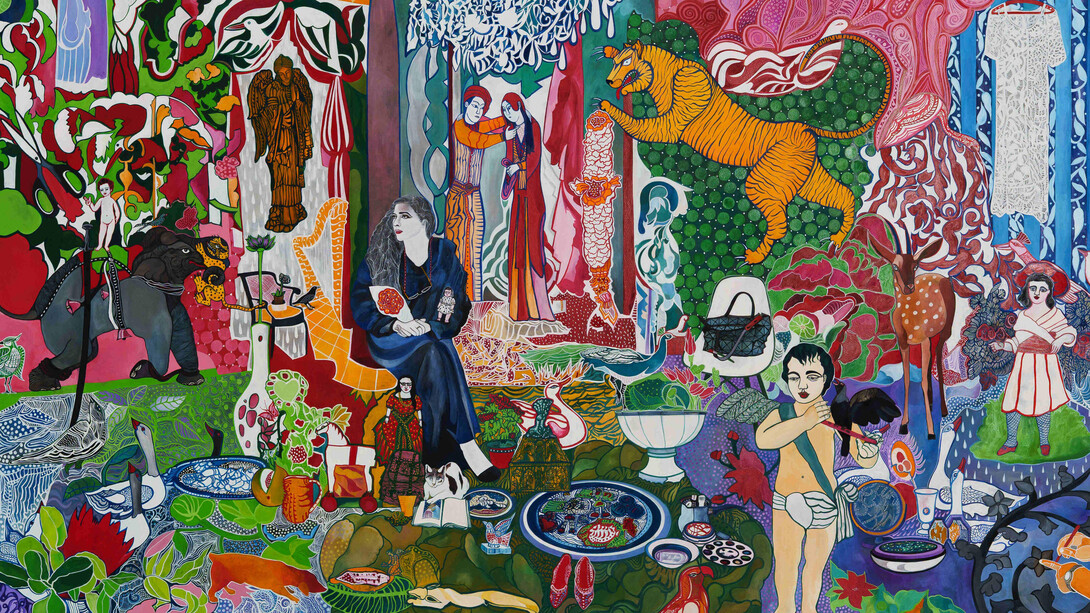
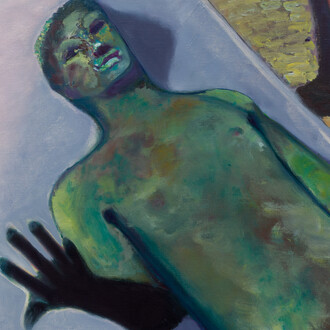
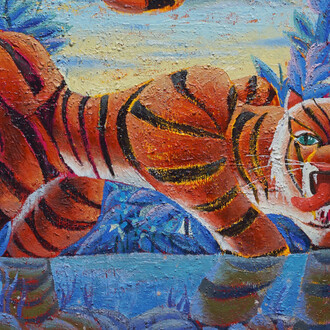
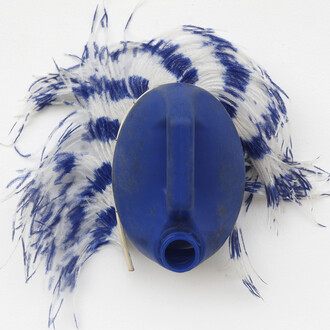
Marking Sakshi Gallery's 40th year, Unfolding narratives: perspectives in contemporary Indian art showcases works by six artists: Amit Ambalal, Manjunath Kamath, Ravinder Reddy, Rekha Rodwittiya, Shine Shivan and Surendran Nair, who have, over many decades, shaped and redefined the contours of Indian contemporary art. A number of works have been created especially for the exhibition, offering audiences an insight into the artists' current directions and evolving practices.
The exhibition opens on June 30, 2026 and remains on view until July 8, 2026 at the Mall Galleries, London. While rooted in South Asia, their practices are situated within a wider transnational context. Their works are well-represented within international collections, including the Victoria & Albert Museum, Detroit Institute of Arts, Peabody Essex Museum, Los Angeles County Museum of Art (LACMA), the Kiran Nadar Museum of Art, and the Museum of Art & Photography (MAP), among others.
This presentation also marks a significant moment in Sakshi Gallery's engagement with London, serving as a prelude to a more expansive institutional exhibition scheduled for 2027 in London. Extending the gallery's four- decade commitment to fostering critical dialogues around Indian contemporary art, the forthcoming exhibition will further deepen these transnational conversations.
Speaking to the gallery's engagement with London, Director Geetha Mehra notes:
Sakshi Gallery is excited to bring an exhibition of contemporary Indian art to London this June.
While the Indian diaspora is well represented in the UK, our endeavour is to reach out to a wider collector base across the UK and Europe.This June is being labelled the "Indian Summer," as several major institutional exhibitions are organized for May and June—including Anish Kapoor's retrospective at the Hayward Gallery—alongside the Christie's auction of Indian art in seven years and several other exhibitions of Indian artists.
Unfolding narratives examines the evolving role of storytelling within contemporary artistic practice. Storytelling has been a cornerstone for Indian visual culture, from the past to the present. Historically, artisans devised ingenious narrative techniques to depict episodes from these tales at a time when art was closely tied to courtly patronage. Over time, these narrative modes become carriers of collective memory, inscribed within visual culture as a vehicle for moral and social messaging. They became a way for communities to find social cohesion, with these stories offering a framework to propagate ideas of duty and order.
However, in the field of contemporary art, these stories are no longer a fixed inheritance. Here, reverence gives way to interrogations, or re-imaginings of a new terrain, rewritten through both personal and political lenses. In the hands of these artists, the narrative becomes fertile ground for playful reflection, speculation, autobiographical impulse, feminist resistance and socio-political critique.
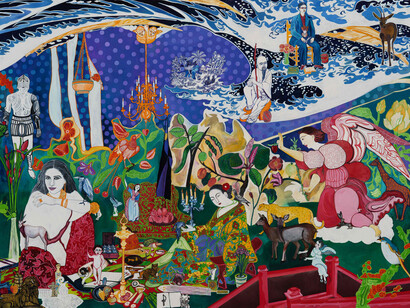
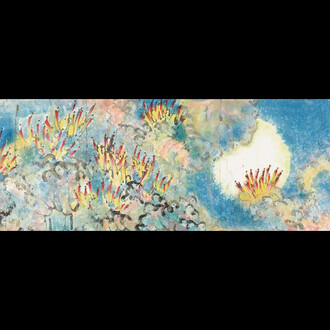
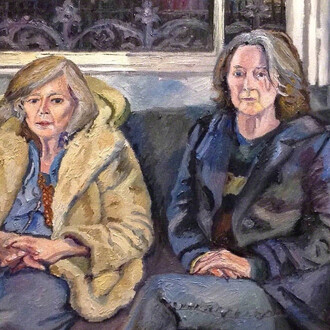
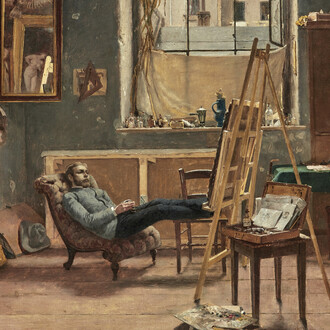
Rekha Rodwittiya, Surendran Nair and Manjunath Kamath approach storytelling as a fluid space, where geographical boundaries become porous. Rodwittiya draws from a tapestry of art-historical references, inscribing them with an autobiographical impulse that rests on feminist resistance. Nair constructs allegories from a range of sources, both Indic and Greek, layered with a strong undercurrent of socio-political reflection. Kamath's works reference shared visual legacies between South Asia, the Middle East, and Europe, treating history and myth as a space of fiction.
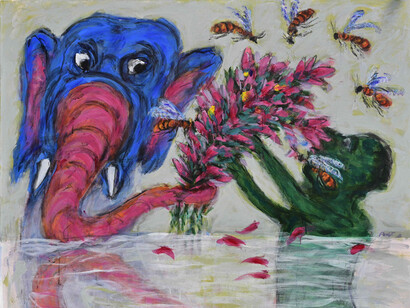
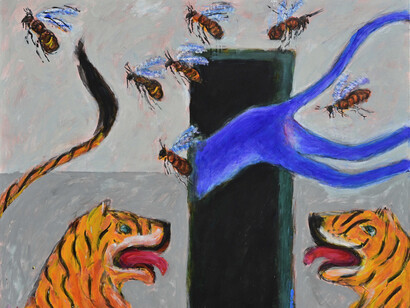
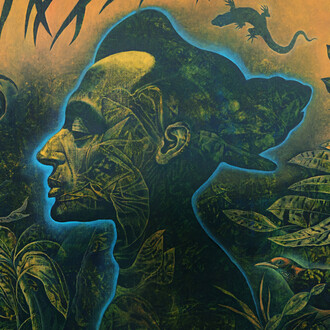
Shine Shivan and Amit Ambalal approach the narrative through playful gestures. Shivan's practice resides in the space between retelling and reliving, shaped by his travels across northern regions of the country to cultural sites. Shivan's recall is not merely illustrative; his monumental paintings evoke awe, at times they perturb, with their deceptive naïveté and coyness. In contrast, Ambalal draws from early encounters with storytelling, rooted in a childhood spent in close proximity to narrative traditions. Central to his practice is the idea of leela, or cosmic play, where non-human creatures assume the follies and affections of everyday life.
Ravinder Reddy's iconic sculptures sit at the crossroads between the secular and sacred, the goddess and the mortal, tradition and contemporaneity. The artist, however, inflects these figures with a bold, kitsch-like sensibility, prompting reflection on femininity, sexuality and the gaze. Reddy's figurations of the everyday woman defy codified beauty ideals, drawing inspiration from both popular culture and classical iconographies.
Featuring more than twenty works, these artists have been chosen for the distinct ways in which they revisit and reframe visual languages drawn from mythology, popular culture, personal history and everyday observation. The presentation highlights a few senior artists represented by Sakshi, some of whom are alumni of the Royal College of Art, London.