English
 Español
 Français
 Deutsch
 Italiano
 Português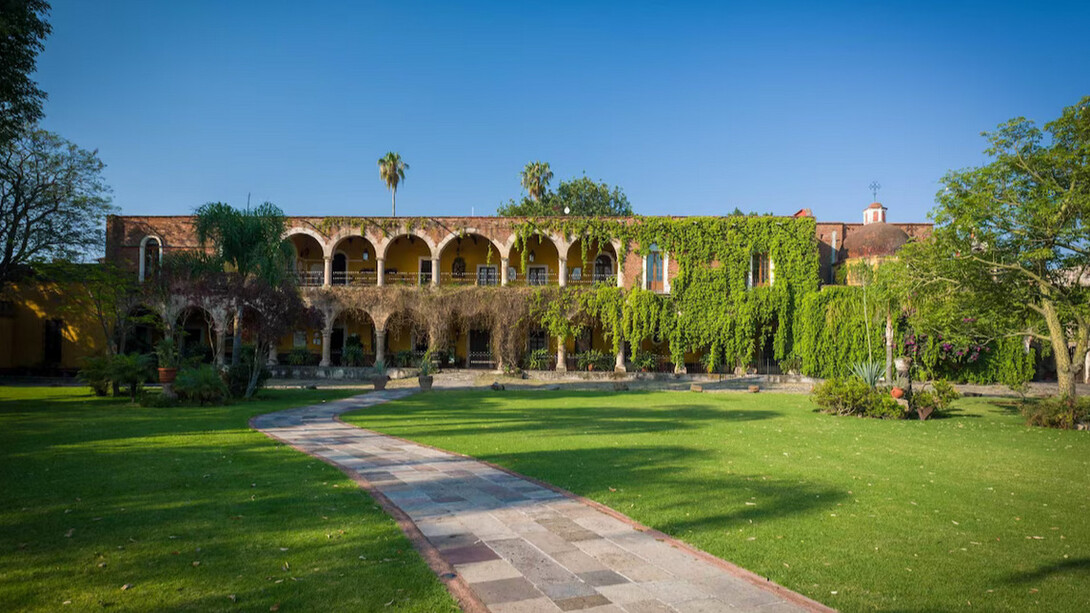
The evening shadows start to lengthen now as the heat of the day fades into a warm, enveloping, sultry night at the Hacienda El Carmen. Inside the large courtyard, the low murmur of voices dining at the long wooden table sitting under the arched loggia is accompanied by the sounds of the splashing fountain. Outside the hacienda’s adobe walls, there’s the rustle of the wind and the screech of parrots and mating calls of the peacocks that roam free.
It is the 21st century, but Hacienda el Carmen has existed since 1573. It is easy to imagine, in the dusky light, that the ghosts of the caballeros, the grandees, their ladies as well as the nuns and the revolutionaries who also at one time stayed here, still walk along the tiled walkway, past the bougainvillea spilling over the sides of the walls and amongst the jacaranda trees.
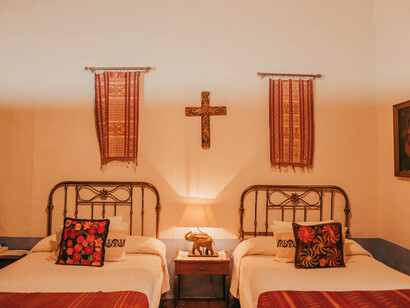
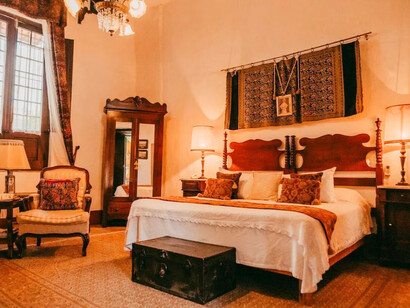
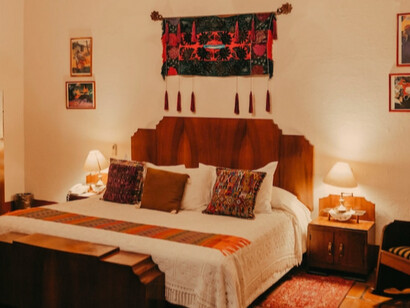
At first, this Colonial-style structure, set on 400 acres with its long colonnaded porch, gracious two-story entranceway leading into connecting dining, sitting, and kitchen areas that front one part of the courtyard and bedrooms comprising the surrounding three sides, all with views of the flower-filled courtyard, was known as the Hacienda de Santa Maria de Miraflores.
Haciendas were once a central part of Mexico’s agricultural life, which included ranching, farming, tequila production, and sugar milling. Many just disappeared with time, but in 1722, Miraflores became the Convento Del Carmen. Though a convent, Hacienda El Carmen didn’t necessarily guarantee a quiet life. Legend has it that the famed revolutionary, Pancho Villa, was welcomed here as Mexico struggled to gain independence.
Now a hotel and seemingly isolated, the hacienda is just a short drive from bustling Guadalajara, Mexico's second-largest city. Located on the road that connects Guadalajara to the tequila region which has made the state of Jalisco famous, the hacienda is in historic Ahualulco del Mercado, a quaint and pretty town, notable for Parroquia San Francisco de Asís Ahualulco, an 18th-century high-ceiling church accented with crystal chandeliers, cream colored walls, intricately patterned tiled floors, and lots of gold gilt and the Shrine of Our Lady Of Guadalupe, its sanctuary dating back to 1594 as well as brightly painted houses and stores.
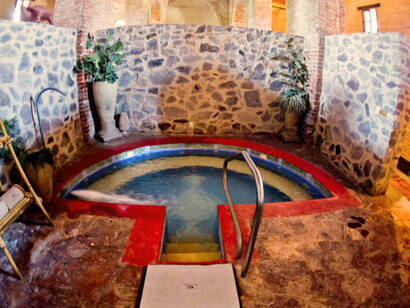
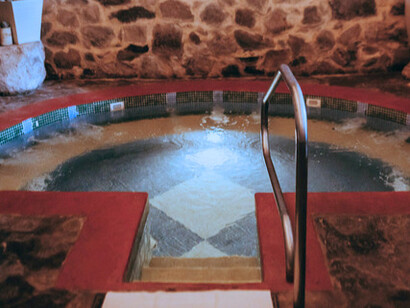
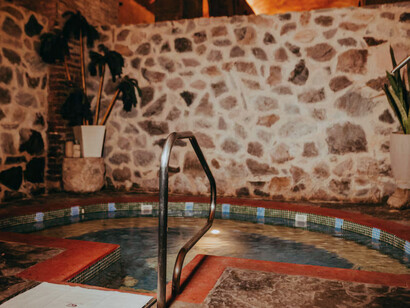
But the feeling of being nowhere doesn’t mean that there isn’t anything to do. Early morning, horses arrive from nearby stables for those who want to ride. There is golfing, swimming, luxuriating at the spa, and cooking classes. There are even occasional tequila tasting seminars.
The atmosphere is so friendly and relaxed that within a short time, it's easy to feel part of the hacienda family, allowed access into the inner workings of the place including peeks into the old fashioned Mexican styled kitchen with its elaborately decorated tiled floors and counters that probably date back centuries and the much more modern appliances that allow award-winning Chef Ambrosio Saavedra to prepare traditional Mexican dishes served at the hacienda’s Don Ambrosio Restaurant.
Menu items can include such dishes as pollo con mole (chicken in mole sauce), filete a los 7 chiles (filet with seven different kinds of chiles), and chile rellenos (stuffed chiles), accompanied by large pitchers of house-made Sangria and iced tea made from hibiscus flowers.
Many of the ingredients come from the hacienda’s gardens. There is also an extensive wine list, the wines being kept in the underground cellar, which has a cozy feel amidst the racks of wine and a table for tasting and dining.
And, of course, there’s a wide selection of tequilas, including Tequila Fortaleza, a handcrafted drink made in an old-fashioned way using a stone wheel called a tahona and copper pots for natural ferment, creating a complex drink with earthy citrus notes. Made by the Sauza family, now in its fifth generation, at their Los Abuelos distillery in the nearby city of Tequila, you can take a tour and see the old-fashioned methods used in its crafting.
At the hacienda, start your mornings with a leisurely coffee and breakfast on the courtyard patio. During the day, explore the surrounding area, including Tequila, a charming town with buildings painted in pale sunset colors. Founded by the Ticula tribe and Franciscan missionaries in 1530, it’s designated as a Pueblos Magicos because of its traditions, gastronomy, and culture, and was also nominated as a cultural heritage of humanity by UNESCO. The Indians had long fermented the agave plant, but producing tequila commercially made even more sense when, in 1595, the King of Spain outlawed vineyards in Mexico to bolster sales of Spanish wines.
After receiving a land grant from the King of Spain, José Antonio de Cuervo built the first commercial tequila factory in 1758. Though some sources say the first was built in 1602 by Don Pedro Sanchez de Tagle, the timing doesn’t work, as he wasn’t born until the late 1600s. In 1873, the Sauza family opened their first tequila production company. Both families are still big in the tequila business, with Cuervo ranking as the world's best-selling and largest tequila brand by volume, and Sauza ranked second.
Visit Tequila’s Plaza Principal (town plaza) to hear mariachis, dressed in traditional garb, play music. It’s also the place where you might catch Danza de los Voladores (Dance of the Flyers) performances. This 600-year-old tradition, which originated in Veracruz, Mexico, is a UNESCO Intangible Cultural Heritage of Humanity that has been passed down through generations. It’s a high-wire act that involves acrobatic swinging from ropes strung from atop a 150-foot pole.
Learn more about the history of the town and the drink by visiting the Museo Nacional del Tequila and the Museo Los Abuelos.
After dinner at the hacienda, sip a margarita under the bright stars. It’s a time when the colorful plumage of male peacocks, their tails dragging on the ground or spread into a fan-like array, strut through the courtyard and along the arched colonnade, is reflected in the moonlight. It’s at moments like this that centuries seem to fade into years past. It is life at the hacienda, not only today but as it was centuries ago as well.
Hacienda El Carmen is one of about 40 haciendas in Mexico that have been restored and converted into hotels.