English
 Español
 Français
 Deutsch
 Italiano
 Português
It seems the first round of Fall 23 menswear collections on the runway this year have been imbued with what could be described as an overarching sense of minimalism. With collections seeming more pared-down in comparison to what we’ve seen post-pandemic (a general sway towards a more maximalist, ‘serotonin dressing’-inspired genre of fashion), this year’s runways are embracing a ‘less-is-more’ mentality with clothing that appears much more conceptually minimalistic in design. These first menswear seasons were more a parade of tailoring and upscale clothes, which has also led some fashion media to declare the death of streetwear and logomania. Instead, we are dressing up and toning down.
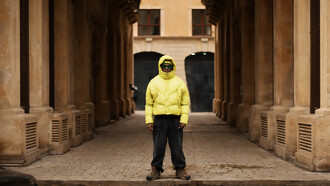
Difficult times can often be a precursor to either an outpouring of extravagant elaborateness or an affirmation of sensibility and reason. Whilst it was the former that largely dictated the trends of fashion post-2020 (from the outburst of foil and sequins and the reign of ‘Gen-Z Yellow’—à la Gucci and Viktor Rolf, for example), it was the latter that reigned over the Paris and Milan fashion weeks this year.
With a slew of brands and designers having presented more stripped-back runways—from Loewe and Saint Laurent to Wales Bonner—it seems that this season’s menswear shows were a rational, efficient, and very product-centered affair: a season of perfectly fine—if not sometimes tethering on safe—clothes. Whilst some runways were an exaltation of rigor, simplicity, and refinement, others remained simply a celebration of normality. Perhaps this could potentially be a nod to the cost of living crisis—the last thing the average person wants to see is a slew of exorbitant and unattainable fashion trends when the majority of economic forces seem to be working against us.
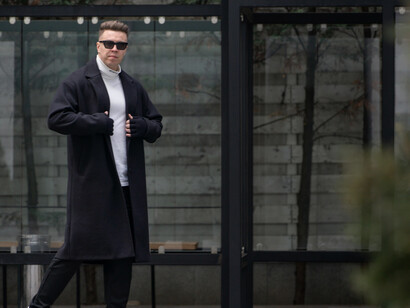
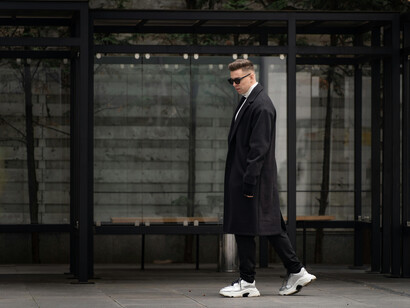
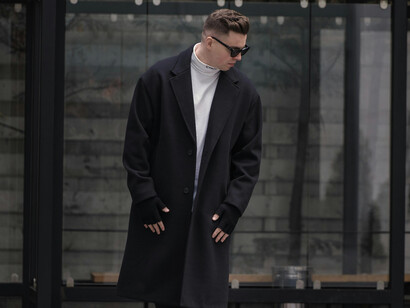
There may have been no new discoveries this season; however, a new formality took hold: a distinctly more muted vibe, after years of fashion going above and beyond to dismantle notions of masculinity, dress codes, and wardrobes. And yet what came from it was not a hardening of the male image but a sense of curated effortlessness, with tailored looks served sans shirts and ties.
Anthony Vaccarello led an almost entirely monochrome Saint Laurent show that was dark, elegant, and much more unconcerned with defying/reinventing fashion gender norms: young men wore leather floor-sweeping coats and crisp white shirts. Givenchy opened its show—which was dubbed the ‘New Formal’ by Vogue—with a grouping of precise black suits tailored by creative director Matthew Williams. The show presented by Jonathan Anderson at Loewe was aesthetically moving and heavily rooted in the notion of refinement and reduction. “I do feel like less is more—but in a new way,” Anderson explained after the show.
“I’ll believe it when I see it. To be sure, many menswear professionals are sick of seeing logoed hoodies and perhaps maybe even sick of the avalanche of colorful flamboyance. But what about the consumer?” says Francisco Roberto Pinto, brand manager for menswear design label Canali at Harrods.
And this, statistically, holds some truth. Post-pandemic, occasionwear has been booming. Retail intelligence firm Edited reports that US and UK retailers introduced nearly twice as many dresses embellished with jewels, sequins, and beads during the second half of 2022 as they did in 2019. The sale of sequined dresses increased 52 percent in comparison to 2019, while that of high-heeled shoes increased 121 percent. With bold looks flooding runways and store floors, retailers and designers don't expect the trend to slow down anytime soon.
“I was hard-pressed to find items from major brands such as Dior, Givenchy, Balenciaga, Gucci, Burberry, Valentino, and Loewe that did not have some form of logo on them,” says Roberto Pinto.
It wouldn’t be the first time that what seemed to be a solidified trend in fashion has ebbed and flowed in and out of the mainstream consciousness. It was only three years ago that none other than the late Virgil Abloh declared the death of streetwear, only to rescind his comments after the backlash from his fans. We’ll see if it is different this time around.
This shift toward minimalism could also be interpreted as a quiet act of resistance against fashion’s accelerated cycles of consumption and spectacle. Designers appear increasingly concerned with longevity, craftsmanship, and the emotional durability of clothing, rather than seasonal novelty. The clean lines, muted palettes, and precision tailoring seen across major houses suggest a return to essentials—where value is found in form, material, and intention rather than ornamentation.
Interestingly, this new restraint doesn’t necessarily signal conservatism. Many collections used minimalism as a language of subversion—employing simplicity to challenge the excess that defined the last decade. The result is not a retreat but a recalibration: fashion turning inward to rediscover its craft. Brands like Prada and Zegna exemplified this shift, merging technical innovation with a refined aesthetic that speaks to maturity and discretion.
In a cultural moment oversaturated by digital noise and algorithmic trends, the quiet confidence of minimalist design might represent a deeper longing—for authenticity, calm, and control. Perhaps the greatest luxury now is not abundance, but intention. This menswear season, the understated silhouette stands as both a creative and cultural statement: the art of saying more with less.