English
 Español
 Français
 Deutsch
 Italiano
 Português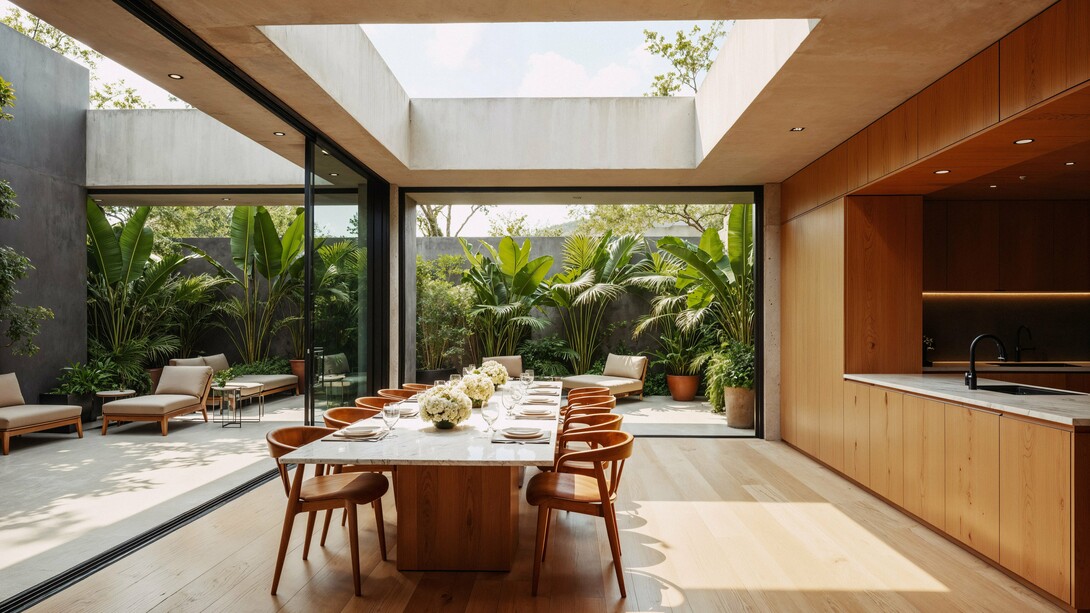
The fifth room embodies a broader architectural mindset that views outdoor space as an integral, lived-in extension of the home, rather than a visual afterthought.
Traditionally, homes were designed with four clear rooms in mind — living, sleeping, cooking and bathing. Today, a fifth room has quietly taken shape. It doesn't always have walls or even a roof. However, it has become just as essential to how you live. This is the outdoor space that feels as intentional, comfortable and functional as the interior, which is a direct result of thoughtful indoor-outdoor architecture.
The idea of a fifth room isn’t about adding square footage for the sake of it. It’s about expanding how space is experienced. When done well, the line between indoor and outdoor fades, creating seamless living spaces that respond to light, climate and human behaviour rather than rigid floor plans.
Rethinking the boundary between inside and out
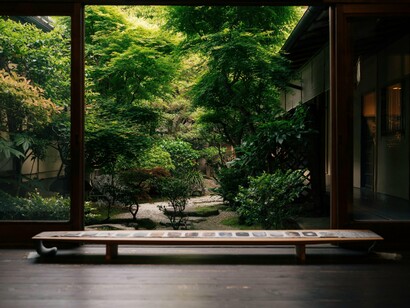
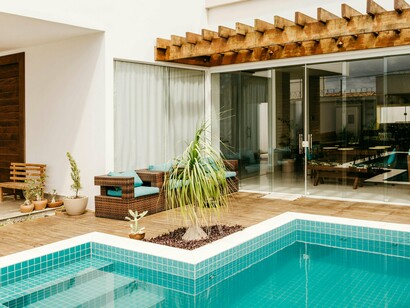
True seamless living spaces begin with rethinking boundaries. Instead of rigid separations, contemporary homes favour visual, spatial and material continuity. Large openings, minimal framing and aligned floor levels allow rooms to extend naturally into the outdoors.
Transitional architecture is central. Covered terraces, breezeways and semi-enclosed patios act as spatial mediators. They offer shelter while maintaining openness, encouraging daily interaction with the outdoors rather than limiting it to special occasions. Projects like enclosing your patio are an excellent way to increase1 your home’s usable square footage. These zones help homes feel larger and more breathable without sacrificing comfort or control.
Architectural thresholds as moments, not barriers
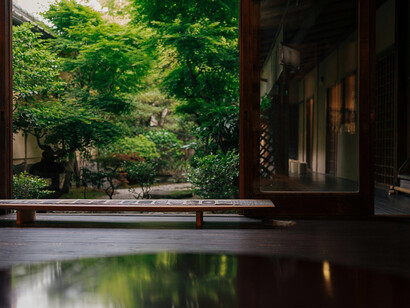
Well-designed architectural thresholds do more than connect spaces. Rather than acting as barriers, they become moments of pause and transition, subtly signalling a shift in environment.
You can achieve this through changes in material underfoot, variations in ceiling height or the way light behaves across a surface. For example, a shaded exterior zone that gradually brightens as it opens to the sky creates a sensory progression. These transitions provide clarity and orientation while preserving openness, ensuring that movement through the home feels intentional rather than abrupt.
Courtyard integration and spatial balance
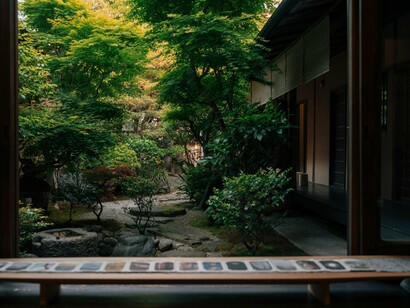
Courtyard integration introduces outdoor space directly into the architectural core of the home. Unlike peripheral gardens or back patios, courtyards influence multiple rooms simultaneously, drawing light, air and greenery inward. The increased natural lighting reduces energy consumption2 used for artificial lighting.
Beyond environmental benefits, courtyards establish rhythm and balance. They break up extended floor plans, offer visual relief and create private outdoor spaces that feel protected yet open. Whether used as a quiet retreat, a gathering space or a visual anchor, the courtyard often becomes the emotional centre of the home.
Outdoor rooms designed for real life
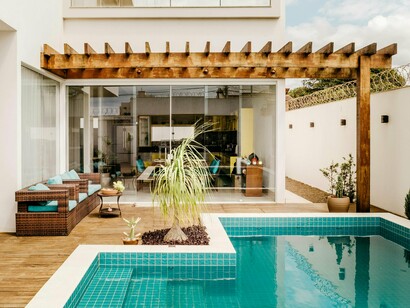
For an exterior space to function as a true fifth room, intention is critical. Effective outdoor room design treats the space as an extension of the interior, complete with defined uses, thoughtful layouts and appropriate amenities.
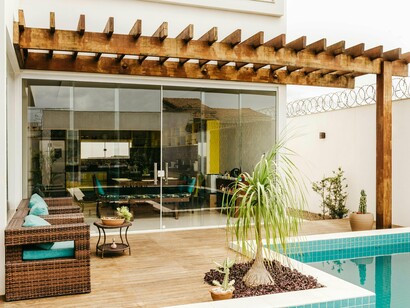
These spaces often include dining areas, lounge seating, outdoor kitchens or even work zones. Comfort is key. Shaded structures, wind buffers and integrated lighting ensure usability throughout the day and into the evening. When outdoor rooms are designed around how people actually live, they can become indispensable rather than optional.
Material continuity and sensory flow
Material choices are essential to achieving cohesion between interior and exterior spaces. Repeating or echoing materials, such as stone, wood or concrete, helps reinforce visual continuity. Even when finishes differ for durability, maintaining a consistent language of texture and tone allows spaces to read as part of a unified whole.
This continuity also supports sensory flow. The way materials feel underfoot, reflect light or respond to weather contributes to a seamless experience. When the transition from inside to outside feels natural at a sensory level, the architecture quietly supports everyday living without drawing attention to itself.
Colour as a connector between spaces
Colour is powerful for unifying indoor and outdoor environments. Natural, earth-inspired exterior palettes, like warm stone and soft greens, provide a grounding backdrop that complements the landscape. These understated tones create calm and balance, allowing the architecture to blend comfortably within its surroundings.
Neutral outdoor hues can also create the perfect foundation for contrast. When paired thoughtfully, they enhance rather than compete with brighter, more expressive interior colours. Organic exterior tones pair beautifully with bold accents3 and vibrant finishes. This creates a harmonious relationship between spaces.
Designing for how spaces are actually used
Beyond aesthetics, successful fifth rooms are shaped by orientation and scale. The sun path, prevailing winds and sightlines all influence how comfortable and usable an outdoor space will be. For example, if you decide on a screened-in porch, you’ll need to choose furniture that can withstand humidity4 and will be long-lasting. Thoughtful placement ensures that these areas feel inviting rather than exposed.
Privacy is critical. Strategic screening, landscaping and partial enclosures allow outdoor rooms to feel intimate without being isolated. When designed at a human scale with proportions that encourage conversation, rest and movement, these spaces support everyday rituals as naturally as any interior room.
Climate-responsive design and everyday comfort
Effective indoor-outdoor architecture is inherently climate-aware. Overhangs control sun exposure, operable openings encourage natural ventilation and landscape elements contribute to passive cooling and privacy. These strategies reduce reliance on mechanical systems while improving comfort.
Adaptability is equally important. Sliding walls, retractable screens and adjustable shading allow spaces to respond to changing conditions and seasons. This flexibility ensures that seamless living spaces remain functional year-round, supporting everyday routines and special moments.
The fifth room as a design philosophy
The fifth room is a new way of thinking about space. By prioritising transitional architecture, refining architectural thresholds and embracing courtyard integration, designers are creating homes that feel open, balanced and deeply connected to their surroundings.
Notes
1 Five Star Bank, Ideas to Increase Your Home's Square Footage, Five Star Bank.
2 Arch Daily, Interior Courtyards: An Effective Strategy to Improve Space Quality in 15 Residential Projects, Paula Pintos, 7 December 2024.
3 Wolf Home Products, Outdoor Living Rooms: Buying Guide for Expanding Your Living Space Outdoors, Wolf Home Products, 10 April 2023.
4 Renovated, Screened-In Porch Ideas: Transform Your Outdoor Space into a Year-Round Retreat, Rose Morrison, 16 July 2025.