English
 Español
 Français
 Deutsch
 Italiano
 Português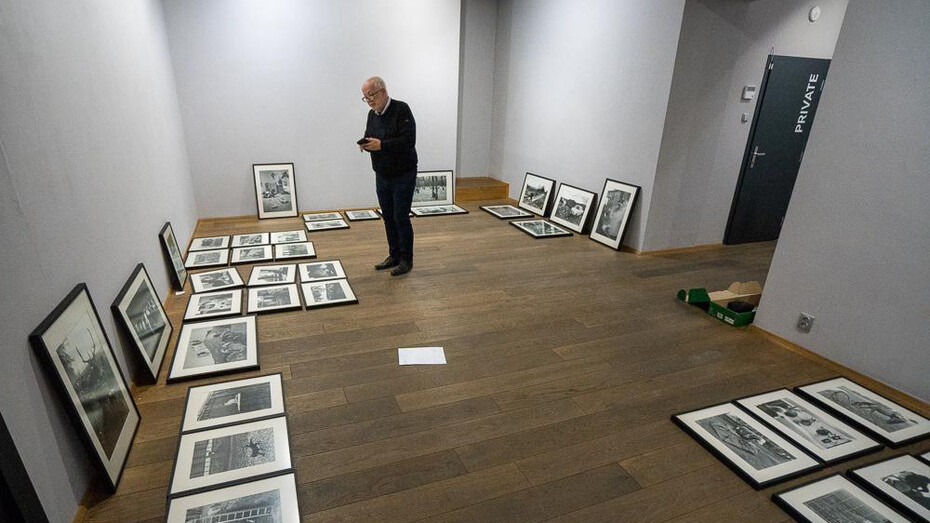
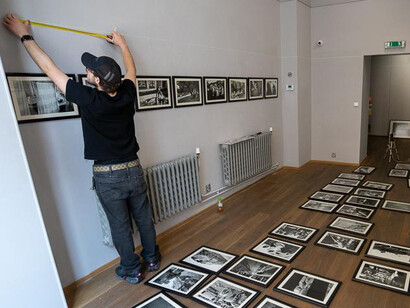
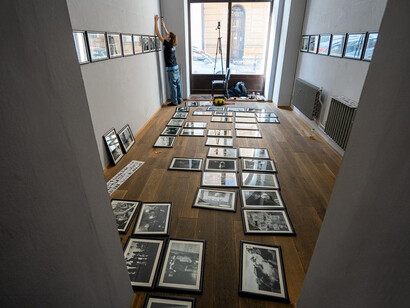
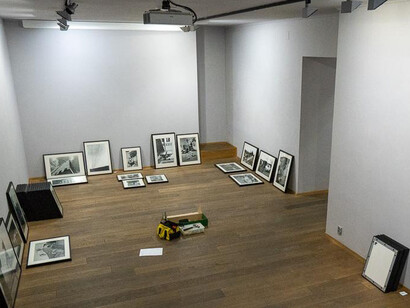
Daniel Šperl has given himself an exhibition for his sixtieth birthday. From the outset, he decided to set aside the photographs made during his stays in Japan, the United States, France, the United Kingdom, China, Mongolia, and Ghana, and to select exclusively from works created in various regions of the Czech Republic. For months, he produced hundreds of traditional darkroom enlargements—enough to fill the Galerie Rudolfinum or the House at the Stone Bell to capacity. Leica Gallery Prague, however, is more intimate in scale. Some time ago, together with the gallery’s director Míla Dubská, I had to endure rather painful moments persuading Daniel Šperl that not all of his finely crafted and meticulously framed photographs could fit within this space, and that some would have to be omitted. I understand all too well the mercilessness of such conditions. As I know from experience, the author’s decision about which photograph to exhibit and which to exclude can at times resemble the situation in Styron’s famous novel Sophie’s Choice.
In the end, however, everything turned out well. The result is an exhibition that is united—despite its thematic diversity—by a distinctive visual language and by the artist’s ability to uncover extraordinary, poetic, and at times almost spectral moments within everyday life. Many photographs not included here remain for what would surely be a truly comprehensive retrospective that Šperl undoubtedly deserves.
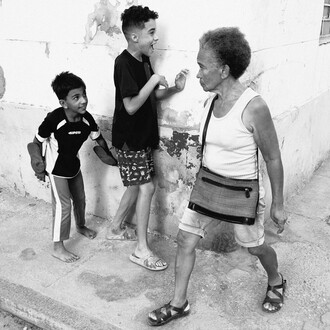
In both parts of the exhibition—whether in the selection of photographs made primarily in rural settings and small towns, or in the cycle Homo Pragensis—Šperl develops the tradition of humanist photography, which he came to know particularly well through his intensive contact with Jindřich Štreit during his studies at FAMU. His view of the everyday lives of ordinary people across different regions of the Czech Republic is, in most cases, empathetic and compassionate. It is no coincidence that he places at the beginning of his website a quotation by the renowned photographer Robert Frank: “The one thing that photography must contain is the humanity of the moment.”
At the center of Šperl’s interest are fundamental human values: expressions of joy and sorrow, love and friendship, loneliness and old age, the effort to preserve traditions, faith, relationships between parents and children, and the relationships of “ordinary” people to various social minorities—those in some way marginalized due to physical or mental disabilities or homelessness. In these photographs, the artist demonstrates profound empathy and an ability to gain the trust of those before his lens, photographing them from the position of an almost unnoticed observer. Within fleeting moments of everyday life, he discovers subtle, timeless metaphors and symbols, leaving their interpretation to the viewer’s active engagement. He finds them across a wide range of environments—from pubs and family celebrations to children’s games, folk festivals, and churches.
Not all the works in this exhibition depict people. We also encounter eloquent views of interiors that reveal much about their inhabitants even in their absence. Animals—and the relationship between humans and animals—are frequent motifs. It is especially in these unusual and surprising animal images that Šperl’s sense of humor becomes most apparent. Most photographs from the series Everydayness, installed at the beginning of the exhibition, were made in villages or small towns, where interpersonal relationships and traditional values remain preserved in a more crystalline form than in cosmopolitan metropolises.
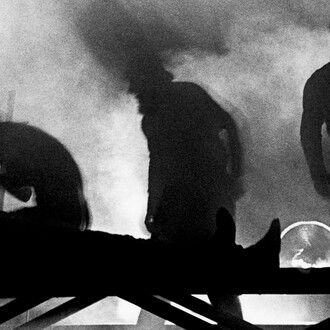
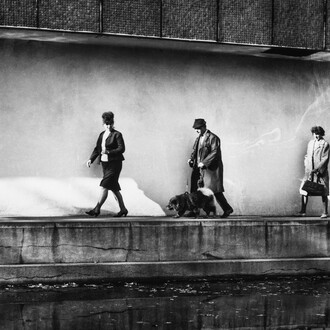
Although the works from the extensive cycle Homo Pragensis were created in a markedly different environment, they share with the first part of the exhibition a desire to reveal the often uncanny, at times almost surreal moments that surround us—moments we frequently overlook because of their transience. They are also united by a refined visual presentation that draws upon contrapuntal relationships between motifs and parallel narrative threads, emphasizing subtexts open to a wide range of interpretative possibilities. Some images resemble carefully staged film stills, yet Šperl does not construct or direct his scenes. Many photographs are marked by a departure from explicit narrative and easily verbalized content, as well as by unusual compositions in which cast shadows play a significant role, often standing in for actual figures or objects. Much remains unspoken—only lightly suggested. The visual symbols and metaphors are never gratuitous; they often give form to the artist’s inner world, his experiences and emotions.
(Text by Vladimír Birgus, curator of the exhibition)