English
 Español
 Français
 Deutsch
 Italiano
 Português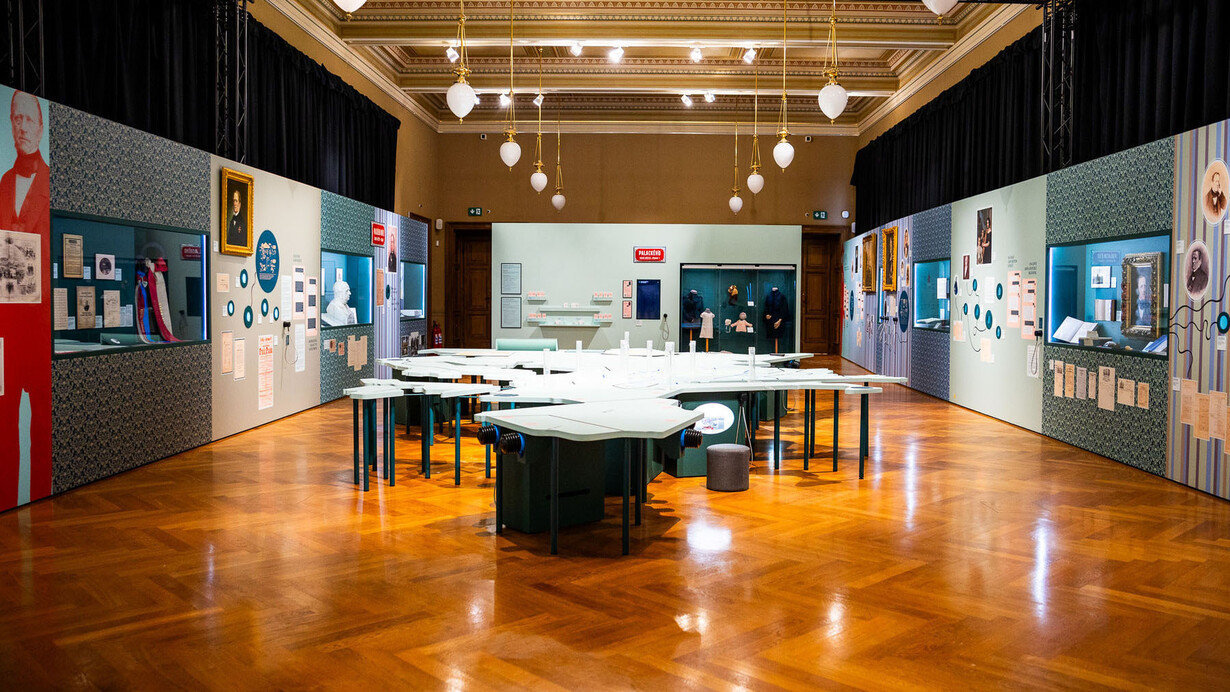
How would the "Father of the nation" speak today? And what would he tell us about Europe, society, or individual responsibility? The exhibition at the Historical Building of the National Museum presents František Palacký in a new way—vivid, engaging, and surprisingly contemporary.
Created on the occasion of the 150th anniversary of his death, the exhibition offers an original perspective on a figure who profoundly influenced Czech history as well as the National Museum itself. Instead of a distant historical symbol, Palacký appears here as a thoughtful person of his own time—and of ours.
You enter Palacký’s world through eight short fictional dialogues between him and a person from the year 2026, stylized as a chat on a mobile phone screen. These dialogues open up key themes of his life as well as questions that still resonate today. The narrative is complemented by an original comic depicting crucial moments of his life—from his youth through his scholarly work to his political career.
The exhibition’s powerful atmosphere is also created by numerous audio recordings that present excerpts from Palacký’s works as well as his personal correspondence. This allows you not only to read his thoughts, but also to hear them in a new context.
A dominant feature of the exhibition is a large-format map of Europe, where visitors can trace Palacký’s travels and observe changes in the national composition of Central Europe. Rotating cylinders with period newspapers offer insight into the media world of the 19th century, while simple manual elements demonstrate how Palacký collected, sorted, and analyzed information without modern technologies.
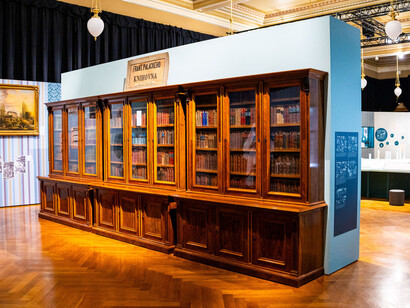
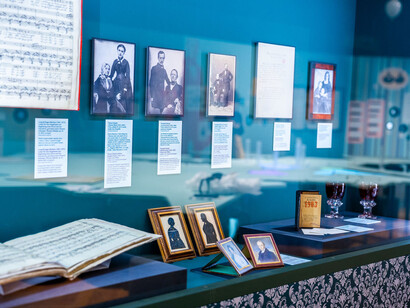
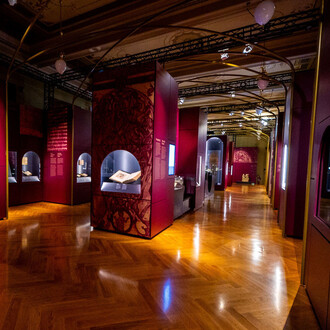
A significant part of the exhibition consists of authentic exhibits from both Palacký’s personal and public life. On display is a selection of 1,000 volumes from his extensive personal library, the original travel trunk with which he arrived in Prague in 1823, as well as small personal items—glasses, clothing accessories, a walking stick, a hat, a paperweight, and a barometer whose readings he carefully recorded. A more intimate perspective is provided by items connected with his family, including garments belonging to his wife Terezie Palacká and his daughter Marie Riegrová Palacká. Among his portraits, a reproduction of one of the most famous—by painter and illustrator Max Švabinský—is also on display.
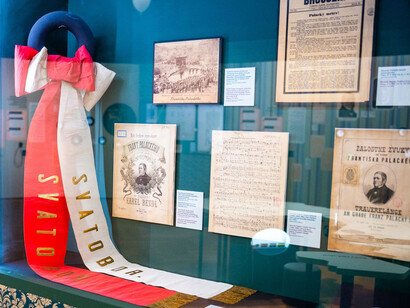
The exhibition also presents Palacký as a public figure. Visitors can see artifacts documenting his political career and his role in the European context. At the same time, it highlights his remarkable legacy—the so-called “second life”—through medals, printed materials, stamps, banknotes, and artistic representations that demonstrate how deeply he has become rooted in Czech historical memory.
The exhibition also includes reproductions of archival materials from Palacký’s estate—drafts of his major work The history of the Czech Nation in Bohemia and Moravia, personal documents, travel papers, and everyday writings that together create a portrait not only of a historian, but of a man of his time.