English
 Español
 Français
 Deutsch
 Italiano
 Português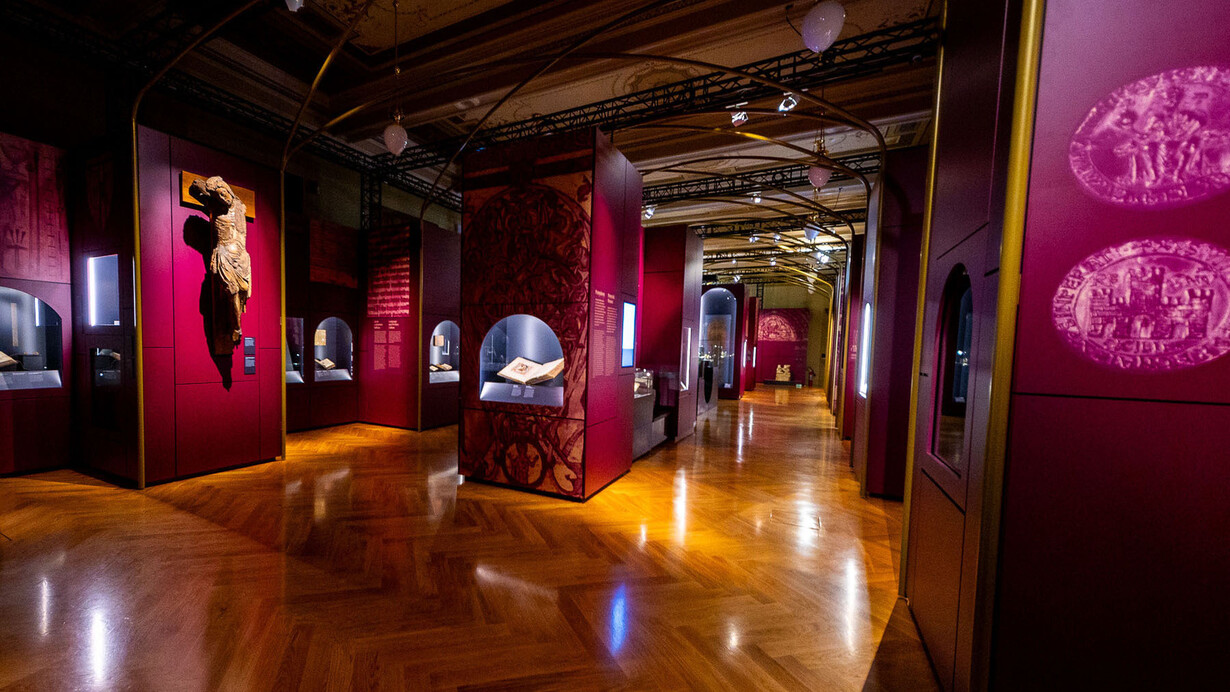
The story of a dynasty that transformed the Czech principality into a kingdom and profoundly shaped the form of Central Europe comes to life in the National Museum’s largest exhibition of the year. It brings together more than 900 exceptional exhibits from nearly seventy institutions from the Czech Republic and abroad, presenting the most extensive project dedicated to the Přemyslid dynasty in both a Czech and European context.
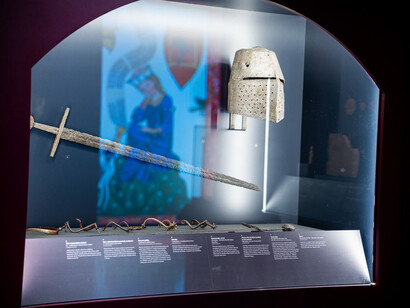
Visitors will see rare treasures displayed only on exceptional occasions. Among the most significant exhibits is the Romanesque sarcophagus of St. Longinus, which is being displayed outside Vyšehrad for the first time and likely once held the body of a monarch, the Royal Crown of Środa Śląska, textiles from the tomb of Saint Ludmila, the funerary jewels of Přemysl II Otakar, his sword, and the personal ring of Přemysl I Otakar.
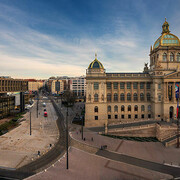
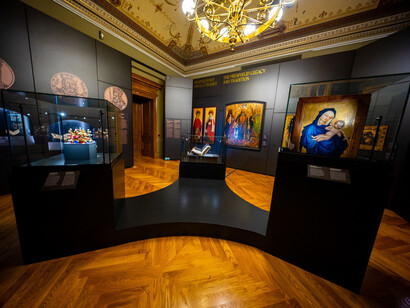
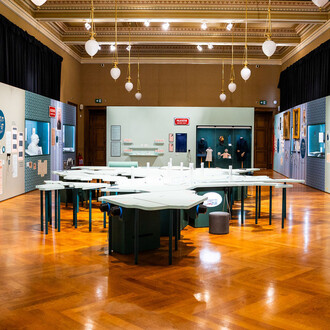
The exhibition located on the ground floor of the Historical Building of the National Museum tells history as a compelling story of power, ambition, family conflicts, and a changing world. It follows the lives of princes and kings from legendary beginnings to the dynasty’s decline, highlighting their influence on the Czech lands as well as on Europe of the time – it will guide you through four halls from the beginnings of the dynasty through the princely and royal eras to its legacy in the time of the Luxembourgs. It traces not only the development of the royal family, but also the transformation of Bohemia and Moravia from the late 8th to the early 14th century in a broader European context.
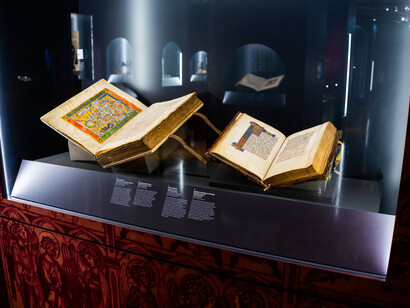
The story of the dynasty begins with the legend of Princess Libuše and the plowman Přemysl. It is a narrative straddling the line between myth and historical memory. Libuše’s decision to call a simple peasant to the princely throne is one of the most famous motifs in Czech history and symbolizes the rise of Přemyslid power. The exhibition brings this story to life through medieval illuminations and Romanesque paintings from the Znojmo Rotunda, which show how the motif of Libuše and Přemysl was perceived and interpreted over the centuries. Alongside these, archaeological finds from Přemyslid hillforts are also presented, placing the legendary origins of the dynasty within a specific historical context.
One of the exhibition’s highlights is the conflict between Saint Ludmila and her daughter-in-law Drahomíra. The struggle for influence over the young Wenceslas was not merely a family feud, but a clash between two value systems – Christian and pagan. It culminated in the dramatic murder of Ludmila at Tetín, which shook the entire country. The textiles from her grave, on display in the exhibition, provide an exceptionally authentic account of this story and are among the rarest early medieval artifacts in Bohemia.
This story is followed by the fate of her grandson, Prince Wenceslas. His life and death, too, are linked to a family conflict, this time between brothers. Wenceslas’s murder in Stará Boleslav ranks among the pivotal moments in Czech history. The exhibition illustrates how a political struggle for power became a powerful symbol. After his death, the ruler was venerated as a saint and protector of the land. Relics and liturgical objects associated with his cult document the transformation of a historical figure into a timeless symbol of Czech statehood.
The history of the Přemyslids is not merely a tale of tragedies, but also of the rise to power. Přemysl I Otakar succeeded in establishing the hereditary royal title and consolidating the position of the Czech lands within the complex landscape of European politics. His personal ring commemorates not only this specific ruler, but also the moment when the principality became a kingdom.
The pinnacle of Přemyslid power was the reign of Přemysl II Otakar, a ruler of European significance whose empire stretched from Bohemia to the Adriatic. His reign, however, is also a story of decline. His ambitions culminated in a tragic end at the Battle of Moravian Field in 1278. The funerary jewels from his tomb – the crown, scepter, and orb – are among the most impressive exhibits in the exhibition and serve as a reminder of the transience of even the greatest secular power.
Women also played a significant role in the history of the Přemyslid dynasty, as they were able to influence the course of the country even without formal power. The story of Saint Agnes of Bohemia illustrates a different kind of influence based on faith, education, and social welfare. The conclusion of the Přemyslid story is marked by the dramatic assassination of Wenceslaus III in 1306, which remains unsolved to this day and brought to a close one of the most significant chapters in Czech and Central European history.
In addition to objects associated with the ruling dynasty, the exhibition also offers a glimpse into everyday life in the early and high Middle Ages. It showcases religion, the emergence of fortified settlements and towns, trade, craftsmanship, art, and scholarship. Visitors will see jewelry, liturgical objects, weapons, coins and coin hoards, books, and other exhibits that document the transformation of society and its growing connections with neighboring lands.