English
 Español
 Français
 Deutsch
 Italiano
 Português

Twice a day, if you are diligent, you commit a small act of violence. The bristles of your toothbrush drag across your gums, tear a living film of bacteria off your teeth, and open thousands of microscopic doors in the process. For a few minutes after brushing, some mouth microbes are in your blood. They have entered your bloodstream.
This is not a sign that you are brushing wrong. It is a sign of how the mouth is built. And it is the quiet, unglamorous reason a growing number of cardiologists, endocrinologists, and neurologists have started asking their patients a question that used to belong entirely to the dentist: How are your gums?
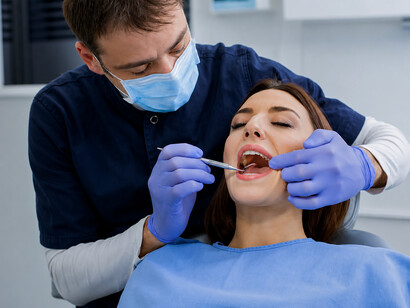
For the majority of modern history, we have categorised the mouth as a cosmetic feature. A smile is something you whiten, straighten, and photograph. Teeth are vanity; gums are an afterthought. Even the way healthcare is organised reflects the split—dentistry sits in its own building, its own insurance, and its own profession, walled off from "real" medicine as if the mouth were a guest room the body doesn't quite use. That wall is now coming down, not because of a marketing campaign, but because the evidence continues to leak through it.
An ecosystem, not a trophy
There are around 700 species of bacteria in the oral cavity. The majority are harmless, some are helpful, and a few are opportunistic, waiting for the right conditions. When plaque, a sticky bacterial biofilm, is allowed to build up along the gum line, that balance tips.
The gums inflame, and the first stage – gingivitis – announces itself in a way almost everyone recognises: a little blood in the sink when you brush or floss. It is caused by plaque left uncleaned, whose bacteria produce toxins that irritate the tissue, leaving gums red, swollen, tender, and quick to bleed. Gingivitis does no permanent damage on its own and clears completely with ordinary care, brushing, flossing, and a professional cleaning, which also stops it from progressing to periodontitis.
And the body, it turns out, does not keep it contained.
A border that won’t stay closed
Here is where the mouth stops being a local story. Some periodontal bacteria have been found somewhere they have no business being: inside the fatty plaques that narrow our arteries. The statistical link is real and repeatable. In pooled studies, people with periodontitis carry roughly a 19% higher risk of cardiovascular disease, and the more carefully researchers control for shared culprits like smoking, the more stubbornly a residual association remains. The leading explanation is inflammation: infected gums raise the body's systemic inflammatory markers, and chronic inflammation is one of the engines of arterial disease.
At this juncture, a credible wellness article must take a moment to clarify, as this is precisely where less rigorous articles tend to rush through. Association is not the same as cause. When researchers use genetic methods designed to test causation directly—Mendelian randomisation—the evidence for gum disease causing heart disease weakens considerably. Treating gum disease reliably improves early warning signs of vascular health; a landmark trial found that intensive periodontal treatment measurably improved blood-vessel function six months later. What it has not yet convincingly shown is that treating your gums prevents heart attacks and strokes. The relationship is strong, biologically plausible, and clinically intriguing. It is not, as of today, proven to run in a straight line from your gums to your coronary arteries. Anyone who claims otherwise is promoting a level of certainty that the current science does not support.
Blood sugar: a reciprocal relationship
While the heart connection is a compelling frontier, the diabetes connection is more established and operates in both directions. High blood sugar is detrimental to gums: it impairs healing and fuels inflammation, making periodontitis both more likely and more severe. But the traffic also flows the other way; the chronic inflammation of gum disease releases cytokines that interfere with the body’s ability to respond to insulin, nudging glucose control in the wrong direction. The most persuasive evidence comes from what happens when you intervene. Across multiple meta-analyses of clinical trials, treating periodontitis in people with type 2 diabetes lowers HbA1c—the standard three-month measure of blood sugar—by roughly 0.3 to 0.4 percentage points. That sounds modest, but a 0.4-point drop matches what you would expect from adding another glucose-lowering drug, and the benefit is largest in poorly controlled patients. For them, a deep cleaning is not a cosmetic indulgence; it is metabolic care.
The brain: a story still unfolding
The newest and most emotionally charged frontier is the one connecting the mouth to memory. In 2019, a team published a striking finding: P. gingivalis, the keystone bacterium of gum disease, was present in the brains of people who had died with Alzheimer's disease. So were gingipain-toxic enzymes the bacterium produces, and their levels tracked with the tau and amyloid pathology that define the disease. In mice, deliberately infecting the mouth with the bacterium led to brain colonisation and more amyloid. The implication was electric: what if a treatable gum infection was one upstream contributor to dementia?
This hypothesis is genuinely important, and it deserves to be presented with its conclusion included. A drug designed to block those gingipains was taken into a large Alzheimer's trial. In the overall group of patients, it failed to hit its main cognitive and functional targets. A pre-specified subgroup of patients who actually carried the bacterium did show a signal of slowed decline, but the programme was later halted over safety concerns. So the state of play is as follows: a beautiful mechanistic story, a mixed and ultimately disappointing clinical result, and no established proof that gum disease causes dementia.
There is also a chicken-and-egg problem worth naming. Cognitive decline makes it harder to brush and floss well, which means dementia can cause poor oral health as easily as the reverse. Disentangling the two is genuinely difficult, and researchers are honest that it may take years. What can be said now is unglamorous but true: oral inflammation is one of many threads in a larger systemic picture, and keeping it low is something you can do at any age.
Why "more than a smile" is literal
Step back from any single disease and a pattern emerges: the mouth is less a sealed compartment than an integrator. It shares its major risk factors—smoking, sugar, poor diet, stress, and poverty—with almost every chronic disease we fear. It is the first stage of digestion and a constant, open interface between the outside world and the bloodstream. Damage here rarely stays.
One of the bluntest measures in health research is how many teeth you still have. In large pooled studies, each additional set of ten lost teeth is associated with roughly a 15% higher risk of death from any cause. A long-running cohort study revealed that each natural tooth remaining at age 70 correlates with a measurable decrease in mortality in the subsequent years. This is why the World Health Organization treats keeping at least 20 functional teeth as a meaningful benchmark for healthy ageing.
The honest reading of these numbers is not that your molars are keeping you alive. Tooth loss is partly a record, a lifetime accumulation of inflammation, diet, habits, and access to care, written in enamel and bone. But it is not only a record. Losing teeth changes what you can eat, reshapes the community of microbes in your mouth, and removes something you can't easily get back. The mouth is both a mirror of your health and a lever on it.
What actually helps
If all of this makes you want to panic the next time you see pink in the sink, don't. Bleeding gums are common, usually early, and typically reversible. This is a population-level story, not a personal diagnosis; a spot of blood is a prompt to take care of your gums, not evidence of impending heart failure or dementia. The useful response is not anxiety. It is boring, effective consistency.
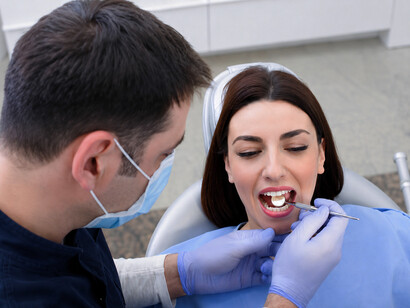
Twice a day, in front of the mirror, you are fighting a quiet mechanical battle to break up the biofilm before it settles in. A manual brush used with care beats an electric one used carelessly. Technique matters more than the tool. Brushing alone is insufficient; you must also clean between your teeth once a day using floss or an interdental brush. Neglecting this step increases the risk of gum disease.
Eating sweets all at once, with a meal, lets your mouth recover between acid attacks; grazing on them through the afternoon keeps the acid and the damage constant. When it comes to sugar and teeth, frequency matters far more than the total amount. The real key is catching the imbalance early and treating it, before it hardens into something permanent.
And keep it in proportion. A healthy mouth is one part of a whole life, not a project to obsess over. The encouraging thing is that oral health tends to travel with everything else: the same habits that protect your gums are not smoking, eating well, and moving your body—the habits that protect the rest of you. If you take care of one border, you will often end up taking care of the entire country.
Your smile, it turns out, was never the point. It was just the part you could see.
References
Dewhirst FE, Chen T, Izard J, et al. The human oral microbiome. Journal of Bacteriology. 2010;192(19):5002–501 7.
Janket S-J, Baird AE, Chuang S-K, Jones JA. Meta-analysis of periodontal disease and risk of coronary heart disease and stroke. Oral Surgery, Oral Medicine, Oral Pathology, Oral Radiology, and Endodontology. 2003;95(5):559–569.
American Heart Association. Periodontal disease and atherosclerotic cardiovascular disease: a scientific statement from the American Heart Association. Circulation. 2025.
Tonetti MS, D’Aiuto F, Nibali L, et al. Treatment of periodontitis and endothelial function. New England Journal of Medicine. 2007;356(9):911–920.
Simpson TC, Clarkson JE, Worthington HV, et al. Treatment of periodontitis for glycaemic control in people with diabetes mellitus. Cochrane Database of Systematic Reviews. 2022;(4):CD004714.
Dominy SS, Lynch C, Ermini F, et al. Porphyromonas gingivalis in Alzheimer’s disease brains: evidence for disease causation and treatment with small-molecule inhibitors. Science Advances. 2019;5(1).
Sabbagh M. The gingipain inhibitor atuzaginstat and results of the GAIN trial. Alzheimer’s & Dementia. 2023;19(Suppl 24):e079337. On the subsequent FDA clinical hold for hepatotoxicity and discontinuation of the programme
Peng J, Song J, Han J, et al. The relationship between tooth loss and mortality from all causes, cardiovascular diseases, and coronary heart disease in the general population: a systematic review and dose–response meta-analysis of prospective cohort studies. Bioscience Reports. 2019;39(1):BSR20181773.
Österberg T, Carlsson GE, Sundh V, Mellström D. Number of teeth — a predictor of mortality in 70-year-old subjects. Community Dentistry and Oral Epidemiology. 2008;36(3):258–268.
Hobdell M, Petersen PE, Clarkson J, Johnson N. Global goals for oral health 2020. International Dental Journal. 2003;53(5):285–288.