English
 Español
 Français
 Deutsch
 Italiano
 Português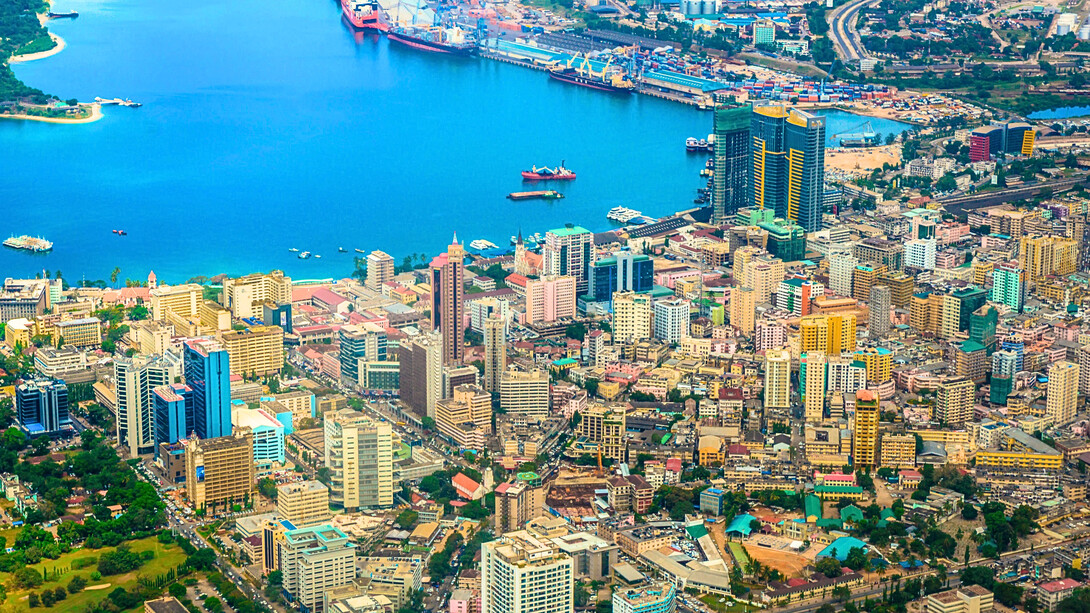
Liberalism not only contributes little to building societies, but also has a feature that undermines social cohesion. 1
Introduction
Why do some countries develop more rapidly than others? Sub-Saharan African countries, in particular, lag behind much of the world in terms of development. This paper examines key differences between populations in sub-Saharan Africa and Europe, focusing on how individuals identify with their nation rather than their ethnic group. The analysis is based on secondary sources.
Since independence, African states have increasingly recognized the vital role of the state in advancing the interests and welfare of all citizens, regardless of ethnic affiliation. Sovereignty—despite being shaped by arbitrary colonial borders—remains a prerequisite for development and the equitable distribution of resources.
Upon independence in the 1960s, African countries faced two principal challenges: securing sovereignty and peace and fostering development to improve citizens’ welfare. Achieving these goals required building a shared sense of values that transcended ethnic divisions. However, political integration has proven elusive, and most African countries still struggle with these challenges today. This paper explores the reasons for this ongoing deadlock, beginning with definitions of key concepts.
For a state to function effectively—especially when it comprises multiple nations or ethnic groups—citizens must develop a sense of loyalty and belonging to the nation as a whole. This involves fostering shared cultural, historical, linguistic, and social characteristics that transcend ethnic divisions. Only when a substantial majority of the population embraces a national identity can state institutions function effectively for everyone’s welfare, promote peace and stability, and maintain harmonious relations with neighbouring countries.
The formation of national identity among citizens is often obstructed by a strong sense of loyalty to an ethnic group with which an individual feels a deep emotional attachment, rooted in family, locality, language, and belief. The challenge for these new independent states was to create a sense of a national community. At the end of the process of nation-building 2, all the inhabitants of a given state, regardless of ethnic differences, must identify with the state's symbols and institutions and share a common sense of destiny 3. A nation, in its true sense, has its roots in ethnicity with a shared cultural heritage. In present-day Europe, ethnicity and nationality are pretty close to the same thing.
This paper draws on theories of individual identity, which emphasize the formative influence of early life experiences. In many African cultures, extended cohabitation with parents and strong ancestral ties deeply shape individual identity. Identity formation is a highly emotional process, influenced by genetics, family, ethnicity, social environment, language, religion, and the broader political context. Both the state and the local community seek to foster loyalty, but which prevails has significant implications for nation-building 4.
Background
Africa’s extraordinary ethnic diversity is often cited as a key factor behind the continent’s persistent challenges, including poverty and civil conflict. Some estimates suggest that three-quarters of the world’s ethnic groups reside in Africa, and the world’s 20 most ethnically diverse countries are all African. Global comparisons reveal that countries with a shared common identity—often ethnically homogeneous—tend to be wealthier and more stable. In contrast, most sub-Saharan African countries are both ethnically diverse and among the world’s poorest and least stable 5.
When Europeans arrived in Africa, they were often met by highly organized and well-structured state entities that bore little resemblance to the arbitrary state borders imposed by European colonial powers at the Berlin Conference in 1884/85.
At the time of the conference, 80 per cent of Africa was still under traditional and local control. What ultimately resulted was a hodgepodge of geometric boundaries that divided Africa into 50 irregular countries. This new map of the continent was superimposed on 1,000 indigenous cultures and regions of Africa. The disregard of African cultural and linguistic boundaries expressed by the Berlin Conference caused long-term political fragmentation that endures to this very day.
At the time of independence, most African colonies had not yet developed cohesive national identities. One of the key tasks of governments of newly independent countries was to identify policies to build national identity so that respective populations could support and participate in the planning and implementation of future development projects.
While there seems to be widespread consensus on the advantages of strong nation-states in ensuring peace and economic development, there is little agreement on how diverse cultural groups within a state can be brought together to form a united people with a common national identity. Examples exist of the positive effects of state interventions in fostering unity among diverse ethnic groups around common national values 6. Often, such results have been ignored because they resulted from politically incorrect methods, even though European nation-states had evolved from non-democratic processes.
My argument
This paper will show that ethnic factors, rather than national values, are more important to the identity of the majority of Africans. I will argue that this is because the development of individual identity particularly takes place in childhood, adolescence, and early adulthood. The impact of African families on the growth and development of children and youth can last for more than a generation. An individual often stays with his/her parents well into early adulthood. A young man may thus remain with his parents for a long time, often after having established his own family. The ethnic influence thus has the potential to affect self-concept and identity formation for a much longer period than state nation-building efforts.
Scholars have and continue to study the processes that led to the development of nation-states in Europe. These studies may inspire researchers to undertake similar studies in the African context. However, I believe it is complicated, if not impossible, to transfer nation-building procedures from Europe to Africa, as the two continents differ on virtually all important variables, such as language, geography, culture, infrastructure, and value systems.
One possible advantage of African states aiming at building a national identity of a shared common history is access to mass media, radio, and television, as well as social media. I believe that the potential benefits from media use are great when controlled and managed by a humane state. The paper warns against the abuse of the media by parties, often supported by powerful Western foundations, that aim to impose Western ideologies on the continent, conflicting with basic communitarian African values.
Former colonial powers made every effort to facilitate state institutions capable of becoming commercial partners within a capitalist economic order. The key approach to securing loyal partners among former colonies was and continues to be by enforcing the adoption of Western political values underlying liberal democracies defined as multi-party systems. This approach is particularly interesting and, in contrast to the creation of states in Europe, where states did not arise from a democratic process but rather from the raw power of a strong despot.
I will argue that electoral democracy permits ethnic candidates to dominate elections and thus divert attention from the critical importance of the state in the building of a nation and even in the effective functioning of the state's institutions. In fact, electoral democracy reinforces ethnic divisions and impedes the formation of nation-states. The Western type of democracy is a luxury for poor African countries, where populations need to work together to develop their countries. The democratic approach is flawed, as it risks diverting attention from the need to emphasize unity around common values and a shared history.
Free speech and human rights principles advocated by Western governments and NGOs, in many instances, constitute a cover for interest groups, both foreign and domestic, that advance the interests of a small elite and thus contribute to continued fragmentation. Moreover, the Western ideology of liberal democracy assumes that humans are fundamentally solitary individuals. African values are closer to reality, as they stress that individuals are social beings and, at their core, are guided by a communitarian spirit.
One of the hallmarks of Western democracy is its high status given to free speech. If this is one of the axioms of a true democracy, one would have expected the media to play a stronger role in nation-building. Some scholars note that the media's role in nation-building is negligible. I argue that the media often contribute to polarizing and dividing a population by presenting critical views of government policies, even when their implementation is likely to improve people's welfare.
Most likely inspired by European and American intellectuals, some African scholars cite the presumed positive impact of industrialization and urbanization on nation-building and conclude that the absence or low level of industrialization is a significant cause of the limited success in fostering a strong sense of belonging to a particular country. While urbanization and industrialization may certainly strengthen and accelerate nation-building efforts, I have yet to find any evidence of a causal relationship between industrialization and nation-building.
Nation-building in Europe
The challenge of nation-building has occupied European rulers since the early 17th century. The channels of dissemination that led to the formation of nations were not always easy or peaceful. More often than not, states emerged from bloody wars, such as the Thirty Years' War (1618-1648), which concluded with the Westphalia Peace Treaties. They established the framework for modern states, as we know them today.
Once the state was established, rulers were charged with the difficult task of building a nation composed of citizens who shared a common history and usually a common language. Two key principles emerged from the settlement of this war: freedom and equality. Religion should not be dictated by the state but should be left to the private sphere of decision-making. Citizens were equally free to choose their religious affiliation. Attempts have been made to apply this principle to other areas of ethno-cultural differences, such as linguistic ones. But language cannot be privatized. It continues to be one of the key defining areas of nationhood.
Equality became another principle of importance in the building of a national identity, especially to neutralize the impact of ethnicity, which was often the decisive factor in determining one's share of state services. A well-functioning state must ensure that the ethnic composition of the population is reflected in its governing bodies to avoid ethnic favouritism 7.
Following the Westphalia treaties in 1648, kingdoms replaced vassal lordships and became the actual powers that united fiefdoms. It is therefore accurate to portray the dictatorial power of kings as the unifying force of scattered, isolated feudal societies, which encompassed many groups of people with loyalties to different ancestors and feudal lords but rarely to a central power.
It was not until the 18th and 19th centuries, influenced by the ideas of the Enlightenment, that absolute monarchs consolidated the formation of states that eventually, in most of Europe, became nation-states composed of people who perceived themselves as citizens of a nation with shared cultural heritage, a common language, and sometimes a common religion.
National identities were strengthened by the introduction of public education systems and increased employment opportunities provided by the state. Most scholars researching the creation of states and the building of European nations have given scant attention to the compelling influence of despotic rulers.
Throughout the 19th century, rulers made great efforts to foster national identity among their respective citizens. In this respect, the kings received a helping hand from poets and authors, who, according to historians and scholars, were part of the cultural movement known as romantic nationalism. Poems and writers adhering to romantic nationalism contributed to the consolidation of a national identity by including themes of national identity in their works. Denmark may serve as an example in this regard. The national anthem originates from this time. The anthem is written by the author, who also wrote a poem in 1802 about the Golden Horns, which originated in the early 5th century 8 and are considered part of the national heritage.
It is still an unresolved question whether African countries can benefit from lessons drawn from European experiences with nation-building. Some scholars have examined how national values were diffused across different groups within a region and a country. They conclude that ‘diffusion operated simultaneously through multiple domains: communication networks between artists and writers to the grid of Roman roads that established regions of cultural similarity during the Middle Ages, from the webs of universities within which the new ideas circulated to the nets of newspapers that channelled nationalist messages’ 9. It is doubtful if this quote could ever apply to an African situation.
Nation-building in former African colonies
Independence was granted to the former colonies at a time when the Cold War was at its peak. The USA was on the brink of entering war against the USSR because of the Cuban crisis in 1962. The global situation influenced European policies regarding their formal exit from former African colonies. It was imperative to them to ensure that Africa remained within the context of Western liberal democracies to block the expansion of communism.
Politicians rarely apply a historical perspective to solve present-day issues. This also applies to the creation of nation-states in former African possessions. There was little reflection on the origin of nation-states in Europe, nor on the type of government that ensured their permanence and effective operation, especially regarding just and equal distribution of goods and services managed by central authorities.
While Europe was evolving from a feudal system into more centralized rule under various monarchs, several African territories were ruled by organized hierarchical systems founded in a set of laws, such as was the case in the Sokoto Caliphate, which for at least one hundred years, until the arrival of the British in 1903, controlled an area of 400,000 square kilometres, thus extending to parts of present-day Cameroon, Burkina Faso, Niger, and Nigeria.
By 1837, the Caliphate had a population of 10–20 million, making it the most populous empire in West Africa. It was dissolved when the British, French, and Germans conquered the area and annexed it into the Nigeria Protectorate, Niger, and Cameroon. The Caliphate's system of governance was so well organized that the British copied it and adopted it in most of their colonies, a practice known as indirect rule. Sokoto was a government of laws 10. One can only guess about how these vast areas would have evolved had it not been for the partition of Africa by European colonizers.
A survey on national versus ethnic identity across 16 African countries 11 shows that respondents who identified as nationals ranged from 88% in Tanzania to 0.17% in Nigeria. In Senegal, respondents are equally divided between ethnic identity and national identity. The lack of shared feelings about key elements of national history is an obstacle to the state's ability to secure public participation and consensus on policies that affect the country's stability and development. Moreover, it is impossible for the state to develop a true nation composed of citizens with different ethnic backgrounds when a large percentage of citizens strongly feel that their ethnicity, rather than their nationality, is more important to them.
A Harvard study furnished the database for the Max Fisher 12 map that shows that the world's 20 most diverse countries are all African. Although the Harvard study is from 2002, the overall picture of a continent kept in a state of underdevelopment remains similar today. The United Nations Human Development Index shows that most countries in Africa, except for a handful, remain classified as least developed, as indicated by life expectancy, access to education, and gross national income13. On a global scale, Nigeria ranked 164, Tanzania 165, and Senegal 169. Iceland and Norway rank first and second among the planet’s 195 countries.
The arguments presented above will be mainly supported by examples from three countries: Tanzania, Nigeria, and Senegal. Two of them illustrate extremes: Tanzania, with the highest percentage of citizens perceiving themselves as nationals of the state, and Nigeria, with more than 99 % of its people holding stronger feelings towards their ethnicity than towards the state, while Senegal falls in between with a population almost equally divided between national and ethnic identity.
Tanzania—a model nation-state
The nation-building achievements of Tanzania’s first president, Julius Nyerere, are remarkable and deserve more attention from African leaders. Nyerere was the chairperson of the only legal political party in Tanganyika, the Tanganyika African National Union (TANU), for 25 years. After the merger in 1977 with the party in Zanzibar, it was renamed the Revolutionary Party, Chama cha Mapinduzi. Elections to the national assembly took place regularly, as in any Western democracy. The citizens were given a choice among the candidates that the party proposed. Nyerere guided the party with a firm hand and a clear vision of his objective: the creation of a socialist nation-state, with equal rights for everybody.
Perhaps the lack of publicity for the Tanzanian success story lies in the effectiveness of the institutions of the one-party state. Most scholars abstain from drawing conclusions about Tanzania’s remarkable nation-building success, probably out of fear that they would be viewed as advocates of one-party systems. Rather be seen as advocates for a Western-defined, market-driven liberal democracy 14. Hence, Tanzania is often left out of statistical analysis because, as it is often stated, “Tanzania is an outlier at the state-level, suggesting that factors other than those considered here were important in the relatively successful nation-building process there 15.”
Neither does Tanzania furnish evidence of the importance of the level of industrialization for the creation of a nation-state. Numerous scholars claim that industrialization is one of the most important factors for the development of feelings of national belonging. It is likely that they arrive at this assumption because industrialization and urbanization forced people of different ethnicities to communicate across ethno-linguistic divides. But in Tanzania, cross-ethnic sharing was facilitated by language and education policies rather than by industrialization. By 2012, industrialization accounted for 22% of the GNP, up from 5% in 1966, when nation-building efforts were at their highest.
One of the first steps taken towards the creation of a true nation was the dismantling of traditional rural authorities. Customary tribal laws were, upon independence, declared invalid. The traditional chief was replaced by a party representative. This person became the chairperson of the village council. Perhaps even more important was the decision to adopt Swahili as Tanzania’s national language. It is important to note that this language was spoken by only a tiny part of the population along the coast of the Indian Ocean. It is considered a neutral language not associated with any particular ethnic group.
Deliberately, the president and the party avoided upgrading the language of one of the larger ethnic groups to a national status, a mistake committed by other African leaders, thus resulting in ethnic tensions and jealousies. With the objective of making Swahili the de facto language for everyone, it was decided that it should be the language of instruction in all educational institutions from primary school to university. Teachers were assigned to regions where they could not use their mother tongue. In this way, Swahili became the lingua franca in a short period of time.
Nyerere, a teacher by training, was very conscious of the importance primary education plays in the formation of individual identity. Therefore, the curriculum underwent profound changes to emphasize Tanzanian history, culture, and values that foster national and Pan-African identity. From the late 1960s, all future teachers were required to serve in the paramilitary National Service organization, which indoctrinated them in the ideals of the regime.
At the time of independence, rural communities were scattered all over the country. With a view to enabling the provision of services equally to all regions of the country, for instance, with regard to the provision of water, health, and education, and also to ensure that all citizens interacted positively with one another, Nyerere, with the backing of the party, began a programme of moving people into villages. Initially (1968), it was announced as a voluntary project, but by 1973 it had become coercive.
Nyerere saw communitarianism, egalitarianism, and participation as key motives of the forced villagization programme, which became one of the pillars of the nation-state. The villagization programme was a way of removing people from localities associated with ethnic roots and traditional ways of living into a more communal coexistence, allowing them to participate and interact outside the core family network. Tanzania’s nation-building would not have come about without a commanding leader.
Perhaps one key to the success of the Tanzanian reform program is that the central government never sought to “stamp out” ethnic languages or indigenous cultural practices. The Tanzanian case suggests that nation-building can succeed without jeopardizing indigenous cultures and languages in an African context.
Ethnic tension in Nigeria
At the other end of the spectrum, we find Nigeria, with less than 1% identifying themselves as nationals 16. Since independence from the UK in 1961, Nigeria has been marred by uncontrollable ethnic chaos, most likely caused by having accepted an electoral parliamentary system but also to a large extent reinforced by the kind of rule practiced by the British. The British colonial power ruled through indirect rule, which bolstered the dominance of ethnicity over that of the state.
The consequences continue to be seen in the absence of equal opportunities and distribution of services among the citizens of Nigeria, who are composed of more than 250 ethnic groups. Efforts to build a nation were particularly pronounced in the 1970s following the Biafran War (1968 - 1970). It was an ethnic war triggered by the demand of the Igbos to have their own state. The war was crushed by the federal army, but left more than one million people killed, mainly from the Igbo people.
To avoid similar conflicts in the future, the federal government introduced the National Youth Service Corps scheme in 1973. With the explicit objective of creating national unity, the federal government established the Federal Character Commission. Its mandate was to ensure an equitable distribution of appointments among the states of the federation, balancing equity and adequate representation among ethnic groups 17. Also, with a view to facilitating greater interaction and understanding among the three largest ethnic groups, pupils are expected to know at least one of the three major languages, Hausa, Yoruba, and Igbo 18.
However, virtually all interventions aimed at fostering national unity have failed. The National Youth Service Corps, which was supposed to foster unity by familiarizing youth with other ethnic groups during the service year, has been an ugly experience for youth nationwide. The youth, leaders of tomorrow, suffer serious discrimination during this period, which further discourages them from being patriotic and believing in the unity of the country. The idea of posting staff of the federal government to other states apart from their own state of origin has further aggravated the quest for national unity because of the open discrimination they have encountered in their service state as non-indigenes.
A study of the 1979 election found that representatives won their seats through ethnic affiliation. Undoubtedly, the elected representatives were obliged to satisfy the ethnic expectations of those who had voted for them, although this conflicted with the goals of national unity and development 19. There is hardly any follow-up by the federal government on the language policy requiring children to learn at least one of the major ethnic languages 20. Enforcement of rules and regulations meant to promote nation-building is disappointingly absent at the federal level.
Nigeria, an oil-rich country, has exploited its natural resources for more than 50 years without equal benefits for its 240 million citizens. Ethnic conflicts continue to this day. A researcher on the subject noted in a recent study that democracy in Nigeria has impeded nation-building by perpetuating ethnic politics. The fusion of the Western type of liberal democracy and ethnic politics has enabled Nigerian leaders to exploit national resources for their personal gain and for the welfare of their respective ethnic groups. “As old ethnic tensions resurface due to lopsided policies and appointments, Nigeria continues to fall apart” 21.
Senegal—towards a nation-state?
While the national motto of ‘One people, one goal, and one belief’ serves as policy guidance, the governments of Senegal have, since independence, shown limited concern for creating a nation united around common feelings and a shared understanding of history. The building of a Senegalese nation composed of ethnicities speaking more than 20 different languages began with the first president after independence, Leopold Senghor.
However, despite 65 years having passed, Senegal is not yet on track. In 2012, half of the population expressed stronger attitudes for their respective ethnic backgrounds than for the nation. Conscious of the role of language and education, this is hardly a surprise. Senegal retained French as the official language—a decision with long-term implications for social equity, educational access, and cultural preservation 22.
French is defined in the Senegalese constitution as the official language and the language of instruction. The French colonial government pursued an assimilation policy towards its colonies. Hence, the ideology upon which the school system was built at the time of independence was that of assimilation into the French culture. Senghor declared in 1962 that the objective of the educational system was to develop the new Senegalese. But no significant reforms were introduced during the first decade of his administration to advance this goal.
Numerous reform proposals have been made for the teaching of history and for the language of instruction. National heroes have been added to the curriculum to ensure that all regions can recognize themselves and take pride in their contributions to the nation's history. Despite growing recognition of the importance of national and local languages, their implementation remains uneven. Thus, the contribution of schools to the development of a sense of national belonging has been modest 23.
President Senghor, with strong support from France, had his prime minister, Mamadou Dia, accused of treason for prioritizing the country's development over the interests of French and Senegalese oligarchs. Senegalese presidents have, until recently, ruled with virtual dictatorial power. Government posts were allotted to family, friends, and influential oligarchs.
Over the years, feelings of disparity have grown, while a sense of exclusion from participation in the political process has evolved throughout the population outside the presidential party and his close friends. In particular, it became increasingly evident that the state allocated its finances among the regions to the profit of an elite close to the president. A recent analysis concludes that, since independence, the state has undergone a gradual meltdown 25. A survey conducted by Afrobarometer during the presidency of Macky Sall found that almost 70% of Senegalese felt that laws were applied unequally.
Leaders of independent Senegal, despite efforts to emphasize the national importance of local heroes, continue to struggle to escape colonial models for disseminating national values. Nation-building efforts have often been of a spectacular kind, such as the opening of the Museum of Black Civilizations in Dakar in 2018 and the erection of the African Renaissance Monument in 2010 24. Both are examples of efforts at great costs aimed at reclaiming the African cultural heritage and thus asserting the identity of African people, while the reality is that these costly monuments, first of all, serve to promote the tourist industry, rather than stimulate a sense of national belonging among people in remote rural areas of Senegal.
In 2014, a party 26 emerged for the first time since independence with an explicit policy aiming at national unity. It had grassroots support from particularly young voters, who, irrespective of language or ethnic affiliation, supported the charismatic party chairperson, Ousmane Sonko. Although banned from running for the presidency in the 2024 election, his party nevertheless won. Although Sonko hails from the breakaway region of the Casamance 27, he succeeded in presenting himself to the people of Senegal as somebody who was serious about uniting the people in a manner that would create a true independent state of Senegal, a nation-state liberated from its colonial ties to France.
In fact, Ousmane Sonko became the focus of national unity through his behaviour and declarations; he succeeded in bringing people across the country closer together. One way of doing this was to present himself, during this campaign, throughout the country prior to the 2024 election, as the very prototype of a true Senegalese with ancestral roots in many regions 28. Nation-building elements of the current government, under PASTEF guidance, include giving greater weight to instruction in national languages. It has also promised to better manage the work of foreign-funded NGOs, with a view to reducing public confusion over identity issues.
An often-ignored area, most likely important to the subject of identity among citizens, particularly in rural areas, is the role of marabouts, who for centuries have provided spiritual guidance and today exert a central role in daily life, politics, and social structure. The government of Sonko has been seen as curbing the influence of Marabouts, since they reinforce ethnic identity rather than national identification. However, since the marabouts exert significant influence over the majority of people in Senegal, the government has adopted a strategic approach of engaging these local leaders in dialogue. The next couple of years will show how effectively the government addresses these issues, particularly given its pledge to follow a democratic approach.
Threats to nation-building
Western governments, often through private foundations, continue to influence not only policy-making but also the funding of projects implemented by civil society. Among such foundations we find the American-based Soros Open Society and the Ford Foundation, both of which have operated in Africa since the early 1970s under the cover of promoting “African-led solutions, grassroots activism, and community-defined strategies to advance inclusive politics, pro-people economic policies, and peace building that centres women, youth, and historically marginalized groups” 29 There are good reasons for African leaders to feel worried by the operations of these Western led foundations.
The Senegalese government has expressed its intention to review the foreign funding of NGO activities in Senegal. Bringing foreign funding to a halt will, without doubt, be seen as an anti-democratic move and possibly be categorized as a violation of human rights principles, although the Open Society Foundation has left its fingerprints on many trouble spots throughout the world.
An attractive approach to foreign interests, with the objective of obstructing nation-building undertaken by states that do not meet the criteria of Western democratic governance, is to provide technical and financial support to private media. This is practiced by the National Endowment for Democracy (NED), which is fully funded by the US government.
Under the slogan ‘Supporting freedom around the world,’ NED ‘helps’ Africans to define the kind of democracy they need. NED brings to the table a US-defined market-driven democracy. It declares on one of its websites that “In Africa, the NED program supports courageous civil society and independent media groups, freedom of expression and religion, rights for all people, free elections, and reforms for a better future across the continent”30.
The role of the media in nation-building
The subject of nation-building has been neglected by media researchers, who prefer to talk of public opinion. This neglect ignores the media's potential role and, therefore, also the destructive impact of the media on efforts to construct a true nation-state. An anthropologist has provided a thorough description of the media's impact on the formation of an ethnic group of Malaysians in Borneo 31. The Malaysian government tasked BBC-trained journalists with creating a sense of belonging to Malaysia among the people living on the remote island of Borneo, which shares a border with Indonesia and none with mainland Malaysia.
Western media operate under the principle of free speech. After the end of the Cold War, the US has undertaken numerous interventions in the affairs of foreign states to ensure that they satisfy ideals of Western-type democracy and enterprises based in Europe and the Americas. These interventions include anything from warfare, named humanitarian wars, to organizing anti-government demonstrations. In between these extremes, one will find the financing of media and training of journalists in the name of free speech, democracy, and human rights. This support for private media aims at undermining social cohesion and a sense of community.
Persistent exposure to such media is likely to result in social fragmentation and hinder the development of a shared national identity. Private media, opposed to the government's nation-building activities, contribute to the fragmentation of national unity under the guise of free speech, human rights, and democratic freedom, even when such initiatives serve the general welfare of the people. When the state controls the media, it can play a decisive role in shaping national identity.
Closing remarks—Africanization of democracy
While nation-building remains of utmost concern for a majority of African countries, especially sub-Saharan ones, so does the demand for true independence and sovereignty. An increasing number of African states, especially former French colonies, have renounced the neo-colonial and imperialist behaviour of former colonial powers. Military cooperation agreements have been canceled, and several countries have expressed interest in investigating foreign funding of civil society organizations. Questions about the national language have re-emerged after 65 years of independence.
Frequently, African scholars refer to the debilitating impact of Western-style democracy, especially the multiparty electoral system, on the development of national identities. Western countries, especially the EU and the USA, use a special terminology that normally does not stand to closer scrutiny but is applied on its face value. In this vocabulary, applied to keep Africa in line with the principles of liberal democracy, we find human rights, free speech, freedom, and democracy. Policies and practices that deviate from these principles and are endorsed by the UN risk being met with threats and sanctions.
It is imperative to the West that transnational enterprises based in the EU and North America continue to have unhindered access to the continent's resources. Weak governments fragmented by ethnic conflicts are not at all a worry to the West, as long as Russia and China are kept out.
Western-based foundations, such as Soros’s Open Society, the Ford Foundation, and many others, do their utmost to ensure that African Sub-Saharan states remain weak and ready to serve Western interests. Lessons from Tanzania's success suggest that very different approaches to nation-building would serve Africa better than those implemented by government systems endorsed by Western governments. Nyerere of Tanzania did not abstain from enforcing decisions by coercive methods when deemed imperative for the common good.
The media, in particular, play a significant role today in maintaining continued fragmentation among citizens. One of the most significant ways mass media influences public opinion is through agenda-setting. The media determine which issues receive public attention. By giving frequent and prominent coverage to specific topics while ignoring others, media outlets direct audiences toward particular concerns. This ability is a serious danger when the private media sector receives foreign funding.
As long as the majority of countries continue to work on the basis of principles judged favorable by Freedom House 32, there is little hope of advancing development in Sub-Saharan countries. It seems increasingly important for Africa to recognize that it needs to develop its own concept of democracy. Africa needs to develop a precise definition of democracy, free from the polluting influence of the West, presented as nonpartisan values.
The world needs a new concept—yet to be named—that entails an Africanization of democracy. This concept must exclude the liberal connotation from its meaning, because in the liberal story, individuals are not supposed to have a strong attachment to their state, whereas nation-building creates strong bonds between individuals and their state 33.
References
1 The Great Delusion. Liberal Dreams and International Realities. John J. Mearsheimer. Yale University Press, 2018.
2 Nation Building: Why some countries come together, while others fall apart. Andreas Wimmer. Princeton, 2018.
3 Democratic Practice and Governance in Nigeria. Ebenezer Oluwole Oni, Omololu Michael Fagbadebo and Dhikru Adewale Yagboyaju (Eds), Routledge, 2021.
4 My introduction is inspired by several scholar, such as Wendell Bell and Walter E. Freeman (eds): Ethnicity and Nation Building. Sage, London, 1974.
5 A revealing map of the world’s most and least ethnically diverse countries, The Washington Post, May 16, 2013. Developed from a study undertaken by Harvard Institute of Economic Research., 2002.
6 Tanzania offers a successful example of uniting diverse ethnicities around common national objectives. Malaysian authorities provide another positive case (Media and Nation Building. How the Iban became Malaysian, Berghahn Books, 2006.
7 Read more about this issue in Nation-building. Why some countries come together and others fall apart. Andreas Wimmer, Princeton, 2018.
8 Adam Oehlenschlaeger: Der er et yndigt land, 1819. His poem about"The Golden Horns" (Guldhornene), written in 1802.
9 Diffusion through multiple domains: The spread of Romantic Nationalism across Europe, 1770 1903, by Andreas Wimmer, s. Lee and Jack LaViolette. Columbia University.
10 Africans. The history of a Continent. John Iliffe. Cambridge University Press, 1995.
11 National and Ethnic Identity in Africa: State, Group, and Individual level correlates of National Identification: by Amanda Lea Robinson. Afrobarometer, Working Paper no. 112. 2009.Other countries included in this survey are Mali, Uganda, Zambia, Malawi, Lesotho, Botswana, Kenya, Ghana, South Africa and Namibia.
12 A revealing map of the world’s most and least ethnically diverse countries, The Washington Post, May 16, 2013.
13 Human Development Report, UNDP, 2025 (Ranking based on 2023 data).
14 Tribe or Nation? Nation-building and Public Goods in Kenya versus Tanzania. Edward Miguel. University of California, Berkeley. 2002.
15 Wimmer, 2018.
16 Amanda Lea Robinson. Afrobarometer, Working Paper no. 112. 2009.
17 Colonialism and ethnic crisis in Nigeria: Barrier to nation-building and national development drive. Adio Saliu Wahab, Ibrahim Akanbi Bolaji (Journal of Advanced Research in Social and Behavioural Sciences 9, Issue 2 (2017) (24-31).
18 Exploring Language Conflict and Attitudes in Nigeria’s Multi-lingual Context, Evelyn Nwene Enu, Ph.D Emmanuel Alayande University of Education, Oyo (Prestige Journal of Education, Vol. 8, No. 2, December 2025).
19 Adio Saliu Wahab, Ibrahim Akanbi Bolaji, 2017.
20 Evelyn Nwene Enu, Ph.D Emmanuel Alayande, 2025.
21 Democracy, Ethnic Politics, and Nation Building in Nigeria, 2015 – 2024 Article in Journal of Nation-building & Policy Studies · May 2025, by Ekeledirichukwu C. Njoku Department of Political Science , Kingsley Ozumba Mbadiwe University Ideato, Imo State.
22 Language and Multilingualism in Senegal: From colonial legacies to contemporary educational issues. Abou Bakry Kebe; Moustapha Fall, 2025.
23 L’Ecole et la nation au Senegal de 1960 à nos jours. L’histoire d’un malentendu. Amadou Fall,(Éditeur:INRP Institut National de Recherche Pedagogique; 2010).
24 This bronze monument, 49 meters high, is the tallest in Africa at a cost of 27 million US$. President Wade expressed his hope that it would attract tourists.
25 Le Senegal en quete de l*Etat-nation? Les Quatre states de l’Effondrement, Aboubakry Dia, Dakaractu, 17. Fevrier, 2024.
26 Les Patriotes Africains du Senegal pour le travial, l’Ethique et al Fraternité (PASTEF) founded in 2014.
27 Since 1982, the region of Casamance has been in open warlike conflict with the central government in Dakar.
28 Ousmane Sonko. Le génie politique. Birame Diop. Harmattan 2022.
29 Open Society Foundations unveils three major programs in Africa, Africa Solutions Media Hub, July 23, 2025.
30 National Endowment For Democracy, Africa.
31Media and Nation Building. How the Iban became Malaysian. Berhahn Books. New York, 2006.
32 Freedom House, a US-based organization, rates people’s access to political rights and civil liberties in countries of the world through its annual Freedom in the World report. A ranking of countries is based on individual freedoms, ranging from the right to vote to freedom of expression and equality before the law.
33 For more on this discussion, see: The Great Delusion. Liberal Dreams and International Realities. John Mearsheimer. Yale University Press, 2018.